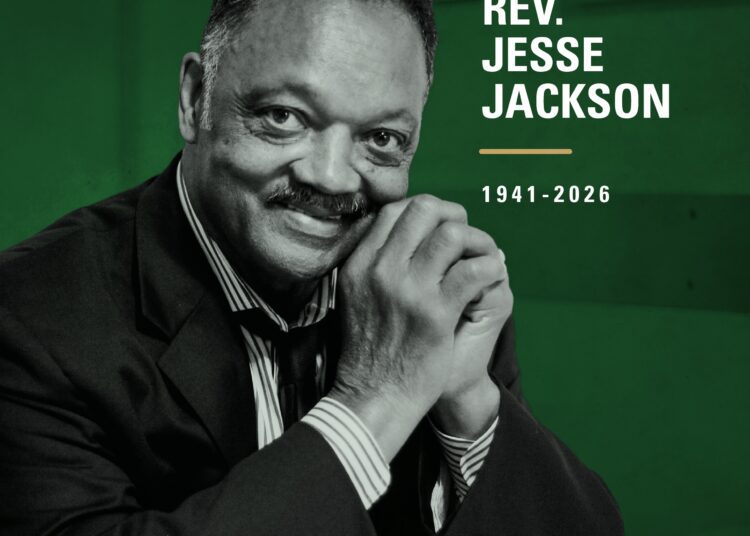
The Chairperson of the African Union Commission, H.E. Mahmoud Ali Youssouf, has mourned the death of the Hon. Rev. Jesse Louis Jackson, who died at the age of 84.
In a statement, the Chairperson described Jackson as a towering figure whose life’s work resonated deeply with Africa’s historic and continuing struggles for justice, dignity, equality and liberation.
A close associate of civil rights icon Martin Luther King Jr (MLK), the Baptist Minister twice ran for the Democratic presidential nomination. He spent decades advocating for the rights of Black Americans and other minorities, dating back to the tumultuous 1960s civil rights movement.
He first entered the public eye as MLK’s mentee and was with MLK when he was assassinated at the Lorraine Hotel in Memphis, Tennessee, in 1968.
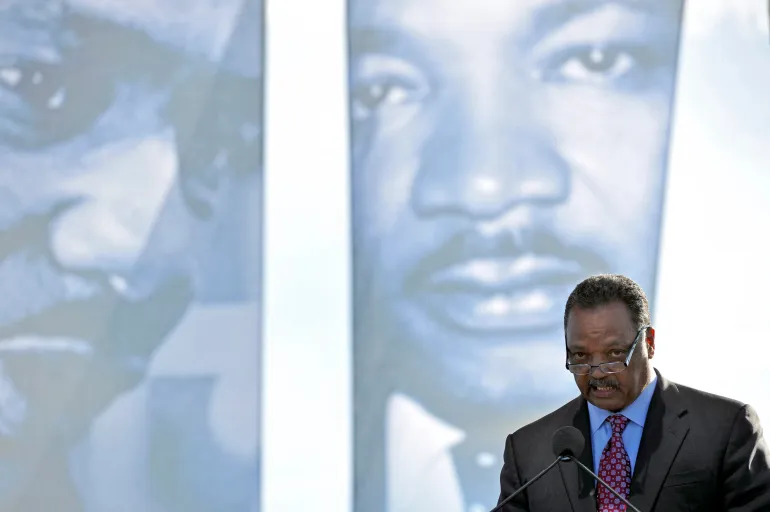
According to his family, the United States civil rights leader died “peacefully.”
Youssouf said that Rev. Jackson’s decades-long advocacy for civil rights, economic justice and political inclusion closely reflected the core mandate of the African Union. He emphasized that Jackson’s efforts to confront racial discrimination and promote equal opportunity paralleled the continental body’s mission to advance human rights and defend the interests of people of African descent globally.
According to the Chairperson, Rev. Jackson’s activism embodied a connection between Africa and its diaspora that has shaped political and social movements for generations. He noted that Jackson consistently expressed solidarity with African liberation movements during critical periods in the continent’s history.
In particular, he lent moral support to the struggle against apartheid in Southern Africa, contributing to the broader international mobilization that ultimately dismantled institutionalized racial segregation in the region.
Youssouf underscored that Rev. Jackson’s public positions aligned with the African Union’s global African agenda, including the recognition of the African diaspora as the continent’s “Sixth Region.” The designation, adopted by the African Union, reflects a formal acknowledgment of the diaspora’s role in shaping Africa’s development and global standing.
The Chairperson said Jackson’s life and work reinforced that bond, strengthening cooperation and shared identity across borders.
“Rev. Jesse Jackson’s life reflected the inseparable bond between Africa and its diaspora. His unwavering commitment to justice and human dignity strengthened the Pan-African vision and advanced the shared quest for decolonisation, equality, and reparation.”
H.E. Mahmoud Ali Youssouf
The Chairperson’s remarks framed Jackson’s legacy not only within the context of American civil rights but also as part of a broader Pan-African struggle.
Throughout his career, Rev. Jackson advocated for fairness in global governance, inclusive economic systems and restorative justice. Youssouf said those priorities continue to resonate strongly with the African Union’s contemporary agenda, particularly its calls for reparative justice for the historical injustices of slavery, colonialism and apartheid.
By linking Jackson’s advocacy to these ongoing efforts, the Chairperson highlighted what he described as a shared moral and political framework.
The African Union has in recent years placed renewed emphasis on addressing the enduring effects of transatlantic slavery and colonial exploitation.
Within that context, Youssouf suggested that Rev. Jackson’s longstanding calls for equality and accountability carried relevance beyond national boundaries. His advocacy, the Chairperson indicated, contributed to a global conversation about historical redress and systemic reform.
AU Commissioner Extends Sympathy To Jackson’s Family, US

In expressing condolences, Youssouf extended his sympathies to Rev. Jackson’s wife, Jacqueline, his family, as well as to the Government and people of the United States of America and the wider civil rights community.
He characterized Jackson’s passing as a moment of shared loss for all those committed to social justice and equality.
The Chairperson affirmed that Rev. Jackson’s legacy would endure as part of what he called the “collective history of resistance, solidarity, and the continuing realization of Africa’s unity and global destiny.”
By situating Jackson within that historical arc, Youssouf portrayed him as a figure whose influence extended beyond his national context and into the global African narrative
READ ALSO: Tarique Rahman Sworn In As Bangladesh’s Prime Minister