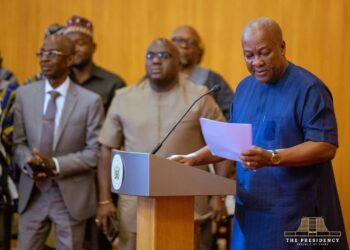
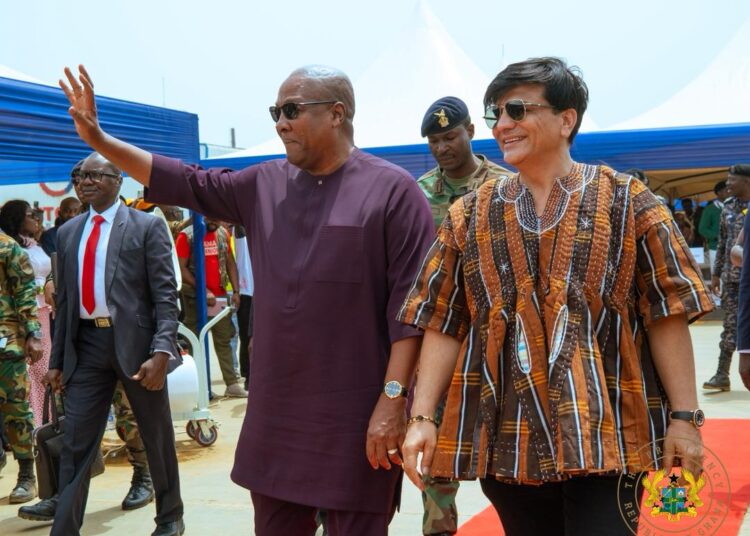
In a landmark event for Ghana’s manufacturing landscape, President John Dramani Mahama has officially commissioned the Phase Two expansion of the B5 Plus Group Steel Ball Mill and Section Mill Manufacturing Plant at the sprawling industrial facility in Lɛpleku, Ningo-Prampram.
Speaking at the event, the President described the milestone as a “defining moment” for the nation’s industrial transformation, noting that the $70 million expansion adds a massive 300,000 tonnes of annual capacity, positioning the plant as the undisputed heartbeat of West African steel production and a central pillar of the government’s 24-Hour Economy Programme.
“Today marks more than the expansion of a factory; it marks the expansion of Ghana’s industrial ambition. This plant stands as a testament to what can be achieved when public policy, private investment, and innovation converge for national development”
President John Dramani Mahama
President Mahama explained that the expansion is not merely an addition to a factory floor but a strategic maneuver to pivot Ghana from a raw material exporter to a value-added industrial powerhouse. By producing structural steel sections and grinding media balls locally, B5 Plus is directly fueling the construction and mining sectors, ensuring that the “Big Push” infrastructure agenda is built on a foundation of domestic strength.
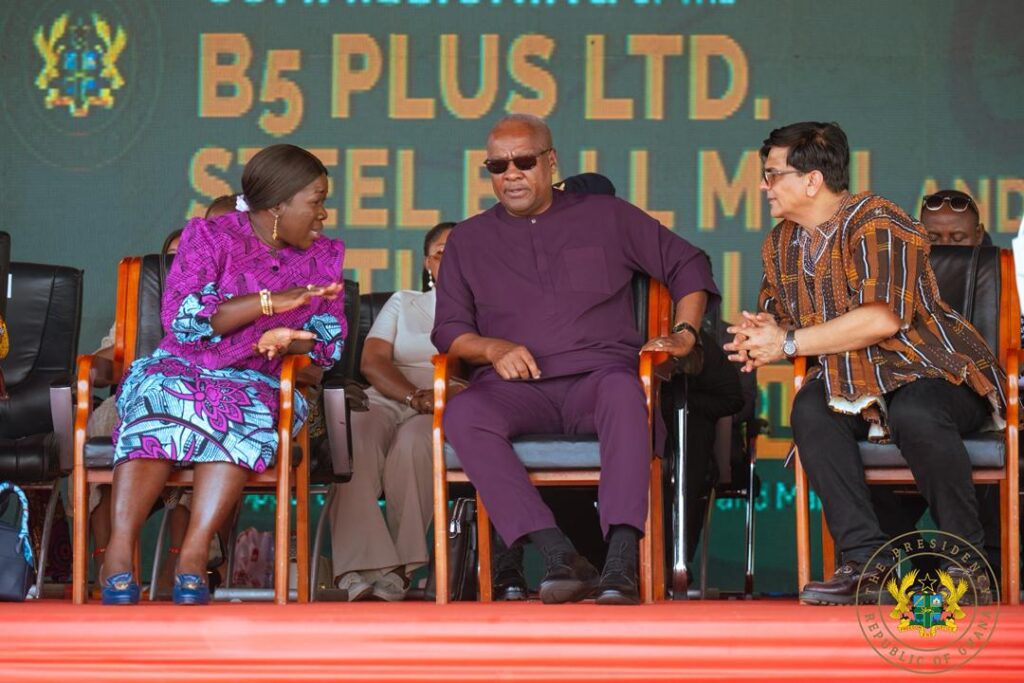
A key highlight of the commissioning was the integration of the plant into the 24-Hour Economy initiative. The President emphasized that energy-intensive industries like steel manufacturing are the ideal candidates for this three-shift model.
“The 24-hour economy programme is particularly relevant to energy-intensive industries such as steel manufacturing, and I know B5 Plus Group will be one of the first companies to register under the initiative”
President John Dramani Mahama
By operating around the clock, B5 Plus will “maximize productivity, reduce energy waste during peak hours,” and significantly lower the unit cost of steel for the Ghanaian consumer. President Mahama noted that the government is providing specific fiscal incentives for companies that embrace the 24-hour production cycle to ensure they remain competitive.
This shift is expected to revolutionize how manufacturing is handled in Ningo-Prampram.
With the 24-Hour Economy, the factory will no longer go dark at sunset; instead, it will become a beacon of continuous productivity, providing stable, high-paying jobs for workers across multiple shifts. This model is seen as the only way to meet the burgeoning demand of the AfCFTA market, where speed and volume are the primary currencies of success.
Achieving Industrial Sovereignty
The economic mathematics behind the expansion are staggering. President Mahama pointed out that Ghana’s annual steel demand now exceeds 1.2 million metric tons. Historically, meeting this demand required massive outflows of foreign exchange, putting immense pressure on the Cedi.
However, the new facility is projected to slash steel imports by 20% to 30% annually, saving the nation hundreds of millions of dollars in the process. “This is what industrial sovereignty is about,” he added.
This “industrial sovereignty,” ensures that the profits from Ghana’s infrastructure and mining boom remain within the country, strengthening the national reserve. The President underscored that every girder produced at Lɛpleku is a blow against dependency, allowing Ghana to dictate its own developmental pace without being held hostage by global shipping disruptions or currency fluctuations.
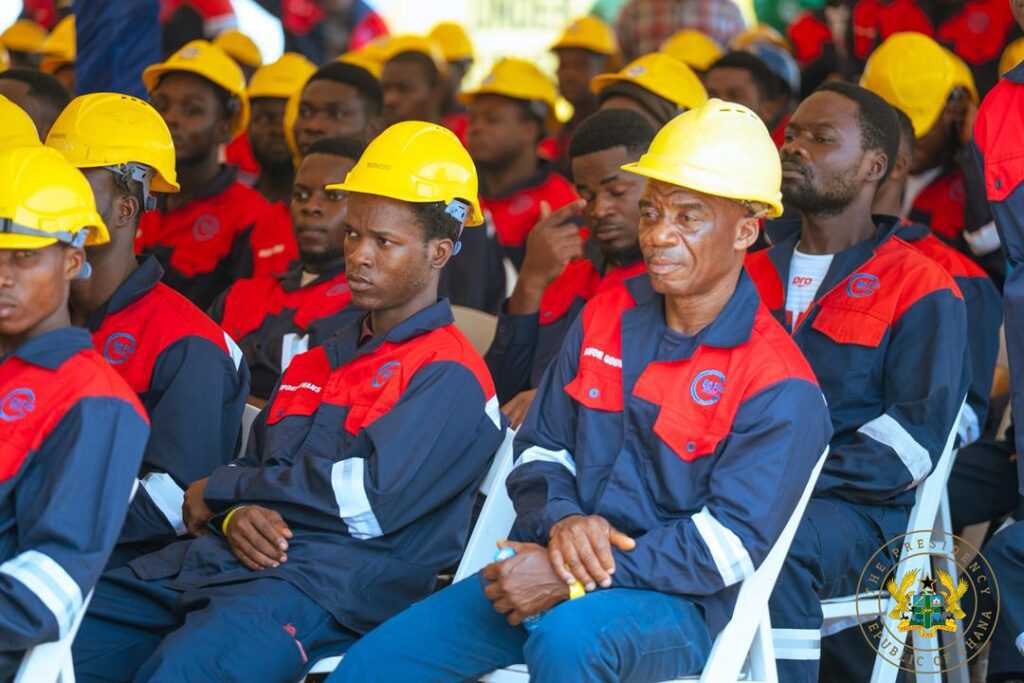
The Phase Two expansion is also a massive job engine. The project is expected to create between 5,000 and 10,000 direct and indirect jobs. Beyond factory-floor roles, the plant generates high-value opportunities for Ghanaian engineers, logistics experts, and transport entrepreneurs.
Furthermore, the production of grinding media balls – essential consumables for the mining industry – strengthens the linkages between the manufacturing and extractive sectors.
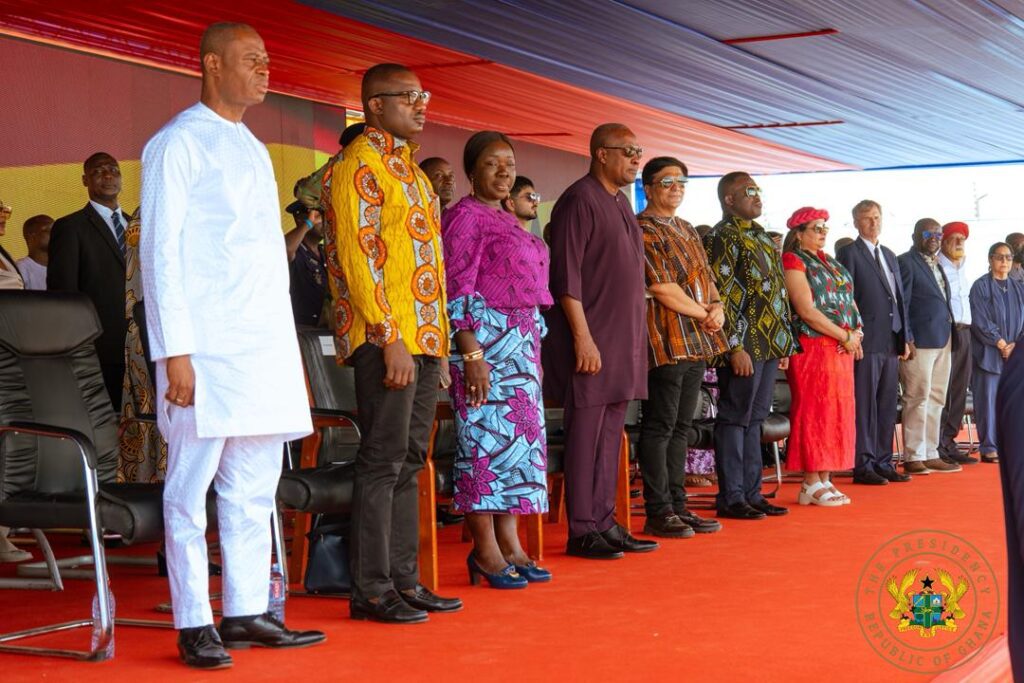
The CEO of B5 Plus Group, Mr. Mukesh V. Thakwani, was commended by the president for his “unwavering confidence,” in the Ghanaian economy. Under his leadership, the company has already contributed over $300 million in taxes to the state, a figure expected to rise sharply following this expansion.
The plant now produces pre-engineered building (PEB) systems and heavy industrial structures, including tankers and trailers, which were previously imported at a premium. By cutting the ribbon, President Mahama’s message to the sub-region was “Ghana is no longer just a consumer of steel – it is now the foundry of West Africa.”
The Lɛpleku facility stands as a monument to value addition, proving that with the right partnership between the state and private investors, the “Made in Ghana” label can compete with any global standard.
READ ALSO: ACEP Partners NEPAD to Leverage Africa’s Mineral Resources