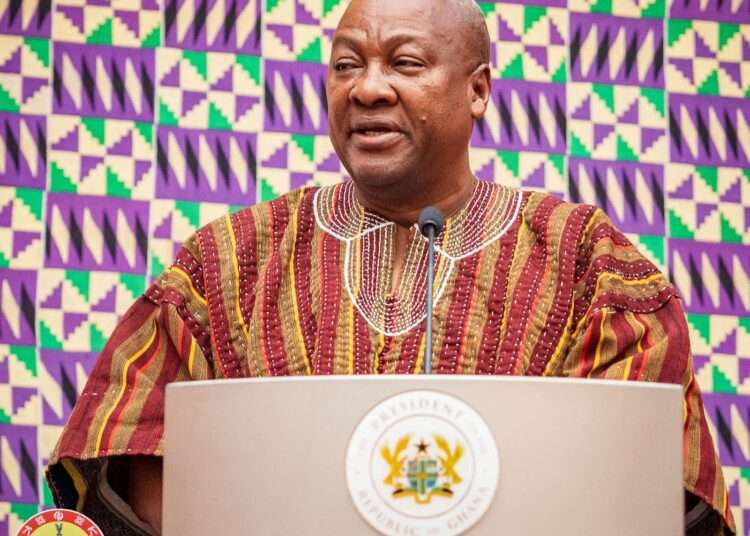
Parliament of Ghana has confirmed that President John Dramani Mahama will deliver the 2026 State of the Nation Address on Friday, February 27, in accordance with Article 67 of the 1992 Constitution.
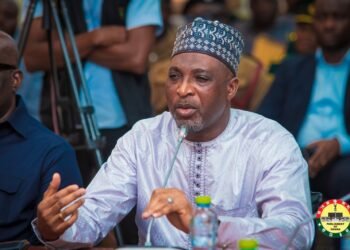
The announcement was made by the Majority Leader and Chairman of the Business Committee, Hon. Mahama Ayariga, during the presentation of the Business Statement for the fourth week of parliamentary sittings.
Addressing the House, Hon. Ayariga informed Members that the President’s appearance before Parliament had been formally scheduled and that preparations were underway to ensure a smooth and orderly sitting.
He emphasised that the address remains a central constitutional obligation and one of the most important engagements between the Executive and the Legislature each year.
In anticipation of the President’s address, Parliament will adjust its sitting schedule for the week. Hon. Ayariga explained that the House will commence sitting earlier than usual on Thursday, February 26, starting at 10:00 a.m.
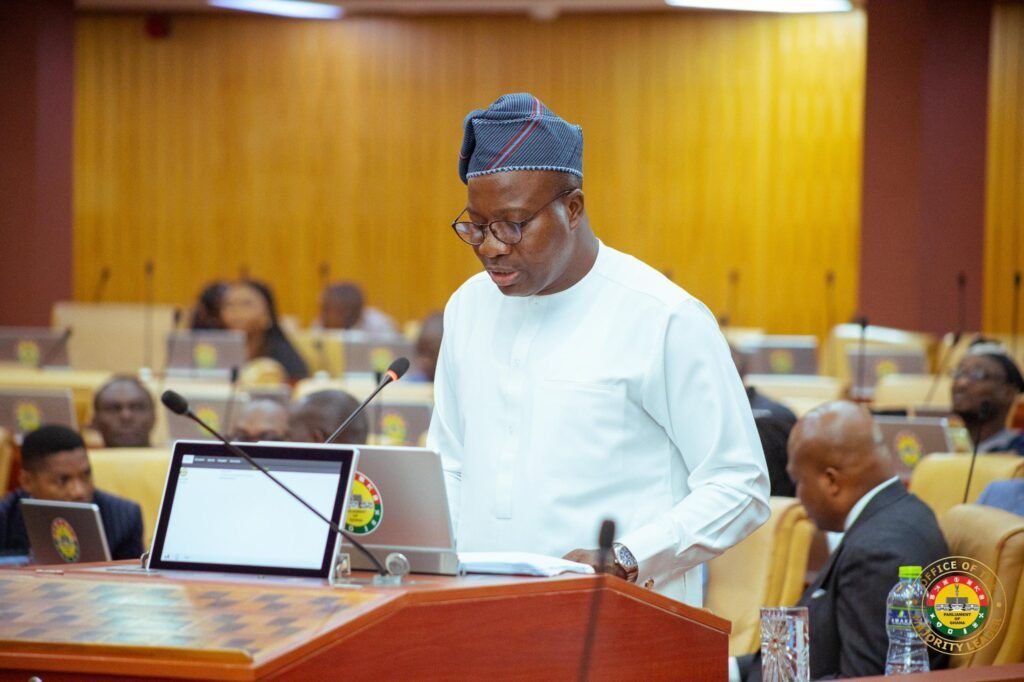
This adjustment is intended to allow the House to adjourn early and complete logistical and security preparations ahead of the presidential address on Friday. He further reminded Members that parliamentary convention requires punctuality during sittings of national importance.
Members were therefore urged to be seated on time on the day of the address to uphold decorum and ensure proceedings begin as scheduled. Such reminders, he noted, are consistent with long standing parliamentary practice whenever the President is expected to appear in the chamber.
Constitutional Basis of the Address
The State of the Nation Address is mandated under Article 67 of Ghana’s 1992 Constitution. The provision requires the President to deliver a message to Parliament on the state of the nation at the beginning of each session and before the dissolution of Parliament.
Over time, the address has become a key mechanism through which the President accounts for governance, outlines policy direction, and signals legislative priorities.
Beyond its constitutional requirement, the address serves as a national moment of reflection, drawing attention from policymakers, civil society, the private sector, and the general public. It sets the tone for executive legislative relations and frames national debate for the year ahead.
Expected Focus of the 2026 Address
President Mahama is expected to use the 2026 address to review government performance over the past year and outline key achievements and challenges that his administration has done.

The speech is also anticipated to present strategic plans for the coming year, particularly in areas relating to economic management, governance reforms, and social sector investment.
Ghanaians expect renewed emphasis on stabilisation efforts, policy implementation, and the pace of reforms initiated since the administration’s return to office. The address will likely highlight progress made and areas requiring further attention as the government transitions from recovery measures to longer-term development planning.
The upcoming address follows President Mahama’s first State of the Nation Address after his historic return to power, delivered on February 27, 2025. In that presentation, the President offered a candid assessment of the economy he inherited, stating that conditions were worse than initially anticipated.
He pledged a comprehensive reset aimed at restoring stability and rebuilding confidence in public institutions. Accountability featured prominently in that address, with the President providing updates on Operation Recover All the Loot, an initiative targeting the recovery of misappropriated state resources.
The programme was framed as a critical step toward strengthening public financial discipline and restoring trust in governance.
Key Policy Themes Previously Highlighted
Education was another major focus of the 2025 address. President Mahama committed to maintaining the Free Senior High School programme while directing attention toward improving basic education.
He announced intentions to review primary school curricula, stressing that strong foundations were essential to achieving better learning outcomes nationwide.
The President also outlined plans to expand Ghana’s digital infrastructure and align existing laws with emerging technologies such as artificial intelligence. These measures were presented as necessary to modernise the economy, enhance service delivery, and position the country competitively in a rapidly evolving global environment.
The State of the Nation Address follows a well established parliamentary protocol. On the day of the address, the President and Vice President are formally ushered into the chamber by the Speaker of Parliament after signing a visitor’s book.

The State Sword, symbolising presidential authority, traditionally precedes the President into the chamber. Seating arrangements also reflect parliamentary tradition, with the Majority side seated to the Speaker’s right and the Minority to the left. These conventions underscore the formality and symbolic significance of the occasion.
Following the address, it is customary for the opposition to present an alternative response, often described as a Genuine State of the Nation Address, offering a different assessment of national conditions and government performance.
As the date approaches, expectations are building around the content and tone of President Mahama’s address. For Parliament, the event represents a key moment of constitutional accountability. For the public, it offers an opportunity to assess whether the administration’s promises are translating into tangible outcomes.
With preparations underway and the schedule confirmed, Parliament is poised to once again serve as the national forum for the President’s assessment of Ghana’s state of affairs and the path ahead.
READ ALSO: Supreme Court Rules Against Trump’s Sweeping Tariffs