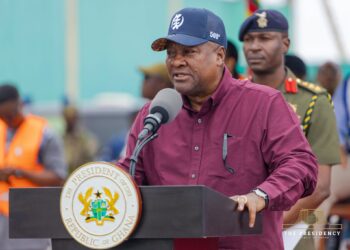
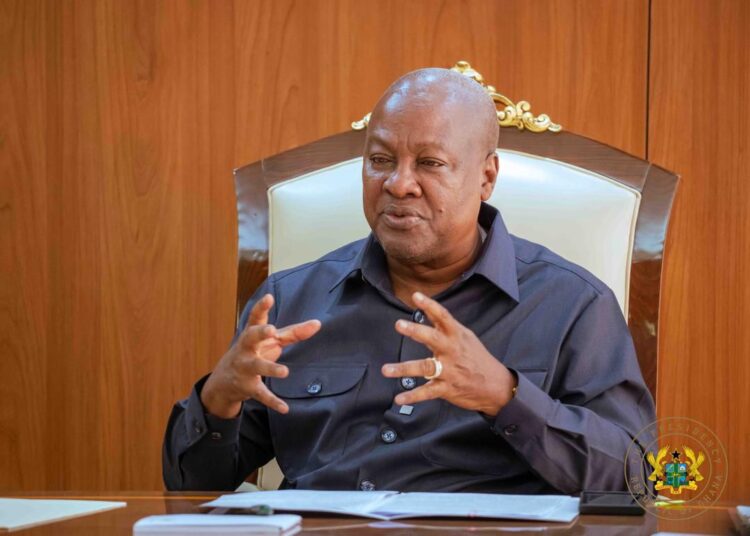
President John Dramani Mahama has ordered decisive action following revelations of a large scale transit diversion and revenue evasion scheme uncovered at Ghana’s borders.
The directive comes after the Customs Division of the Ghana Revenue Authority intercepted articulated trucks suspected to be abusing the transit regime under the guise of transporting goods to Niger.
According to Deputy Minister for Finance Thomas Nyarko Ampem, the President was visibly angered after being briefed on the matter and demanded immediate accountability.
The enforcement operation focused on trucks that had entered Ghana through Akanu and were declared as transit goods destined for Niger via Kulungugu.
Investigators discovered that the consignments were moving without the mandatory customs human escort, a breach of established transit protocols that immediately raised concerns about internal complicity and weak control systems at the borders.
“When we returned from the border, the President was waiting for us for feedback. He was so upset, and there is no way anybody involved in this is going to be treated with kid gloves.”
Deputy Minister for Finance Thomas Nyarko Ampem
Customs Enforcement and Alleged Complicity
The comment underscored the administration’s resolve to confront revenue leakages that undermine public finance and border security. Mr Ampem stressed that customs officers are entrusted with protecting national revenue and Ghana’s territorial integrity, making any compromise of that responsibility unacceptable.
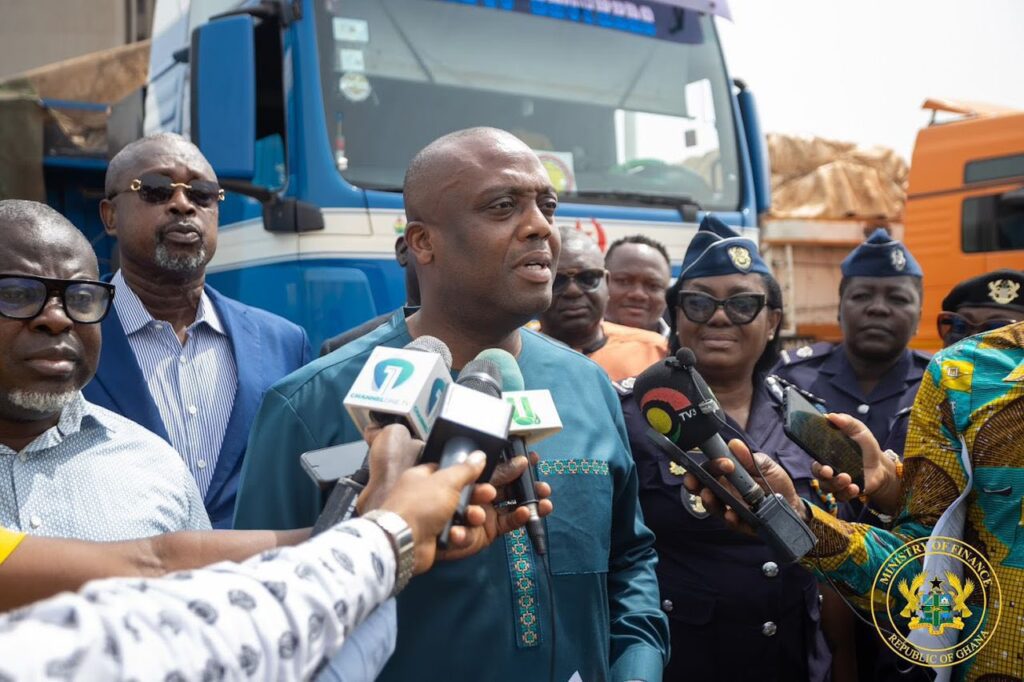
He said the government intends to send an unmistakable message that enforcement officers who collude with smugglers or clearing agents will face sanctions.
“We want to send a very strong signal that our customs officers have the responsibility to ensure revenue and protect our borders. So, they should not be complicit in this.”
Deputy Minister for Finance Thomas Nyarko Ampem
At the same time, the Deputy Minister was careful not to paint all customs officials with the same brush. He acknowledged that some officers played a crucial role in exposing the irregularities and assisting the enforcement team during the operation.
In the Deputy Minister for Finance’s words, “There are good ones who assisted us in this exercise. We want to reward good behaviours of customs officers and punish bad behaviours.” The operation, carried out last Wednesday night, led to the interception of eighteen articulated trucks declared as goods in transit to Niger.
Intelligence and field surveillance showed that the trucks were moving without the required customs escorts, despite having been released from the Akanu Border Post for transit through the Eastern Corridor with exit designated at Kulungugu under a specific bill of entry.
The declared cargo comprised 44,055 packages weighing a total of 879,860 kilograms. As of the latest update, twelve of the eighteen trucks have been impounded.
Eleven are secured at the Tema Transit Yard for detailed inspection, investigation, and legal processing, while one truck overturned while attempting to evade interception, spilling its cargo. The remaining six trucks are still being pursued by enforcement teams.
Initial assessments placed suspended duties and taxes on the cargo at GHS 2.6 million. However, further examination after interception revealed significant discrepancies in declared unit values, tariff classifications, and weights.

These findings dramatically changed the revenue picture. Revised estimates now put the suspended revenue exposure at over GHS 85 million, highlighting the scale of potential losses to the state.
Government Tightens the Net
Preliminary findings from the operation point to systemic control weaknesses and human complicity within the transit regime. In response, Finance Minister Dr Cassiel Ato Forson has directed the Ghana Revenue Authority to commence comprehensive investigations without delay.
He has also signalled that any customs officer found culpable will face prompt disciplinary action in line with the law. Criminal investigations are expected to extend beyond public officers to include importers and clearing agents where evidence supports prosecution.
Officials insist that the full rigours of the law will be applied, and that the impounded goods will be auctioned strictly in accordance with applicable legal procedures.
Beyond investigations, the government has announced immediate policy measures to prevent a recurrence of such abuse. All land transit of cooking oil has been prohibited, with affected consignments now required to pass exclusively through Ghana’s seaports.
Transactions originating from land collection points will also be subjected to enhanced monitoring and tracking, alongside stricter compliance enforcement.
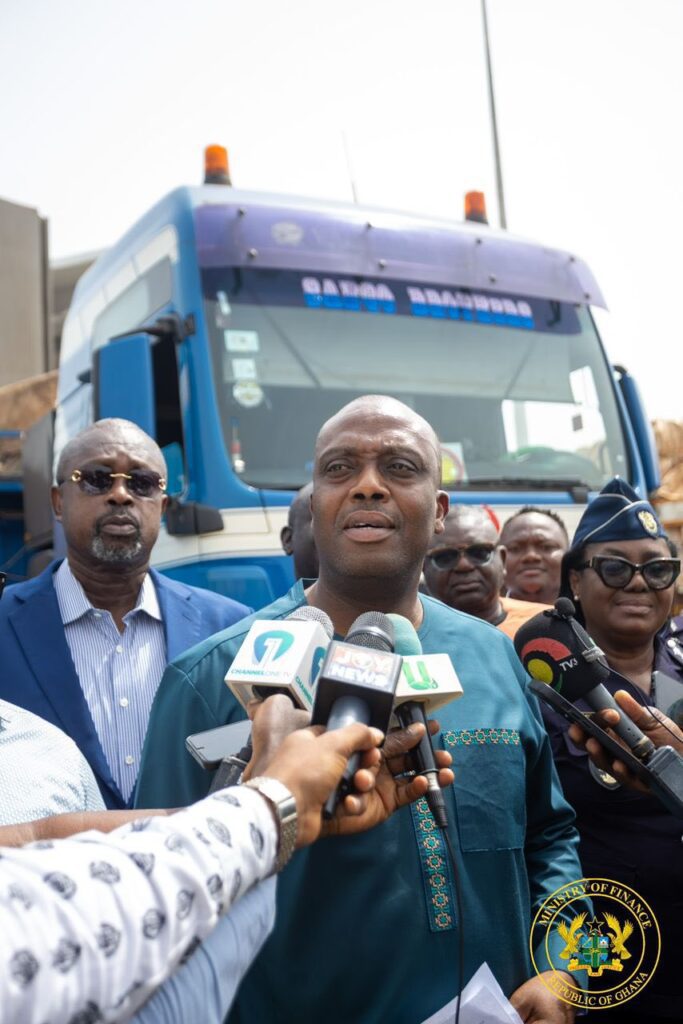
Mr Ampem said these measures reflect the administration’s determination to safeguard domestic revenue, protect local industry, and preserve jobs. He noted that customs regimes exist to facilitate trade, not to provide loopholes for revenue evasion and unfair competition.
Government officials argue that every cedi lost through such schemes weakens the state’s ability to fund national priorities, from infrastructure and social services to security.
As investigations continue, the Mahama administration is signalling that restoring integrity at the borders is central to its broader economic and governance agenda.
READ ALSO: From Crisis to Stability: Ghana’s Broad-Based Macroeconomic Turnaround