Ghana fuel stock remains sufficient to power the economy for several weeks despite growing global uncertainty triggered by escalating tensions in the Middle East, the National Petroleum Authority (NPA) has announced.
The Director of Economic Regulation and Planning at the NPA, Abass Ibrahim Tasunti assured, as concerns mount worldwide over potential disruptions to crude oil supply and rising international prices following recent attacks involving Iran and regional actors.
“As of Friday, Feb 27, Ghana has petroleum products in the country that will last more than, for almost 6 and 7 weeks for petrol and diesel, diesel and petrol respectively.”
Abass Ibrahim Tasunti, Director of Economic Regulation and Planning at the NPA
Adequate Stocks Despite Global Uncertainty

Speaking on the situation, Abass acknowledged that global developments naturally raise concerns among consumers and industry stakeholders.
“So, definitely with such a war happening and the impact it has on the global oil market, consumers and oil stakeholders will be concerned about whether Ghana will be affected.”
Abass Ibrahim Tasunti, Director of Economic Regulation and Planning at the NPA
However, he emphasized that Ghana’s fuel security strategy is not reactive but part of a long-standing system designed to cushion the country from global shocks.
“For a country like Ghana, which is a net importer, even without this war, we always ensure that we have a plan to make petroleum products available for consumers in the country.
“And so, this is not something that is being done because of the war, but it’s something we do regularly.”
Abass Ibrahim Tasunti, Director of Economic Regulation and Planning at the NPA
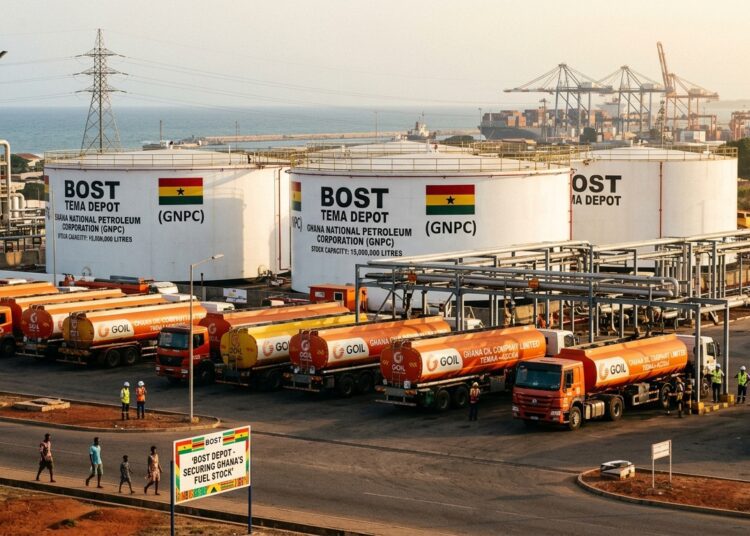
According to the NPA’s latest monitoring data as of Friday, petrol stocks can last approximately 6.8 weeks, while diesel stocks stand at about 5.3 weeks.
Continuous Imports and Daily Discharge
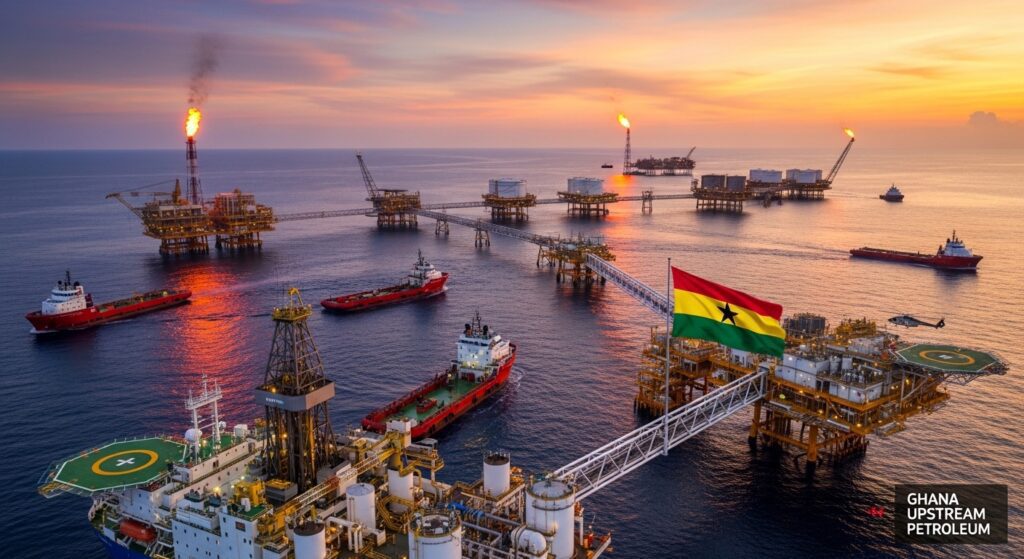
Mr. Tasunti clarified that the reported stock levels do not imply that Ghana has halted imports. On the contrary, fuel cargoes continue to arrive and discharge regularly at the ports.
“But just to add that this does not mean that we don’t have imports coming in.
“We discharge petroleum products almost every day in this country.”
Abass Ibrahim Tasunti, Director of Economic Regulation and Planning at the NPA
He revealed that between two and four vessels are currently anchored at the Tema Port awaiting discharge. These include two cargoes of diesel and two cargoes of petrol, with additional shipments scheduled to arrive in the coming days.
This steady inflow forms part of a structured import plan designed to prevent supply gaps and stabilize the domestic market even when global supply chains experience turbulence.
Local Production Strengthens Supply
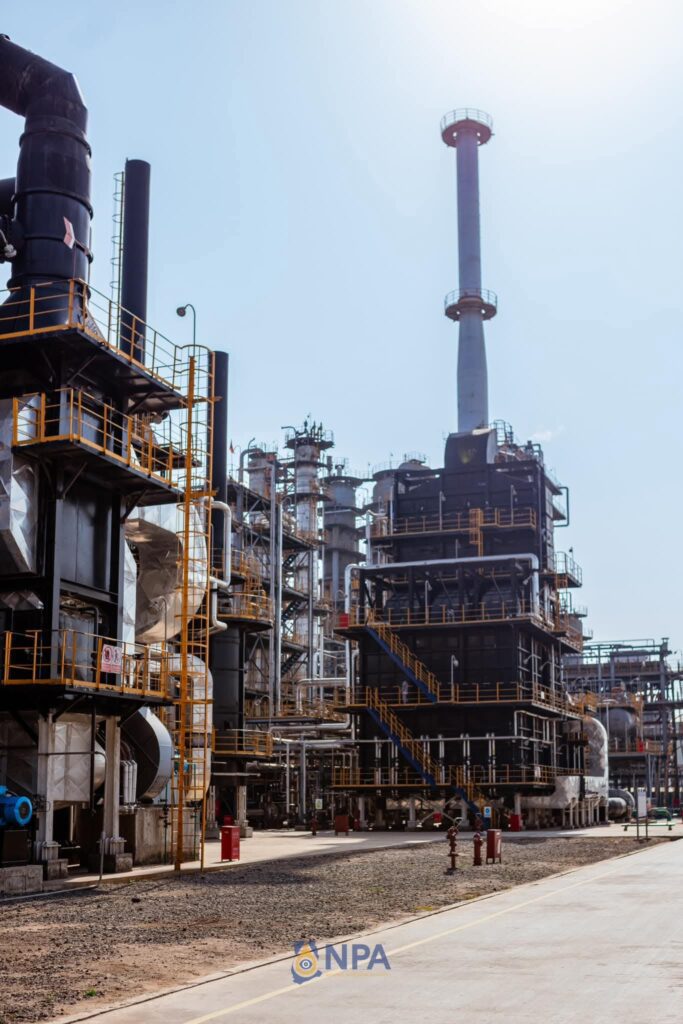
Beyond imports, local production is also playing a key role in maintaining Ghana fuel stock levels. The Sentuo oil refinery has been operating consistently since June 2025, contributing refined products to the domestic market on a daily basis.
Additionally, the Atuabo Gas Processing Plant continues to supply liquefied petroleum gas (LPG) to consumers. “The gas processing plant is also producing and putting LPG on the markets,” he added.
The combination of local production and imports ensures that stocks remain replenished even as consumption continues. Mr. Tasunti explained that the figures provided represent in-tank stocks, meaning fuel physically available within the country’s storage facilities.
The NPA’s reassurance comes at a time when international oil markets are reacting to geopolitical tensions, raising fears of potential price hikes.
While Ghana cannot fully insulate itself from global price fluctuations due to its import dependence, authorities insist that supply stability is firmly under control.
The regulator’s proactive communication aims to prevent panic buying, hoarding, or artificial shortages that sometimes follow global crises.
Monitoring Global Developments

Although supply remains stable, the NPA says it continues to monitor global market developments closely. Escalating conflict in the Middle East has historically led to oil price volatility, affecting import bills and domestic pump prices.
Still, Mr. Tasunti stressed that ensuring product availability remains one of the Authority’s core mandates. “It’s one of NPA’s major mandates to ensure that petroleum products are always available,” he reiterated.
For now, Ghana fuel stock levels appear robust enough to withstand short-term external shocks. With nearly seven weeks of petrol and over five weeks of diesel in reserve, alongside continuous imports and steady local production, the country’s energy supply chain remains intact despite global uncertainty.
As tensions abroad continue to unfold, the NPA’s assurance provides a measure of stability for Ghana’s economy, which depends heavily on uninterrupted fuel supply for transportation, industry, and power generation.