UK Prime Minister,Sir Keir Starmer and US President, Donald Trump have discussed the urgent need to reopen the Strait of Hormuz during a high-level call focused on the escalating conflict in the Middle East.
According to a Downing Street Spokesperson, the leaders “agreed that reopening the Strait of Hormuz was essential to ensure stability in the global energy market,” and have also “agreed to speak again soon.”
Earlier, United States President Donald Trump threatened to attack Iran’s power plants if freedom of navigation is not fully restored at the Strait of Hormuz, a dramatic escalation as the US-Israeli attacks on Iran continue.
“If Iran doesn’t FULLY OPEN, WITHOUT THREAT, the Strait of Hormuz, within 48 HOURS from this exact point in time, the United States of America will hit and obliterate their various POWER PLANTS, STARTING WITH THE BIGGEST ONE FIRST.”
Donald Trump
The statement came as Trump faces increasing pressure to secure the vital waterway whereas Iran has promised to keep it closed to “enemy ships,” leading to soaring oil prices and plunging stock markets.
Following Trump’s threat, the Iranian army said it would target all energy infrastructure belonging to the US in the region if Iran’s fuel and energy infrastructure were attacked.
Security Risks Disrupt Tanker Traffic in Hormuz
According to Arne Lohmann Rasmussen, chief analyst at Global Risk Management, the current environment has created a layered risk structure that is increasingly difficult for commercial shipping to sustain. He noted that ” You can be attacked or you can’t get insurance or it is extremely expensive, so you have to wait until the security situation is better.”
As a result, shipping companies are often forced to delay, reroute, or suspend transits entirely. While there is no formal closure or internationally declared blockade of the Strait of Hormuz, the operational reality is increasingly restrictive. No state has officially closed the waterway, yet persistent security threats and repeated maritime incidents have created conditions that discourage routine commercial navigation and disrupt predictable shipping schedules.
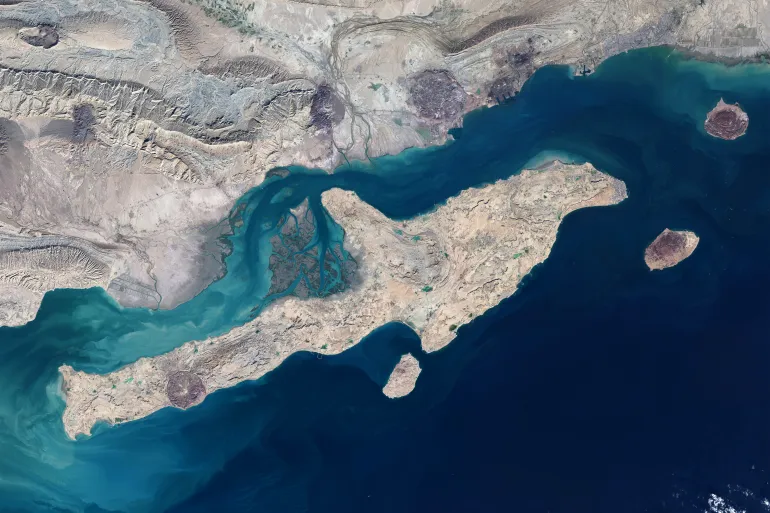
The Strait of Hormuz itself remains one of the world’s most important energy corridors. It is a narrow but deep maritime passage between Iran and Oman that accommodates the world’s largest oil tankers and serves as a primary export route for major Gulf energy producers. Its geography gives it out sized strategic importance: although physically limited in width, it handles a disproportionately large share of global energy trade, meaning even minor disruptions can have immediate international consequences.
Countries such as Saudi Arabia, Iraq, Kuwait, Qatar, and the United Arab Emirates rely heavily on this corridor to transport crude oil and liquefied natural gas (LNG) to global markets. As a result, even partial disruption in the Strait does not remain a regional issue; it rapidly translates into volatility in global energy prices, shipping costs, and supply chain stability.
Estimates from the US Energy Information Administration indicate that approximately 20 million barrels of oil and petroleum products pass through the Strait each day.
This represents a substantial share of global consumption and equates to hundreds of billions of dollars in annual energy trade. In addition to crude oil, the Strait is also a critical route for LNG exports, particularly from Qatar, one of the world’s largest suppliers of liquefied natural gas.
LNG is particularly significant in global energy systems due to its transport efficiency. By cooling natural gas to a liquid state, its volume is reduced by about 600 times, allowing it to be shipped over long distances in specialised tankers.
Once it reaches its destination, it is regasified for use in electricity generation, heating, and industrial applications. Disruption to LNG flows through the Strait therefore has immediate and far-reaching implications for energy security, particularly for countries that depend heavily on imports to meet domestic demand.
This has led to a noticeable reduction in tanker traffic, as shipping firms reassess routing decisions, delay voyages, or avoid the area altogether when insurance coverage becomes too costly or unavailable.
Analysts note that this creates a form of “financial blockade,” where trade is constrained not by physical barriers but by the cost and availability of risk coverage.
Against this backdrop, recent calls by US President Donald Trump urging allied nations and major global powers, including China and the United Kingdom, to help secure the Strait of Hormuz highlight the central role of the Strait of Hormuz in global stability.
READ ALSO : Trump Gives Iran 48 Hours To Reopen Strait Of Hormuz