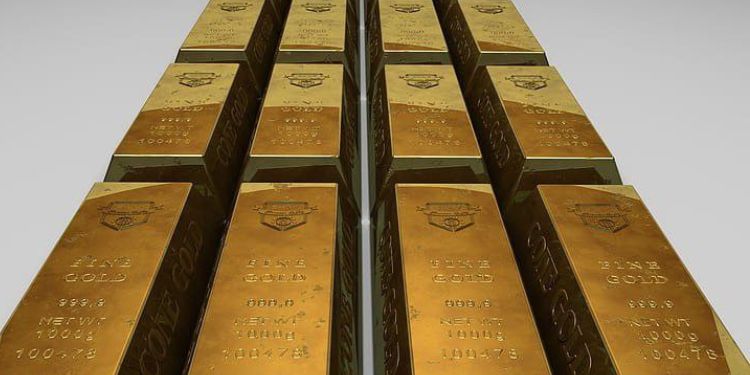
Gold prices have witnessed a historic retreat as the precious metal plunged 8% to approximately $4,100 per ounce, marking its most significant single-day decline and hitting a four-month low.
This dramatic sell-off was triggered by a complex interplay of escalating Middle East tensions and a surge in oil prices that shifted investor focus from safe-haven protection to the looming threat of a stagflationary shock.
While geopolitical unrest typically bolsters bullion, the current crisis in Iran has instead fueled aggressive inflation fears, leading market participants to brace for a “higher-for-longer” interest rate environment that diminishes the appeal of non-yielding assets.
“The metal initially plunged to its lowest level since January as surging oil prices and hawkish central bank signals shifted the market narrative toward a stagflationary shock. However gold trimmed early losses to trade higher as the potential for de-escalation eased the pressure on non-yielding assets from soaring Treasury yields.”
Trading Economics.

The volatility intensified as traders reacted to a high-stakes standoff involving the United States and Iran, which directly threatened global energy infrastructure.
President Donald Trump’s threats to strike Iranian power plants, coupled with Tehran’s warnings of retaliation against U.S. and Israeli assets, sent Brent crude oil soaring and decimated global risk appetite.
This energy spike prompted a hawkish shift in central bank signals, with the Federal Reserve now widely expected to consider rate hikes by year-end to combat persistent price pressures.
Although gold eventually trimmed some losses following a surprise announcement of a five-day pause in planned U.S. strikes, the “safe haven premium” remains fragile amid conflicting reports regarding control over the strategic Strait of Hormuz.
Economic Fallout for Gold-Dependent Nations
For major gold-producing and dependent economies, particularly in Africa and Central Asia, this 8% “rare squeeze” presents an immediate fiscal challenge.
Nations that rely on gold for a substantial portion of their export revenue are facing narrowed trade balances and a sudden contraction in mining royalties.
The rapid shift in sentiment highlights a dangerous vulnerability: while these nations often benefit during periods of global uncertainty, the current “liquidity moves” by central banks are creating a downward pressure that offsets the traditional geopolitical tailwinds.
Analysts suggest that the impact is twofold; while the spot price has dipped, the rising cost of energy a primary input in large-scale extraction is further eroding the profit margins of mining enterprises.
This pincer effect is stalling new exploration projects and forcing a re-evaluation of national budgets that were predicated on sustained record highs.
In many emerging markets, the resulting currency pressure is making it difficult for local central banks to manage their own domestic inflation, as the cost of imported goods rises alongside the weakening of their gold-backed reserves.
Forecast for Rebound and Market Resilience

Despite the current turbulence, the long-term outlook for the extractive sector remains cautiously optimistic as many analysts predict a robust price rebound.
Institutional research from J.P. Morgan and other major banks suggests that the fundamental driver’s geopolitical fragmentation, de-dollarization, and structural demand from central banks have not been permanently altered by this week’s correction.
Some forecasts even indicate that gold could push toward $5,000 or $6,000 per ounce by late 2026, provided that the current stagflationary fears eventually give way to a flight to safety once the interest rate peak is clearly defined.
For gold-dependent economies, the predicted recovery offers a path to fiscal stabilization.
The current slump is increasingly viewed as a “technical consolidation” rather than a breakdown of the bull market.
As the market navigates these “turbulent waters,” the resilience of physical demand and the strategic role of gold in central bank reserves are expected to provide a floor for prices.
Industry experts emphasized that while “volatility could continue in the coming weeks,” the intrinsic value of bullion as a hedge against long-term fiscal instability remains intact for the foreseeable future.
READ ALSO: UK Equips Solomon Islands to Tackle Marine Pollution