Iran has named Mohammad Bagher Zolghadr as the new Secretary of the Supreme National Security Council (SNSC).
Presidential Office Spokesman Mohammad Mehdi Tabatabaei reported that the Iranian President has decreed to appoint Mohammad Bagher Zolghadr as the new Secretary of the Supreme National Security Council. “With the endorsement of the Supreme Leader and the President’s decree, Mohammad Bagher Zolghadr has been appointed secretary of Iran’s Supreme National Security Council,” the official said in a statement on his X page.
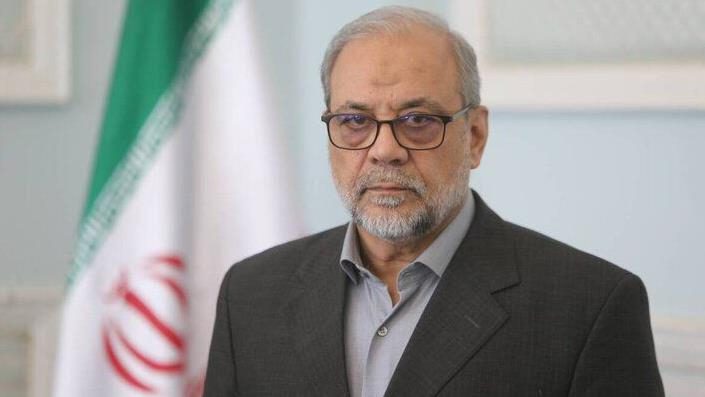
Zolghadr replaces Ali Larijani, who was assassinated last week. The change in leadership comes as Iran remains embroiled in ongoing conflict.
Ali Larijani, Zolghadr’s predecessor, was one of Iran’s most senior national security officials. A veteran politician, philosopher and former speaker of Iran’s parliament, Larijani had twice served as SNSC Secretary and was seen within Tehran as a figure with significant influence across political factions. He was killed in Tehran on March 17, 2026, during a series of targeted strikes against Iranian leadership.
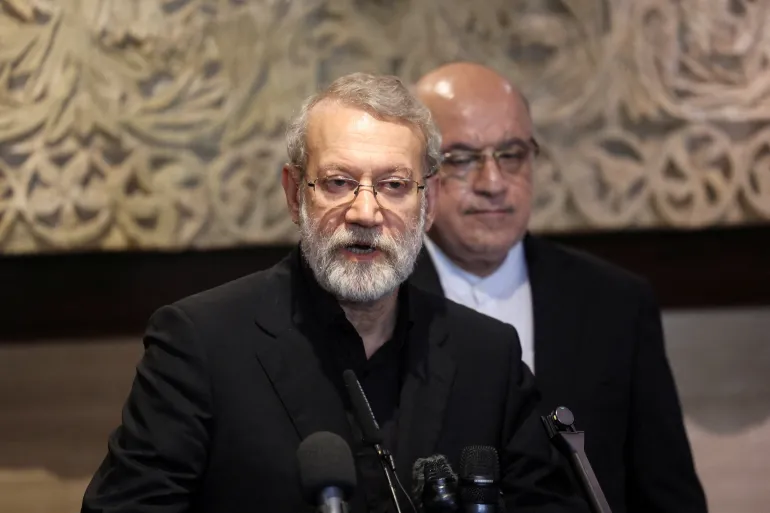
Larijani’s death removed a senior official who had, at times, been considered a mediator within Iran’s political landscape and a key figure in negotiating internal consensus. His absence creates a leadership gap that Tehran now seeks to fill with Zolghadr, whose security credentials are rooted in Iran’s military establishment rather than parliamentary or diplomatic experience.
Prior to being named the new Security Chief, Zolghadr was serving as the Secretary of the Expediency Discernment Council, a key body that advises Iran’s supreme leadership. Over the years, he has held several senior roles within the country’s political and security establishment.
Zolghadr has been an IRGC Commander and has served in several high-ranking government positions, including Deputy Chief of strategy in the judiciary for eight years until 2020. Zolghadr has served as the Chief of the Joint Staff of the IRGC, Deputy Commander in chief of the IRGC and the Deputy Chief of security and law enforcement at the Interior Ministry.
Zolghadr was born in 1954 in Fasa, near Shiraz, Pahlavi Iran. He pursued higher education at the University of Tehran, where he obtained a bachelor’s degree in economics from the Faculty of Economics prior to the 1979 Islamic Revolution.
Before the revolution, Zolghadr was associated with the Mansourun guerrilla group, an Islamist militant organisation active at the time.
Zolghadr co-headed the Islamic Revolutionary Guard Corps’ educational division in the 1980s. Later, he served as the Commander of the IRGC Irregular Warfare Headquarters. Zolghadr also served as the Deputy Commander of the IRGC.
In 2007, Zolghadr was appointed the Deputy Chief of general staff of the Iranian Armed Forces for Basij-related affairs. Zolghadr was appointed Deputy Chief of the Judiciary for strategic affairs on 14 May 2012, having previously served as the Chief Justice Sadeq Larijani’s advisor since 2010
Zolghadr has also authored Qesse-ye Ghorbat-e Gharbi or the Tale of Western Estrangement, published in 1381 (2002–2003) in Iran by Dowrye Aliye Jang. The work, written in Persian, is a short volume that engages with themes related to Western society and culture, framed through a critical and ideological lens.
Zolghadr’s wife, Sedigheh Begum Hejazi, has served as the director general of the Office of Women and Family Affairs. His son-in-law, Kazem Gharibabadi, is an envoy who represented Iran at the International Atomic Energy Agency (IAEA) and other global organisations.
Zolghadr’s Appointment Seen As Move To Ensure Continuity In National Security Policy
Zolghadr’s appointment is seen within Tehran as a move to ensure continuity in national security policy at a moment of sustained tension. His experience within the IRGC and longstanding service within Iran’s security framework will shape how he guides the council’s deliberations and manages coordination among senior officials.
In the new role, Zolghadr will head one of the most powerful institutions in Iran, responsible for shaping the country’s defence, nuclear, and foreign policy strategies.
Iran’s Supreme National Security Council is a constitutional body formed to define defense and security policies, coordinate cross-government strategic planning, and respond to internal and external threats under the broader guidance of the Supreme Leader. The President of Iran chairs the council, but the Secretary is responsible for organizing its work and coordinating policy implementation across the military, intelligence, and civilian sectors.
Analysts note that leadership transitions in Iran’s security hierarchy can reflect broader strategic priorities, particularly in an environment that Tehran has described as one of heightened external threat and complex geopolitical pressures.
Zolghadr’s tenure as Secretary will be closely watched by international observers seeking insight into Iran’s policy direction and its approach to the ongoing conflict.
READ ALSO: Secondary Market Activity Slows as Long-Term Bonds See Near-Zero Investor Interest