
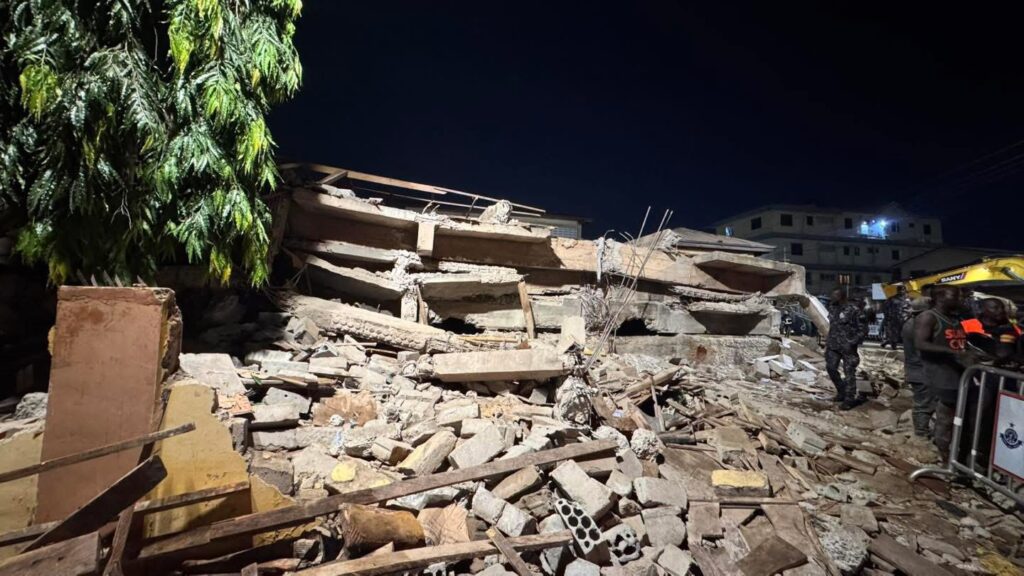
A four storey building collapse in Accra New Town has left three people dead and twenty others rescued following an intensive overnight operation by emergency services.
The incident, which has shaken residents and drawn national attention, prompted a coordinated response from multiple state agencies working to save lives and account for all victims.
Ghana’s Interior Minister, and MP for Asawaase Constituency Hon. Muntaka Mubarak Mohammed, confirmed the figures after what he described as a thorough and carefully verified rescue effort.
Authorities worked through the night, cross checking data from the police, ambulance service, fire service, and the National Disaster Management Organisation to ensure accuracy before releasing official numbers.
According to the Minister, a total of twenty three individuals were affected by the collapse. “We have put all the information together and what we can say is that there was a total of 23. Unfortunately, we have lost three,” he stated.
The deceased include one male and two females, all adults, while the remaining twenty survivors are currently receiving treatment in various medical facilities.
Survivors Receiving Treatment
The rescued victims have been distributed across several hospitals in Accra, including the Police Hospital, the 37 Military Hospital, Mamobi Polyclinic, and a private health facility. Authorities have indicated that many of the injured are responding well to treatment, with some already showing signs of recovery.
Despite this progress, medical teams have been instructed to exercise caution in discharging patients. The Minister explained that even those who appear stable are being closely monitored to prevent complications. This precautionary approach reflects the seriousness of injuries typically associated with structural collapses.
Among the twenty three victims, fourteen are females and eight are males, with seven identified as minors. Notably, none of the fatalities involved minors, a detail the Minister described as both relieving and tragic given the overall loss of life.
The rescue mission involved a combination of human effort and advanced search techniques. Emergency teams deployed police and military personnel, alongside canine units from both the police service and the Narcotics Control Commission. These dogs were used to scan the rubble for any remaining signs of life.
The Interior Minister commended the coordinated effort, noting that the teams worked methodically to ensure no victim was left behind. He added that based on the combined assessment of the rescue teams and canine units, authorities are about ninety to ninety five percent certain that no additional persons remain trapped under the debris.
This development suggests that the active rescue phase is nearing completion, although officials will continue clearing debris as a precautionary measure. The aim is to confirm the findings and prevent any overlooked casualties.
Community Effort and First Responders
Before the arrival of official rescue teams, local residents played a crucial role in the initial response. The Minister acknowledged the efforts of community members, often referred to as area boys, who quickly mobilized to assist victims trapped in the rubble.
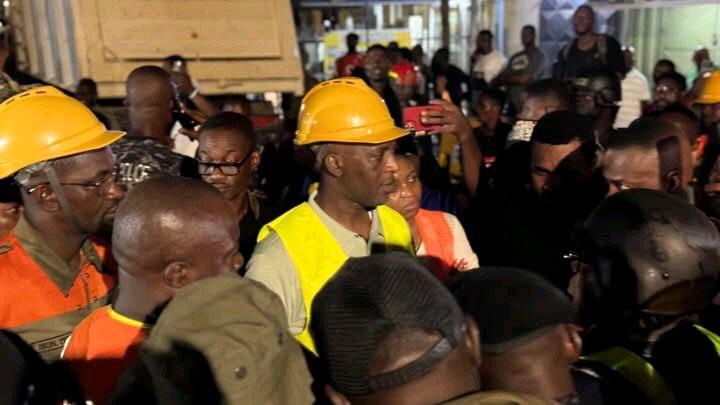
Their early intervention is believed to have contributed to saving lives in the critical moments following the collapse. Emergency services later took over the operation, bringing in specialized equipment and personnel to manage the situation.
The collaboration between residents and state agencies highlighted the importance of community response in disaster situations. The Minister also expressed appreciation to the media for their continuous coverage, which helped keep the public informed throughout the rescue efforts.
Questions Over Structural Safety
Preliminary information suggests that the building within the Accra New Town may have been flagged prior to the incident. According to the Minister, reports indicate that the municipal assembly had issued a warning against the use of the structure, possibly as recently as the previous week.
Despite this warning, the building was reportedly occupied at the time of the collapse, with some individuals believed to have gathered there for worship. This revelation raises serious concerns about enforcement of safety directives and compliance with building regulations.
While acknowledging these concerns, the Minister cautioned against assigning blame prematurely. He emphasized that the immediate priority remains supporting victims and ensuring public safety, rather than engaging in accusations.
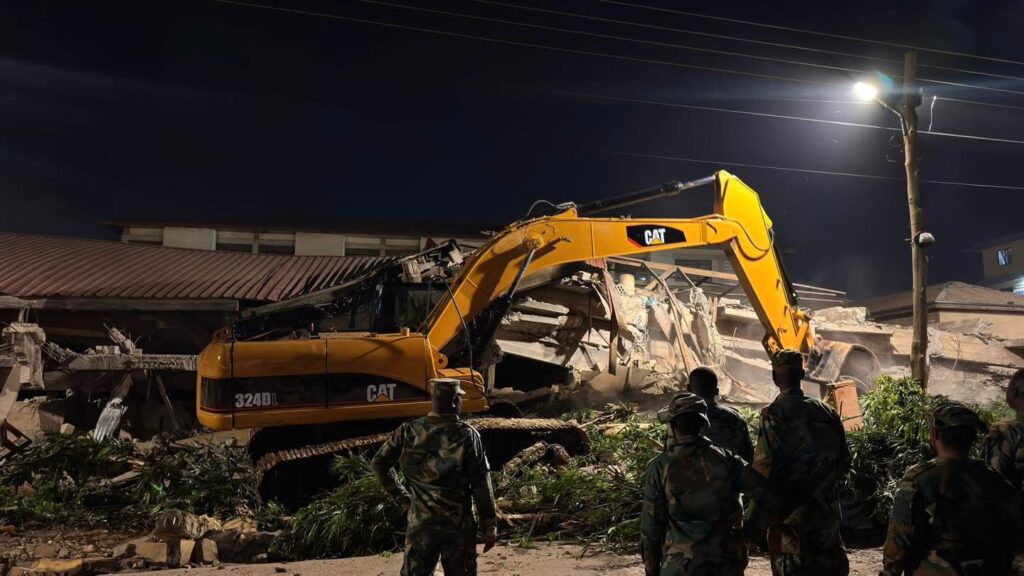
Authorities have announced plans for a full investigation into the cause of the collapse. The findings are expected to inform future measures aimed at preventing similar incidents. The Minister stressed the need to understand how the tragedy occurred and what steps can be taken to strengthen enforcement and compliance.
He also noted that the incident could have resulted in far greater casualties had it occurred on a weekday when nearby schools might have been in session. This perspective underscores the narrow margin by which a larger disaster was avoided.
As the nation reflects on the tragedy, the focus is shifting toward long term solutions. Strengthening building inspections, enforcing safety warnings, and improving emergency preparedness are likely to form key parts of the response going forward.
READ ALSO: US Warned Against Ground Invasion In Iran