

Ghana is tightening the rules around its petroleum sector while attempting to attract fresh upstream investment, reduce the foreign-exchange burden on local refining and impose stronger environmental controls on oil and gas operations.
The developments form part of a broader shift in Ghana’s energy policy: attracting capital to a maturing petroleum sector while making domestic energy infrastructure and environmental performance more sustainable.
A September 2026 energy and natural-resources review by TEMPLARS highlights three changes with particularly important implications for Ghana’s energy outlook, new methane requirements, plans for five additional petroleum agreements and a proposed change to how locally produced crude supplied to domestic refineries is paid for.
Fresh Upstream Investment Targets Declining Production
Ghana’s plans to conclude five new petroleum agreements between 2026 and early 2027 come at a critical point for the upstream industry.
The Ministry of Energy and Green Transition and the Petroleum Commission are reviewing petroleum legislation, policies and regulations before the proposed agreements are finalised, with the stated objective of improving the competitiveness of Ghana’s fiscal terms and reflecting changes in the industry.
The timing is significant.
Ghana’s major producing fields are ageing, making new investment increasingly important to maintaining production and replacing declining output.
New agreements could therefore provide a route to additional exploration, appraisal and development activity, but the commercial terms will ultimately determine whether investors commit capital.
The policy challenge is to make Ghana sufficiently competitive to attract investment without weakening the state’s ability to capture value from its petroleum resources.
This makes the review of fiscal terms particularly important. An agreement that attracts investment but delivers limited domestic value may not address the wider structural problem; conversely, terms that are too demanding could discourage capital at precisely the point when new discoveries and developments are needed.
Crude Payments Could Ease Refinery Forex Pressure
Another proposed change could have a more immediate connection to Ghana’s downstream energy system.
Government has directed the Ministry to review the payment arrangements governing crude supplied by Ghanaian producers to Tema Oil Refinery (TOR) and other domestic refineries.

Under the existing arrangement, local refineries are required to obtain US dollars to pay for domestically produced crude under the Petroleum Revenue Management Act. The proposed restructuring would allow such crude to be paid for in Ghana cedis.
“The proposed review would allow local refineries to pay for domestically supplied crude in Ghana cedis rather than US dollars, easing pressure on the local currency, reducing the refinery’s demand for foreign exchange, and potentially lowering transaction costs.”
TEMPLARS’ September 2026 Energy And Natural Resources Digest
For Ghana, the significance extends beyond the mechanics of a crude transaction.
A refinery buying domestic crude should, in principle, have a different foreign-exchange exposure from one importing crude or refined products.
Reducing the need to source dollars for locally produced crude could ease one layer of pressure on refinery financing and working capital.
However, the currency change alone would not make domestic refining commercially viable. Refinery economics would still depend on crude availability, processing efficiency, product yields, financing costs, infrastructure and the competitiveness of locally refined products.
Methane Rules Raise The Bar For Oil And Gas
Ghana is also introducing stronger environmental requirements for the petroleum industry.
The Environmental Protection Authority has issued guidelines covering the inspection, monitoring and reporting of fugitive methane emissions from upstream and midstream oil and gas operations.
The framework introduces requirements for leak detection and repair, emissions reporting, and controls on venting and flaring.
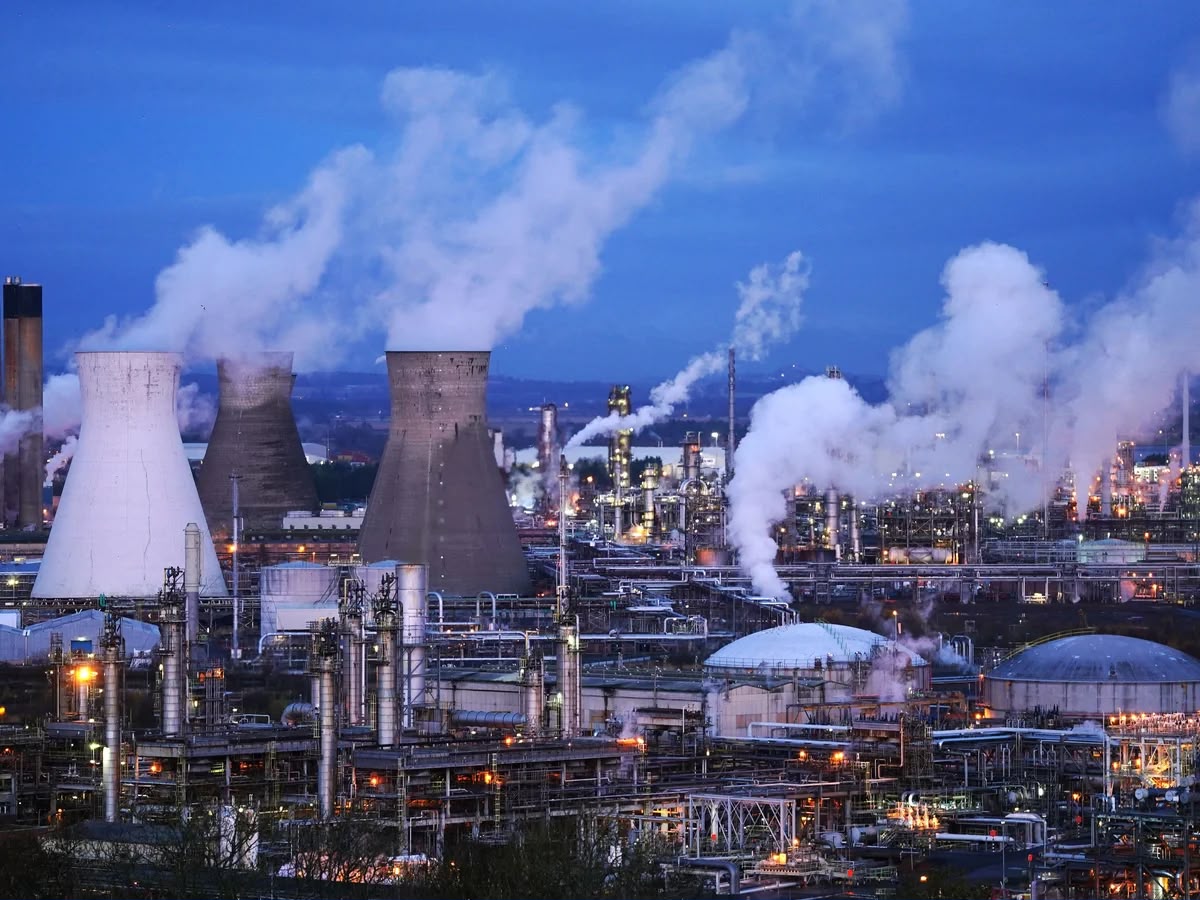
Companies must submit methane inspection plans within six months and complete their first leak-detection and repair inspection within the first year, with compliance increasing progressively over five years.
This matters economically as well as environmentally.
Methane is a potent greenhouse gas, but leaks also represent lost commercial gas. For an industry seeking to maximise domestic gas availability for power generation and industrial use, reducing avoidable losses can therefore have an energy-security dimension.
The new requirements could raise compliance costs for operators, particularly where additional monitoring equipment and leak-detection systems are required.
Over time, however, stronger measurement can give regulators and producers a clearer picture of how much gas is being lost and where operational improvements are possible.
Nigeria Offers A Different Investment Response
Nigeria is pursuing a related objective through a different policy instrument.
Its government has introduced a rules-based fiscal incentive framework for qualifying deep offshore oil and gas projects, replacing project-by-project negotiations with defined eligibility criteria. The framework is intended to unlock up to US$50 billion in deep offshore investment.
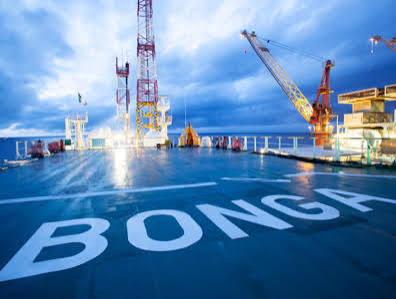
The Bonga South-West/Aparo project is among the first major developments being advanced under the framework. Its partners have executed contractual addenda and completed pre-FEED work, with the project expected to attract between US$15 billion and US$21 billion over its life and reach peak production of about 175,000 barrels of oil per day and 140 million standard cubic feet of gas per day.
Nigeria’s approach offers a relevant lesson for Ghana: investment terms increasingly have to provide enough certainty for companies to commit billions of dollars to long-cycle petroleum projects.
But Nigeria is also attaching domestic-content expectations, including greater in-country execution where commercially and technically feasible.
That is particularly relevant to Ghana as it seeks not merely to replace declining oil production, but to extract greater industrial value from its petroleum sector.
Ghana’s Next Energy Challenge Is Converting Reform Into Investment
Taken together, the changes suggest that Ghana is trying to address several weaknesses simultaneously: declining upstream production, limited domestic refining capacity, foreign-exchange exposure and environmental risks.
The success of that strategy will ultimately depend on implementation.
Five new petroleum agreements could expand the investment base, but exploration does not automatically translate into commercial discoveries.

A new crude-payment structure could reduce foreign-exchange pressure, but it cannot by itself resolve the technical and commercial challenges facing domestic refining.
Likewise, methane regulations can improve environmental performance, but their effectiveness will depend on enforcement and credible monitoring.
The emerging policy direction nevertheless points toward a more integrated energy strategy, attract new upstream capital, strengthen domestic processing, reduce avoidable foreign-exchange pressures and make existing petroleum operations more environmentally accountable.
For Ghana, that combination is increasingly important. With mature fields putting pressure on production, the country cannot rely indefinitely on its existing petroleum assets.
The next phase of the sector will be determined by whether regulatory reform can translate into new exploration, commercially viable discoveries, stronger domestic energy infrastructure and greater value retained within the Ghanaian economy.
READ ALSO: African Leaders Demands Continental Push to Halt Raw Mineral Exports