
Ghana has introduced a new regulatory framework aimed at tightening control over methane emissions from oil and gas operations, marking what industry observers describe as one of the country’s most important recent environmental interventions in the petroleum sector.
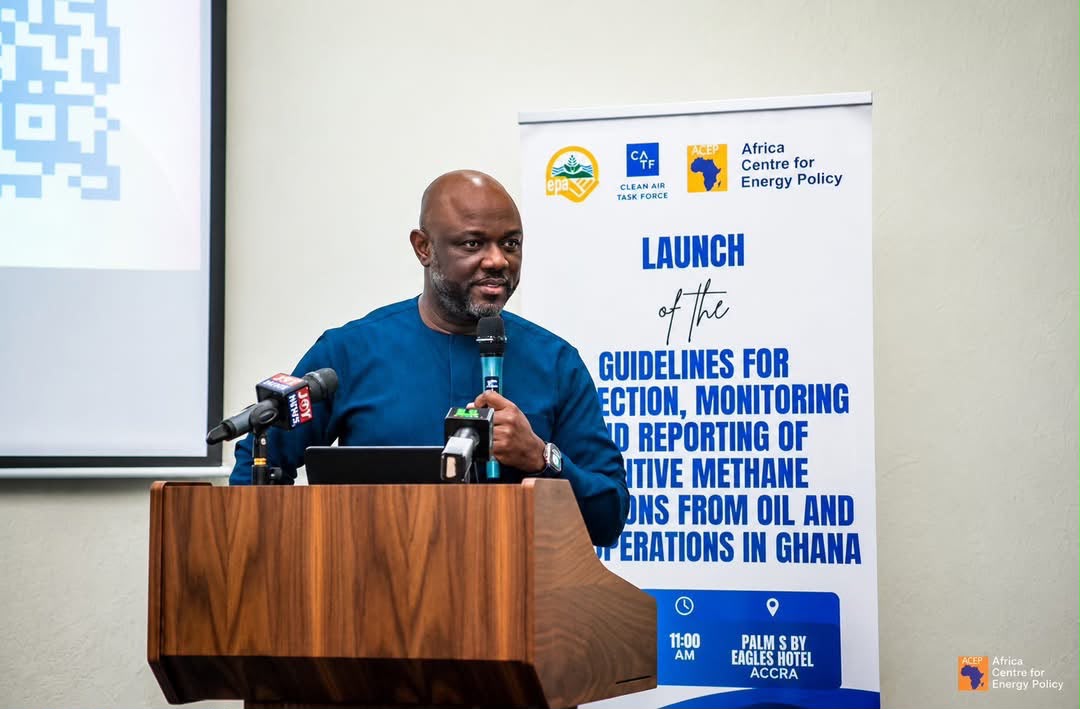
The Environmental Protection Authority (EPA) on Monday launched the Guidelines for Inspection, Monitoring, and Reporting of Fugitive Methane Emissions from Oil and Gas Operations in Ghana, establishing new expectations for how petroleum operators detect, measure, report and manage methane leaks across upstream and midstream facilities.
The launch, held at The Palms by Eagles (Holiday Inn) in Accra, brought together regulators, petroleum companies, civil society organisations, development partners and energy policy institutions.
The initiative is being implemented by the EPA in collaboration with the Clean Air Task Force, the Climate and Clean Air Coalition, and the Africa Centre for Energy Policy (ACEP).
A shift from broad climate goals to operational regulation
The new framework moves Ghana’s climate agenda from high-level commitments toward operational regulation inside the petroleum value chain.
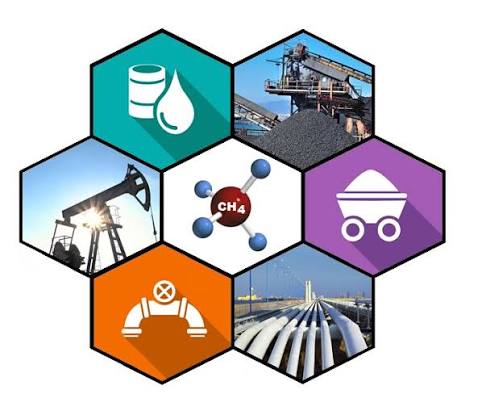
Methane is the principal component of natural gas and can escape through leaks, venting, equipment failures and other unintended emissions during production, processing, transportation and storage.

Although carbon dioxide receives greater public attention, methane has a far stronger warming effect over the short term, making its reduction one of the fastest available climate actions in the oil and gas sector.
The EPA said the guidelines are intended to create a clear national system for preventing, monitoring and controlling methane emissions rather than relying on fragmented company-level practices.
The purpose of this guideline is to establish the mechanisms and actions that operators must adopt to prevent, monitor, and control methane emissions from petroleum operations.
Environmental Protection Agency
Why the policy matters for Ghana
The timing is significant.
Ghana is simultaneously pursuing higher gas production, expanding gas use for power generation and seeking to attract new upstream investment.
That creates a policy tension: how to develop hydrocarbon resources while strengthening environmental performance.
The methane framework attempts to address that tension by positioning emissions management as part of modern petroleum governance rather than as an obstacle to investment.
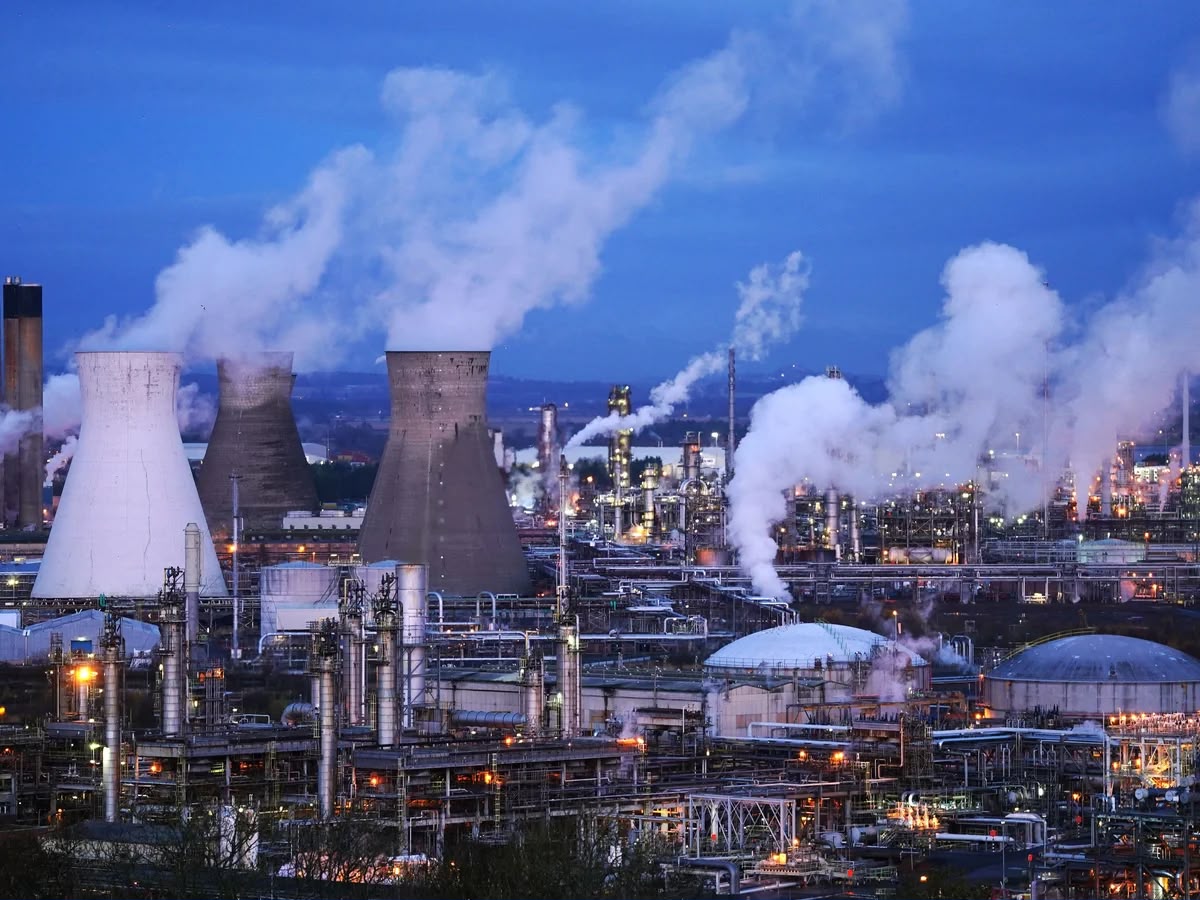
For Ghana, methane control has both environmental and economic dimensions.
Gas that leaks into the atmosphere is also lost product.
Reducing leaks can improve operational efficiency, increase the volume of gas available for domestic use or sale, and strengthen the economics of gas infrastructure.
That is particularly relevant as Ghana continues to emphasise gas as a transition fuel within its broader energy strategy.
ACEP highlights implementation support
The Africa Centre for Energy Policy said it would continue supporting implementation through stakeholder engagement and capacity-building programmes.
That support is important because effective methane regulation requires technical expertise, monitoring technology, data management and enforcement capability.
Many countries have adopted methane guidelines; fewer have developed the institutional capacity to verify emissions independently and ensure consistent compliance across operators.
The challenge is therefore not only writing the rules but building the systems that make the rules credible.
The investment signal
The launch also sends a message to international investors.
Global lenders, energy companies and development institutions are placing increasing emphasis on emissions management, environmental disclosure and operational transparency.

A stronger methane-regulation framework can help position Ghana as a jurisdiction seeking to align hydrocarbon development with evolving international environmental standards.
That does not guarantee investment, but it can reduce regulatory uncertainty around climate-related expectations.
The deeper question: can Ghana measure methane accurately?
The most important issue is measurement.
Globally, one of the biggest challenges in methane management has been the gap between reported emissions and actual emissions detected through advanced monitoring technologies.
The credibility of Ghana’s new framework will depend on the quality of inspections, the reliability of monitoring systems, the transparency of reporting and the willingness of regulators to verify operator data independently.
Without robust measurement, emission-reduction claims become difficult to assess and enforcement becomes largely procedural.
A broader African trend
Ghana’s move fits into a wider African and global trend.
Countries are increasingly focusing on methane because it offers relatively quick climate benefits while allowing continued use of natural gas during the transition to lower-carbon energy systems.

For many African economies, the debate is not simply whether to produce gas, but how to produce it with lower emissions and stronger environmental oversight.
In that context, methane regulation is becoming a test of institutional maturity.
What operators should expect
For petroleum companies, the new guidelines are likely to increase compliance obligations.
Operators can expect more structured inspection requirements, clearer reporting procedures and greater scrutiny of leak detection and repair practices.

The framework may also encourage investment in monitoring technologies, improved maintenance and more efficient gas handling systems.
While this could raise compliance costs in the short term, it may also improve operational performance and reduce product losses over time.
A learned assessment
The launch is a positive and overdue development.
Ghana’s energy debate has often focused heavily on renewable energy while giving less attention to emissions within the oil and gas value chain.
Yet methane management is one of the areas where targeted regulatory action can produce meaningful environmental benefits without requiring the immediate abandonment of natural gas.
The real test lies ahead.

If the guidelines are supported by independent inspections, reliable data, technical capacity and consistent enforcement, Ghana could strengthen both its environmental credibility and the efficiency of its gas industry.
If implementation is weak, the framework risks becoming another well-crafted regulatory document with limited impact on actual emissions.
The launch therefore represents more than an environmental event.
It is an early indicator of whether Ghana intends to build a petroleum sector that is not only commercially competitive, but also increasingly accountable for its climate and environmental footprint.
READ ALSO: GH¢13.79bn BoG Bill Sale Shakes Money Market