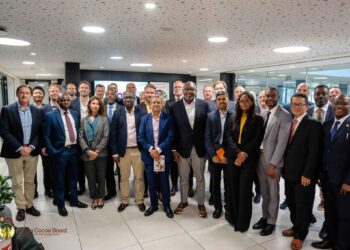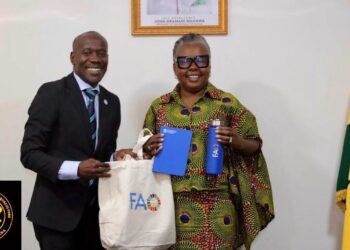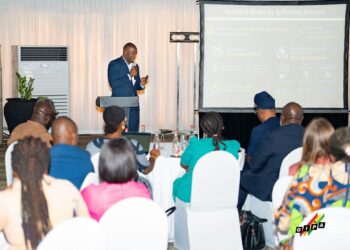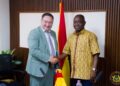
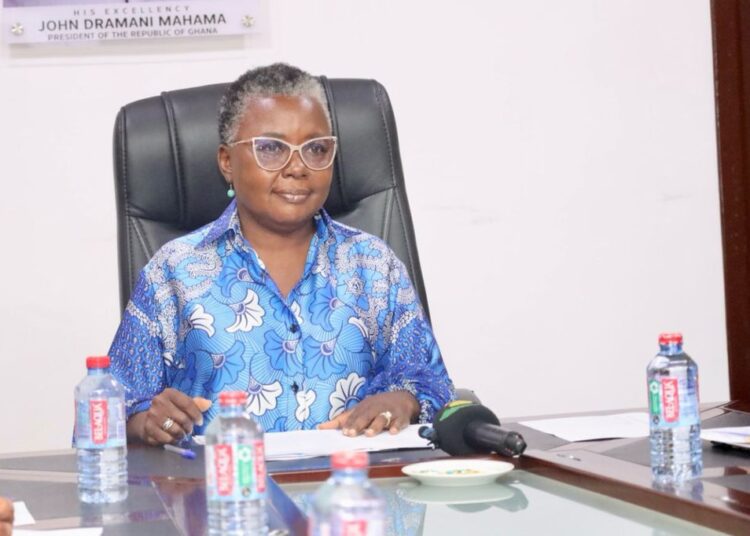
The Minister for Fisheries and Aquaculture Development, Hon. Emelia Arthur, has delivered a strong strategic endorsement of Liberia’s “Blue Horizon,” at the National Fisheries Investment Conference Liberia 2026 (KPONGAMA), acknowledging an overdue shift in the maritime landscape of West Africa.
Speaking to a delegation that included Liberian President Joseph Boakai, Hon. Arthur signaled that Ghana is no longer just a neighbor but a “fellow traveler,” in a regional transition designed to transform the Atlantic coastline into a primary engine for jobs, food security, and sustainable growth.
The conference, themed “Unlocking the Blue Horizon: The Future of Fisheries and the Blue Economy,” marked a decisive “declaration of intent,” for Liberia to move toward a coherent national Blue Economy – a model that Ghana has been refining since the passage of its own Fisheries and Aquaculture Act, 2025 (Act 1146).
“History teaches us that nations rise when they recognize the true value of their natural endowments – and Liberia has a lot of national endowments – and upon that recognition summon the courage to organize around them. This meeting is a sign of courage to organize around Liberia’s own natural resources”
Hon. Emelia Arthur, Minister for Fisheries and Aquaculture Development
Hon Arthur noted that for decades, the Gulf of Guinea has been characterized by isolated interventions and theoretical discussions regarding its vast marine resources.

“However, the KPONGAMA summit represents a readiness to change this reality,” she said, applauding Liberia’s new 10-year development plan for its fisheries sector and registering Ghana’s effective validation of a technical roadmap that prioritizes action over chance.
The Ghanaian endorsement was rooted in Liberia’s move away from the discovery of potential toward the “unlocking of assets,” as Hon. Emelia Arthur emphasized that the country’s vast marine resources and strategic Atlantic coastline are not new, but the clarity of vision being applied to them is.
She described it as a technical distinction that signifies a transition from subsistence-level fishing to a high-value blue economy characterized by industrial processing, scientific stock management, and regional policy alignment.
The Fisheries Minister added that Ghana’s own journey serves as the blueprint for this transition, from policy alignment, scientific evidence, stakeholder ownership, and political commitment.
She highlighted the presence of President Boakai at the conference, to signal to international investors that the “political commitment,” variable is now a constant in the Liberian market. This high-level buy-in is the primary de-risking mechanism for the private sector, ensuring that 10-year plans are not discarded during political cycles.
Regional Cooperation
Hon. Emelia Arthur noted that as West African nations face increasing pressure from illegal, unreported, and unregulated (IUU) fishing by foreign vessels, the push for regional cooperation is becoming an economic necessity.
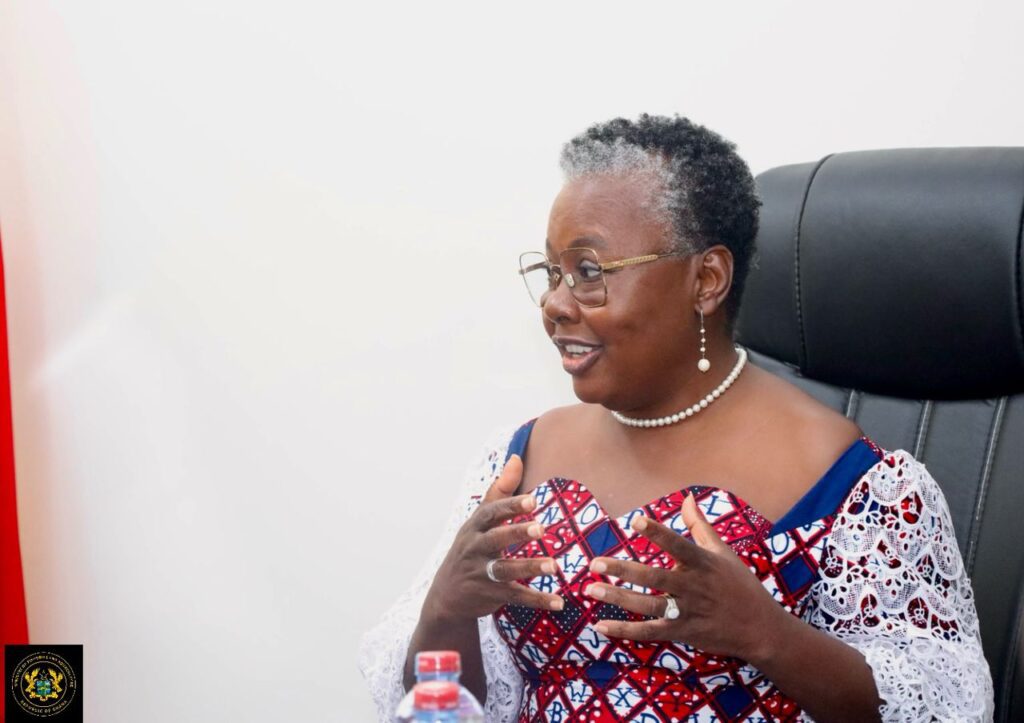
For the Ministry of Fisheries and Aquaculture Development (MoFAD), standing with Liberia underscores the need for a unified maritime front in the Gulf of Guinea. This regionalism is expected to harmonize regulations, making it harder for illicit actors to exploit the regulatory inconsistencies between neighboring coastal states.
Furthermore, the Minister’s focus on scientific evidence during her speech suggests a future where Ghana and Liberia share data on migratory fish stocks and water quality, since data is the most valuable commodity for sustainable growth in the 2026 trade climate. Without shared science, individual national plans are likely to fail as fish populations move across borders.
The KPONGAMA conference was therefore the first step toward an integrated West African Blue Economy, where the Atlantic coastline is managed as a single, strategic asset rather than a series of disconnected national zones.
“Liberia’s vast marine resources, rich inland waters and strategic Atlantic coastline are not new discoveries. What is new is the clarity of vision and the resolve to transform these assets into prosperity, sustainability and national resilience. This is what makes this moment significant.
“Liberia is not discovering its potential. Liberia is choosing to unlock its blue horizon. The blue economy is not the future of Africa. It is the present opportunity we can no longer afford to delay”
Hon. Emelia Arthur, Minister for Fisheries and Aquaculture Development
Ghana’s endorsement also touched on the critical need for stakeholder ownership, as the Fisheries Minister highlighted steps in the motherland’s last fiscal cycle focused on conducting extensive national consultations to bring government institutions, academia, and coastal stakeholders into the decision-making process for the sector.
Hon. Emelia Arthur urged Liberia to maintain this level of inclusivity, noting that top-down policies often fail to gain traction at the base – the small-scale fishermen and local processors who form the backbone of the sector.
For Liberia, the Kpongama declaration is ultimately about national resilience to transform marine assets into prosperity, following the “National Reset Agenda,” logic that has become prevalent in recent Ghanaian policy circles. This involves building a domestic value chain that includes cold-chain logistics, processing plants, and export-ready packaging facilities.
For Ghanaian businesses, this presents an opportunity for cross-border investment in Liberian waters, leveraging relations to create joint ventures in the West African Blue Economy. As the KPONGAMA 2026 conference concluded its opening sessions, the takeaway for the West African business community is one of strategic consolidation.
Ghana’s support for Liberia’s 10-year plan is a signal that the regional “Blue Economy,” is no longer an abstract ideal. It is a functional, investment-ready sector backed by the highest levels of political authority in both nations.