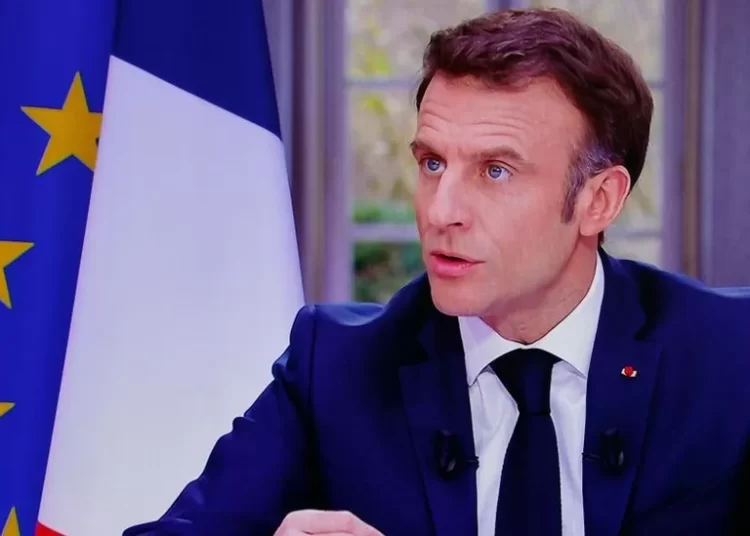
French President Emmanuel Macron and South Korean President Lee Jae Myung have agreed to work together to help reopen the Strait of Hormuz and ease global economic uncertainties caused by the war in the Middle East.
In a televised briefing after their meeting in Seoul, Macron underscored the need for France and South Korea to cooperate to help reopen the strait and de-escalate Middle East animosities.
Macron disclosed that the two sides had discussed the Middle East situation at length. “I believe we can do useful things to stabilize the situation in Hormuz, and more broadly once the bombardments have ceased,” he said.
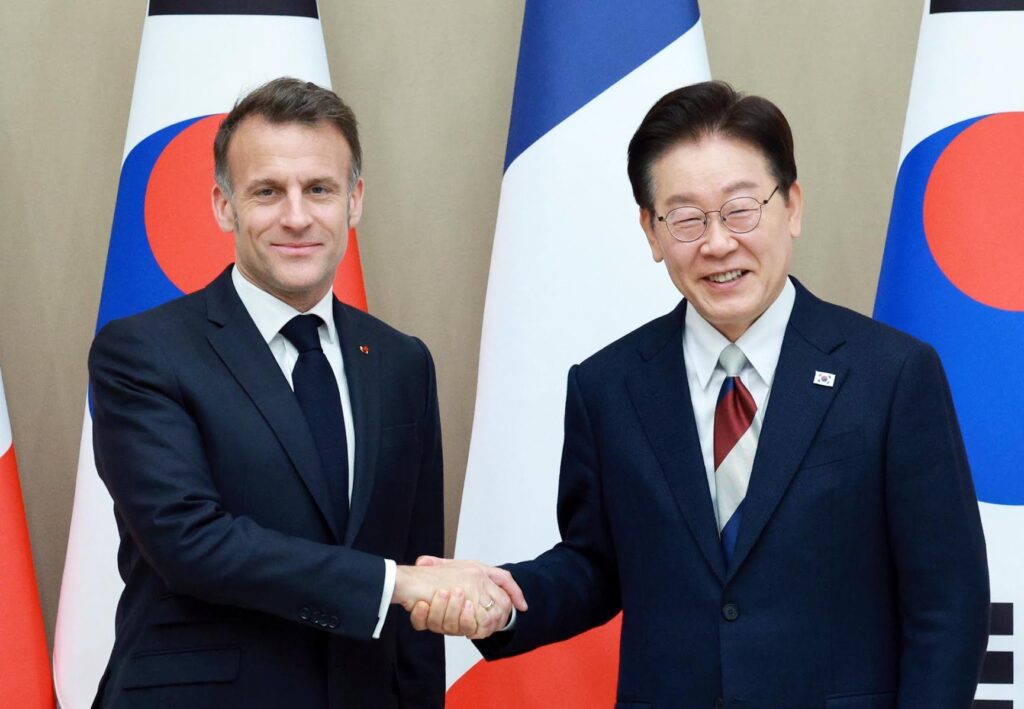
On his part, Lee said that the two affirmed “their resolves to cooperate to secure the safe shipping route in the Strait of Hormuz.”
“We agreed to share policy experiences and strategies to jointly respond to the economic and energy crisis caused by the Middle East war and to work together to resolve international economic uncertainty.”
Lee Jae Myung
The two leaders did not elaborate on how they would help reopen the strait and took no questions. This comes amid Macron’s first visit to South Korea since taking office in 2017.
Yesterday, the French President asserted that it would be unrealistic to launch a military operation to force open the Strait of Hormuz, after US President Donald Trump challenged allies to work towards reopening it.
“Some people defend the idea of freeing the Strait of Hormuz by force via a military operation, a position sometimes expressed by the United States, although it has varied.
“This was never the option we have supported because it is unrealistic. It would take forever, and would expose all those who go through the Strait to risks from the Revolutionary Guards but also ballistic missiles.”
Emmanuel Macron
Macron, who has worked with European and other allies to build a coalition to guarantee free passage through Hormuz once hostilities have stopped, said this could only be done by talking to Iran. “What we say from the beginning is that this strait must be reopened because it is strategic for energy flows, fertilisers and international trade, but that it can only be done in consultation with Iran,” he said.
Macron also commented on Trump’s criticism of NATO allies.
“I don’t want to provide a running commentary of an operation the Americans have decided on their own with Israel. They can deplore the fact they’re not being helped, but that’s not our operation. We want peace as soon as possible.
“This is not a show. We’re talking about war and peace… Let’s be serious and not say one day the opposite of what we said the day before.”
Emmanuel Macron
Meanwhile, Iran is reported to be in talks with Oman to jointly manage the Strait of Hormuz. The state-run news agency said that the discussions are to draft a “protocol” for the narrow waterway that is a lifeline for the global economy.
Iran and Oman sit on opposite sides of the strait where a fifth of the world’s oil and gas transits in peacetime. However, since the US-Israel war on Iran began on February 28, Iran has effectively blocked passage for most ships, except those from select countries that have negotiated deals with Tehran.
Little is known about the Iran-Oman protocol. It is also unclear whether or not a deal would be acceptable to other countries in the region and beyond. Other Gulf countries have recently insisted that they are included in any plan for the future of the Strait of Hormuz on which their energy exports depend.
Australia Criticises Iran Over Strait Of Hormuz Closure
Australian Foreign Minister, Penny Wong hit out at Iran over its closure in effect of the Strait of Hormuz.
Speaking after the UK convened a virtual meeting of 40 countries to discuss the blockage of the waterway, Wong said in a post on X that Tehran was hurting “communities worldwide, with the costs borne disproportionately by the most vulnerable.”
“The focus of last night’s meeting was diplomatic and civilian initiatives countries could pursue to make the Strait of Hormuz accessible and safe. Ministers agreed on the importance of continued coordination and collective action. Australia is not taking offensive action against Iran and we are not deploying troops on the ground in Iran.”
Penny Wong
Wong added that the Australian government continues to support de-escalation and the resolution of the ongoing conflict.
READ ALSO: Accra Mayor Offers GH₵500 Reward for Reporting Illegal Sanitation Activities