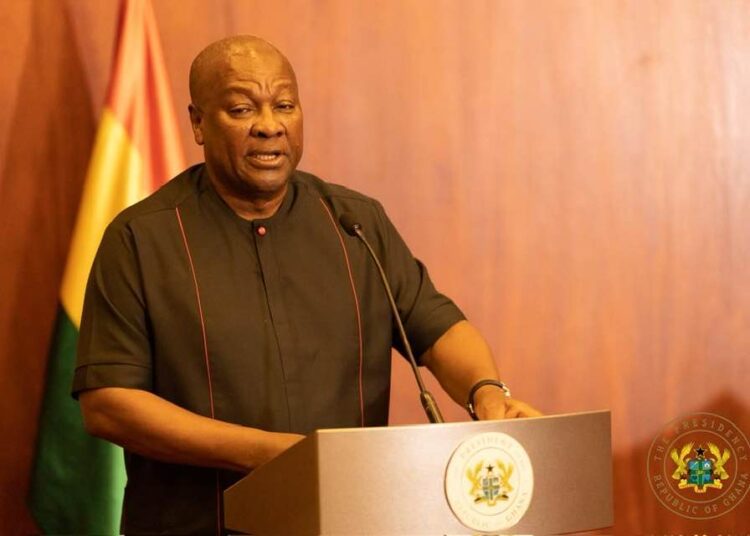
President John Dramani Mahama has confirmed that government will complete 35 hospitals under the Agenda 111 programme as part of a revised strategy to accelerate healthcare infrastructure delivery across Ghana.
He made the announcement during a courtesy visit by the Northern Regional House of Chiefs, where he outlined a shift in approach to the execution of the large scale hospital project initiated in previous years.
According to him, the original plan to construct 111 hospitals simultaneously was not the most efficient model, and a phased completion strategy is now being adopted to ensure value for money and timely delivery.
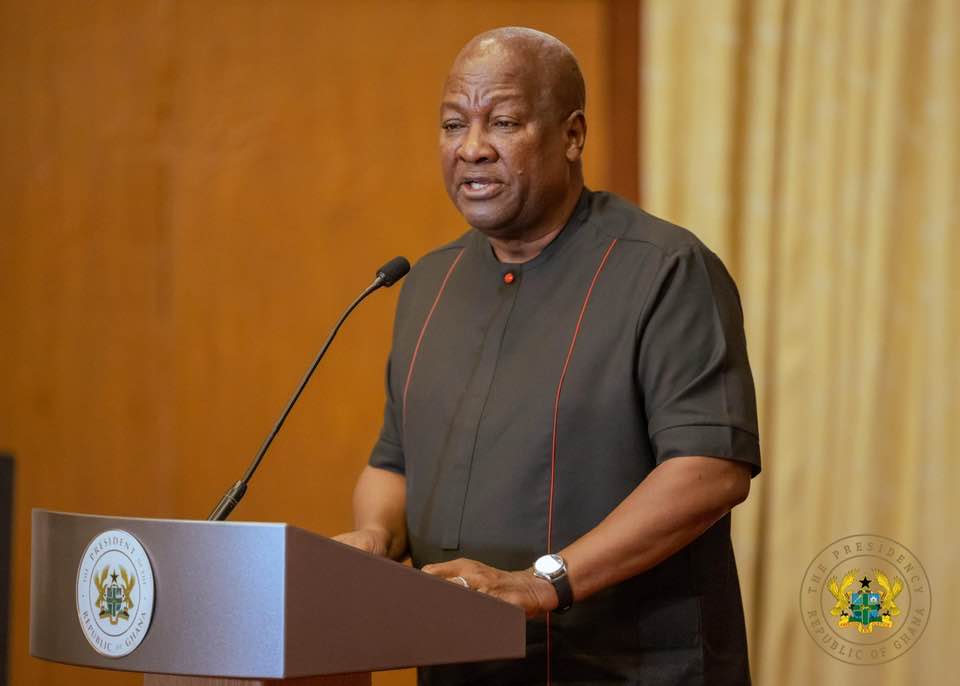
“With the Agenda 111 hospitals, I do not think it was a very prudent idea to start 111 hospitals at the same time. At least they should have been phased out”.
President John Dramani Mahama
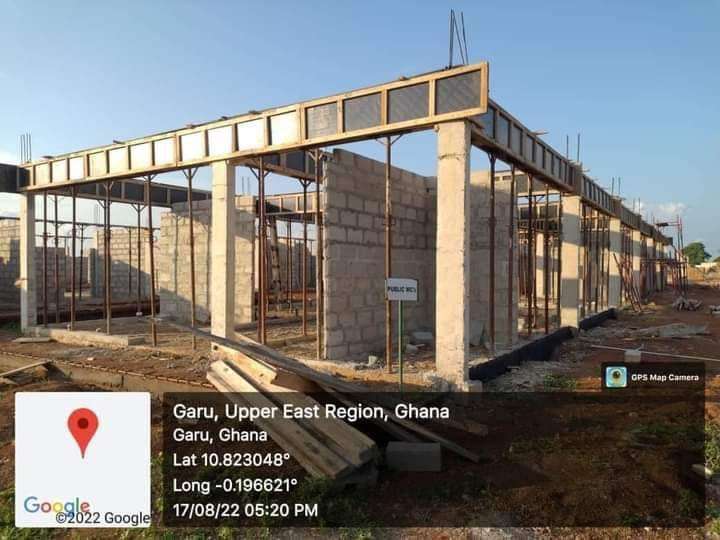
He explained that while some facilities remain at early construction stages, others have stalled entirely, with reports that mobilisation payments were made without contractors fully executing their obligations. “EOCO is going after them,” he said, referring to enforcement actions linked to the project delays.
Focus on Completing 35 Near-Finished Hospitals
President Mahama disclosed that government’s immediate priority is to complete 35 hospitals that are already at advanced stages of construction. Funding will be allocated within the current fiscal year to ensure these facilities are completed and made operational.
He added that subsequent budgets will provide for additional batches of hospitals to be completed in phases, rather than attempting simultaneous nationwide delivery.
The President explained that the new approach is designed to ensure that limited resources are concentrated on projects with the highest readiness levels, thereby reducing delays and improving healthcare access more quickly.
Faith-Based Organisations to Support Completion
As part of the revised strategy, government will engage faith based organisations to support the completion and management of selected hospital facilities under the programme.
President Mahama said many faith based health providers already operate hospitals efficiently and are well positioned to adopt and complete some of the unfinished facilities.
“We are inviting the faith-based organisations that run hospitals to adopt some of the hospitals that they think they can complete and bring into operation”.
President John Dramani Mahama
He noted that the collaboration will strengthen healthcare delivery while easing pressure on government resources and improving operational efficiency in underserved communities.
Cardiac Centre Planned for Northern Ghana
The President also announced plans to construct a new cardiac centre at the Tamale Teaching Hospital to address critical gaps in specialist healthcare services in the northern part of the country.
He noted that patients suffering from cardiovascular conditions in the five northern regions currently have to travel to Kumasi or Accra for treatment, often at significant financial and logistical cost.
“In the whole of the five northern regions, there is no cardio centre. So any persons who had strokes or heart attacks had to either come to Kumasi or Accra at great cost to themselves and their families”.
President John Dramani Mahama
The planned facility is expected to serve as a regional referral centre for cardiac care, improving emergency response and reducing pressure on southern health facilities.
Health Sector Reform and Accountability
Health sector oversight institutions, including the Ministry of Health led by Kwabena Mintah Akandoh, have previously confirmed ongoing progress on selected Agenda 111 projects, aligning with the government’s broader health infrastructure agenda.
President Mahama emphasized that the revised implementation framework will strengthen accountability and ensure that public funds are tied directly to project completion outcomes.
He noted that stalled and abandoned projects will continue to be investigated, particularly where funds were disbursed without corresponding work done on site.
The President’s remarks signal a shift from a simultaneous nationwide rollout model to a phased and targeted delivery system. Under this approach, priority will be given to projects that are closest to completion, while future budgets will support gradual expansion.
He said the goal is to ensure that infrastructure investments translate into functional healthcare services rather than unfinished structures scattered across the country.
The revised strategy is expected to shape the next phase of Ghana’s healthcare infrastructure development as government seeks to improve efficiency, expand access, and address long standing gaps in specialist care.