• About
  • Advertise
  • Privacy Policy
  • Contact
Friday, May 15, 2026
  • Login
The Vaultz News
  • Top Stories
  • News
    • General News
    • Education
    • Health
    • Opinions
  • Economics
    • Economy
    • Finance
      • Banking
      • Insurance
      • Pension
    • Securities/Markets
  • Business
    • Agribusiness
    • Vaultz Business
    • Extractives/Energy
    • Real Estate
  • World
    • Africa
    • America
    • Europe
    • UK
    • USA
    • Asia
    • Around the Globe
  • Innovation
    • Technology
    • Wheels
  • Entertainment
  • 20MOBPL2DNew
  • Jobs & Scholarships
    • Job Vacancies
    • Scholarships
No Result
View All Result
The Vaultz News
  • Top Stories
  • News
    • General News
    • Education
    • Health
    • Opinions
  • Economics
    • Economy
    • Finance
      • Banking
      • Insurance
      • Pension
    • Securities/Markets
  • Business
    • Agribusiness
    • Vaultz Business
    • Extractives/Energy
    • Real Estate
  • World
    • Africa
    • America
    • Europe
    • UK
    • USA
    • Asia
    • Around the Globe
  • Innovation
    • Technology
    • Wheels
  • Entertainment
  • 20MOBPL2DNew
  • Jobs & Scholarships
    • Job Vacancies
    • Scholarships
No Result
View All Result
The Vaultz News
No Result
View All Result
in General News, Health

NHIA Pays Over GHC157 Million in Claims

Evans Junior Owuby Evans Junior Owu
May 15, 2026
Reading Time: 6 mins read
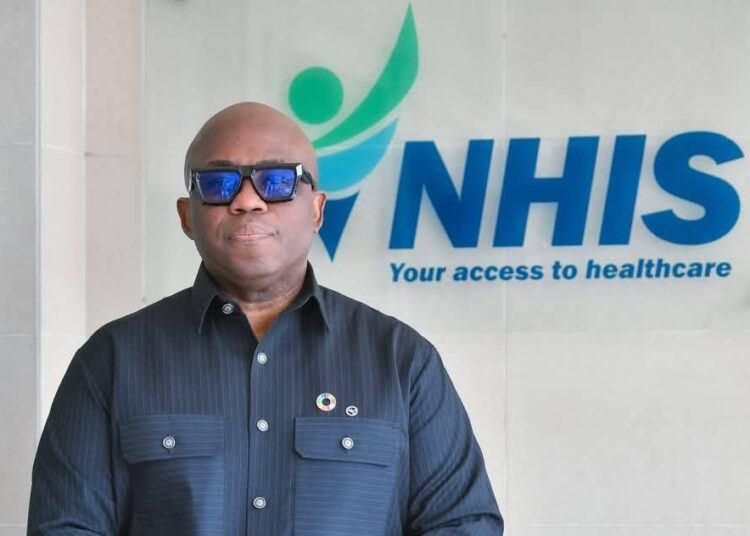
Chief Executive of the NHIA, Dr. Victor Asare Bampoe

Chief Executive of the NHIA, Dr. Victor Asare Bampoe

The National Health Insurance Authority has confirmed disbursing more than GHC157 million in claims to healthcare service providers across Ghana in April 2026, marking another significant step in efforts to strengthen the country’s health financing system and ensure uninterrupted service delivery under the National Health Insurance Scheme.

According to an official statement issued by the Authority’s Claims Directorate, the payments were made in two separate tranches during the month.

The first payment of GHC43.7 million was released on April 14, while a second and larger disbursement of GHC113.6 million was made on April 30, bringing the total amount paid within the month to more than GHC157 million.

The Authority explained that the payments covered accrued and unvetted claims dating back to 2019 which had remained outstanding due to what it described as isolated peculiar challenges within the claims processing system.

ADVERTISEMENT

In addition, some vetted claims processed through March 2026 were also included in the latest round of disbursements.

Officials at the NHIA said the prompt settlement of claims forms part of the institution’s broader commitment to ensuring that members of the National Health Insurance Scheme continue to receive uninterrupted access to healthcare services while service providers maintain the financial stability needed to operate effectively.

Dr Victor Asare Bampoe, NHIA CEO

Private Facilities Receive Largest Share

The latest claims payment also reflected the scale of service delivery across Ghana’s healthcare network, with private healthcare facilities receiving the largest share of the total disbursement. Public health institutions followed, while mission facilities also received substantial allocations under the claims settlement exercise.

The distribution further showed that high volume facilities accounted for 64 percent of all claims paid, underscoring the heavy patient load managed by larger hospitals and treatment centers across the country.

Clinics and health centers received 23 percent of the payments, while Community-based Health Planning and Services compounds accounted for nine percent. Specialized healthcare facilities received the remaining four percent.

The NHIA noted that this structured disbursement approach is intended to ensure that all categories of service providers remain financially supported while continuing to deliver quality healthcare services to insured patients nationwide.

The Authority reiterated its determination to clear all outstanding arrears and further strengthen the financial capacity of health institutions across the country.

Financial Reforms Reshape the NHIA

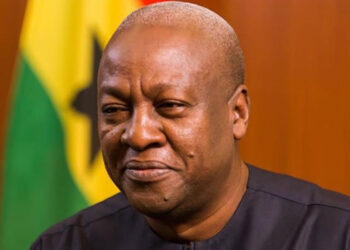
The latest claims payment comes amid sweeping structural and financial reforms being implemented by the NHIA under the administration of President John Dramani Mahama.

The reforms are designed to place Ghana on a sustainable path toward universal health coverage by 2030 while strengthening the long term financial stability of the national insurance system.

ADVERTISEMENT

A major turning point in this reform process came with the repeal of Act 947, a law that previously imposed annual funding caps on allocations to the National Health Insurance Authority.

Minister for Health, Kwabena Mintah Akandoh

The removal of these restrictions created a new financial framework that significantly expanded the Authority’s spending capacity and operational flexibility.

Following the repeal, the NHIA budget increased from GHC7 billion to an unprecedented GHC10.7 billion, creating the fiscal space required to tackle historical arrears, improve provider reimbursements, and modernize the country’s healthcare financing system.

The expanded budget has transformed the Authority’s ability to respond to provider concerns while ensuring that hospitals, clinics, and community health facilities receive payments on time.

Historical Arrears Cleared

The uncapped funding model has also enabled the NHIA to systematically clear historical provider arrears accumulated between 2022 and 2025, restoring financial confidence among healthcare providers across the country.

For years, delayed reimbursements had created operational difficulties for many facilities, with some providers struggling to maintain supplies, pay staff, and deliver essential services. In some cases, patients were reportedly compelled to make out of pocket payments for services that should have been covered under the insurance scheme.

However, the introduction of prompt disbursement mechanisms has injected billions of cedis back into the healthcare system, significantly restoring trust between service providers and the national insurer.
A hospital-ward-room-cctv-security-camera-system

The renewed confidence among providers is already improving patient experiences and strengthening the overall credibility of the National Health Insurance Scheme.

Digital Transformation Improves Efficiency

Beyond financial reforms, the NHIA has also accelerated the digital transformation of its operations to improve efficiency, accountability, and fraud detection.

More than 4,000 healthcare providers connected to the national insurance network have now transitioned from manual claims processing to unified electronic claims validation systems. The move is expected to reduce administrative inefficiencies, eliminate unnecessary delays, and curb financial leakages within the system.

The Authority has also introduced artificial intelligence driven fraud protection systems designed to analyze claims data, identify irregular patterns, detect operational loopholes, and improve compliance across both public and private healthcare providers.

Health sector analysts say the integration of automated verification systems represents a significant modernization of Ghana’s healthcare financing architecture and could help protect the sustainability of the insurance scheme in the years ahead.

Tariff Adjustment Targets Illegal Co Payments

Another major reform introduced by the Authority involves a 120 percent tariff adjustment for healthcare providers. Officials say the revised tariff structure is intended to provide more realistic economic compensation for medical services and permanently eliminate illegal co-payments often demanded from insured patients.

The tariff correction forms part of broader efforts to end out of pocket patient exploitation and ensure that National Health Insurance Scheme members receive the full benefits promised under the programme.
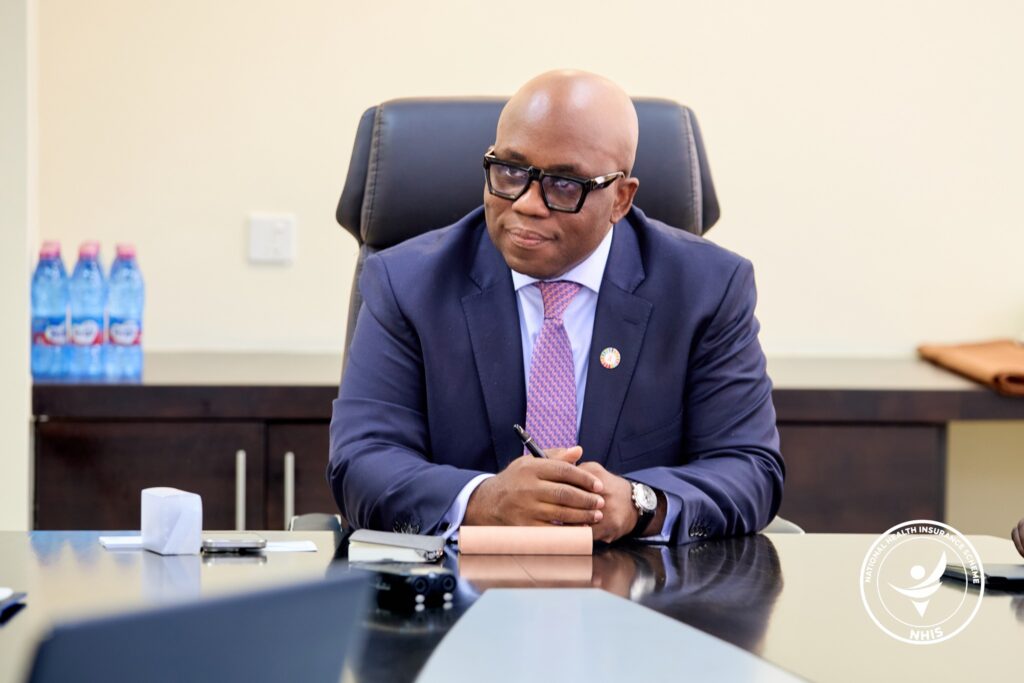
Chief Executive of the NHIA, Dr. Victor Asare Bampoe

At the same time, the Authority has introduced biometric and cashless administrative systems across regional offices, while mobile phone based membership renewal platforms have made it easier for citizens to maintain active insurance coverage.

Toward Universal Health Coverage

With more than GHC157 million paid in April alone, the NHIA says it remains focused on building a financially stable, technologically advanced, and patient centered insurance system capable of delivering universal healthcare access by 2030.

As claims continue to be settled, digital systems expanded, and provider confidence restored, Ghana’s health insurance sector appears to be entering a new phase of stability and reform aimed at ensuring equitable healthcare access for all citizens.

READ ALSO: IMF Ghana Review Ends in Dramatic Cliffhanger

Sign Up to Our Newsletter

Fresh updates, Straight to your inbox

Tags: electronic claims processingGhana healthcare financinghealth insurance reformshealthcare digitization Ghanahealthcare providers GhanaJohn Dramani MahamaNational Health Insurance AuthorityNHIA budget expansionNHIA claims paymentNHIS Ghanauniversal health coverage
Share1Tweet1ShareSendSend
Please login to join discussion
Previous Post

UAE Announces Accelerated Pipeline Construction To Bypass Strait Of Hormuz

Next Post

Fernandes Crowned Manchester United Player of the Year Again After Remarkable Season

Related Posts

Governance Expert, Dr Frederick Oduro
General News

Governance Expert Says Constitution Must Protect Rights of Citizens

May 15, 2026
Ghana’s Minister for Communications, Digital Technology and Innovation, Hon. Samuel Nartey George
General News

Ghana Targets 70% Nationwide 5G Expansion by 2027

May 15, 2026
Justin Kodua Frimpong, General Secretary of the NPP
General News

Words Like Mine Speak The Truth — Kodua Frimpong

May 15, 2026
National Chairman of the National Democratic Congress (NDC), Johnson Asiedu Nketiah
General News

Support Mahama to Succeed, Asiedu Nketiah Urges Party Supporters

May 14, 2026

Sign Up to Our Newsletter

Fresh updates, Straight to your inbox

Recent News

Fidelity Demands Africa Own Its Digital Future At a time when Africa’s digital economy is accelerating at an unprecedented pace, Fidelity Bank Ghana has delivered one of the strongest messages yet on the continent’s technological future. The bank made a bold and urgent case for Africa to stop depending on foreign controlled digital systems and begin building its own infrastructure capable of retaining value, strengthening currencies, and driving long term economic sovereignty. As one of the key sponsors of the 3i Africa summit, Fidelity Bank did not just show up to participate. It arrived with a message that resonated deeply across conference halls and policy discussions. Fidelity Bank emerged as one of the loudest voices championing a future where African nations control the very digital rails that power their economies. Digital Infrastructure Is The New Economic Power One of the defining moments of the summit came during a high level panel discussion on digital public infrastructure, where Adeline Aryee delivered a statement that immediately captured the attention of participants. She declared that if Africa builds its own digital rails, it naturally retains the value created by those systems. Her message was clear and uncompromising. In previous decades, national infrastructure was measured by roads, bridges, ports, and airports. Today, the true engines of economic power are payment platforms, identity systems, financial technology ecosystems, and digital marketplaces. According to Aryee, digital public infrastructure is no longer a luxury. It is now a strategic national asset. Her remarks struck at the heart of one of Africa’s most pressing economic concerns. Despite growing digital adoption, many transactions across the continent still pass through foreign payment systems, resulting in value leakage and continued pressure on local currencies. Ghana’s Success Story Becomes A Continental Blueprint Aryee highlighted Ghana’s progress in financial inclusion, mobile payments, and digital banking, describing the country as an emerging model for other African economies. Over the years, Ghana has invested heavily in domestic payment systems such as GhIPSS and its flagship platform, Gh-link. These systems have significantly expanded access to financial services while promoting digital transactions across urban and rural communities. Yet Aryee argued that inclusion alone is no longer enough. The next chapter for Africa, she insisted, must focus on ownership. She questioned why local transactions continue to depend on foreign rails when domestic infrastructure already exists. According to her, such dependence creates unnecessary external exposure and limits the continent’s ability to fully capture the economic benefits of its growing digital market. Her comments triggered intense debate among summit participants, many of whom acknowledged the urgent need for policy reforms and infrastructure investments. Market Driven Innovation Takes Center Stage Beyond infrastructure, Fidelity Bank also made a strong case for innovation that begins with real market needs. During the Ecosystem Roundtable on platforms, talent, and digital markets, Prince Osei Hyeaman-Addai shared insights from the bank’s years of digital financial innovation. He stressed that successful digital products are not built in boardrooms or based on assumptions. Instead, they are created by listening carefully to the market and understanding customer pain points. According to him, the market itself reveals the problems that need solving, the type of platform required, and the path toward scalable growth. His comments reflected a growing shift in African fintech circles, where customer centered design is becoming essential for product adoption and long term relevance. Trust And Credibility Remain The Real Currency Prince also emphasized that technology alone does not guarantee success. In his view, trust, credibility, and strong operational structures remain the real foundations of successful innovation. He noted that while investor interest in African fintech continues to rise, startups must prove they can deliver sustainable solutions, maintain transparency, and build products that respond to local realities. This perspective reflects Fidelity Bank’s own journey in digital transformation. Over the years, the bank has built strategic collaborations with leading fintech players, including IT Consortium, helping pioneer wallet to bank integrations and mobile financial solutions in Ghana. These partnerships have helped position Fidelity as one of Ghana’s most innovation driven financial institutions. A Defining Moment For Africa’s Digital Future Fidelity Bank’s participation at the 3i Africa Summit 2026 was more than a corporate appearance. It was a strategic declaration. At a time when Africa is racing to build competitive digital economies, the bank’s message was impossible to ignore. Africa cannot simply consume technology created elsewhere. It must own the infrastructure, shape the platforms, and capture the value generated by its digital future. As conversations from the summit continue to ripple across financial and policy circles, one thing is becoming increasingly clear. Africa’s next economic revolution may not be built on oil, gold, or minerals. It may be built on digital rails designed, owned, and powered by Africans. READ ALSO: IMF Ghana Review Ends in Dramatic Cliffhanger Fidelity Demands Africa Own Its Digital Future At a time when Africa’s digital economy is accelerating at an unprecedented pace, Fidelity Bank Ghana has delivered one of the strongest messages yet on the continent’s technological future. The bank made a bold and urgent case for Africa to stop depending on foreign controlled digital systems and begin building its own infrastructure capable of retaining value, strengthening currencies, and driving long term economic sovereignty. As one of the key sponsors of the 3i Africa summit, Fidelity Bank did not just show up to participate. It arrived with a message that resonated deeply across conference halls and policy discussions. Fidelity Bank emerged as one of the loudest voices championing a future where African nations control the very digital rails that power their economies. Digital Infrastructure Is The New Economic Power One of the defining moments of the summit came during a high level panel discussion on digital public infrastructure, where Adeline Aryee delivered a statement that immediately captured the attention of participants. She declared that if Africa builds its own digital rails, it naturally retains the value created by those systems. Her message was clear and uncompromising. In previous decades, national infrastructure was measured by roads, bridges, ports, and airports. Today, the true engines of economic power are payment platforms, identity systems, financial technology ecosystems, and digital marketplaces. According to Aryee, digital public infrastructure is no longer a luxury. It is now a strategic national asset. Her remarks struck at the heart of one of Africa’s most pressing economic concerns. Despite growing digital adoption, many transactions across the continent still pass through foreign payment systems, resulting in value leakage and continued pressure on local currencies. Ghana’s Success Story Becomes A Continental Blueprint Aryee highlighted Ghana’s progress in financial inclusion, mobile payments, and digital banking, describing the country as an emerging model for other African economies. Over the years, Ghana has invested heavily in domestic payment systems such as GhIPSS and its flagship platform, Gh-link. These systems have significantly expanded access to financial services while promoting digital transactions across urban and rural communities. Yet Aryee argued that inclusion alone is no longer enough. The next chapter for Africa, she insisted, must focus on ownership. She questioned why local transactions continue to depend on foreign rails when domestic infrastructure already exists. According to her, such dependence creates unnecessary external exposure and limits the continent’s ability to fully capture the economic benefits of its growing digital market. Her comments triggered intense debate among summit participants, many of whom acknowledged the urgent need for policy reforms and infrastructure investments. Market Driven Innovation Takes Center Stage Beyond infrastructure, Fidelity Bank also made a strong case for innovation that begins with real market needs. During the Ecosystem Roundtable on platforms, talent, and digital markets, Prince Osei Hyeaman-Addai shared insights from the bank’s years of digital financial innovation. He stressed that successful digital products are not built in boardrooms or based on assumptions. Instead, they are created by listening carefully to the market and understanding customer pain points. According to him, the market itself reveals the problems that need solving, the type of platform required, and the path toward scalable growth. His comments reflected a growing shift in African fintech circles, where customer centered design is becoming essential for product adoption and long term relevance. Trust And Credibility Remain The Real Currency Prince also emphasized that technology alone does not guarantee success. In his view, trust, credibility, and strong operational structures remain the real foundations of successful innovation. He noted that while investor interest in African fintech continues to rise, startups must prove they can deliver sustainable solutions, maintain transparency, and build products that respond to local realities. This perspective reflects Fidelity Bank’s own journey in digital transformation. Over the years, the bank has built strategic collaborations with leading fintech players, including IT Consortium, helping pioneer wallet to bank integrations and mobile financial solutions in Ghana. These partnerships have helped position Fidelity as one of Ghana’s most innovation driven financial institutions. A Defining Moment For Africa’s Digital Future Fidelity Bank’s participation at the 3i Africa Summit 2026 was more than a corporate appearance. It was a strategic declaration. At a time when Africa is racing to build competitive digital economies, the bank’s message was impossible to ignore. Africa cannot simply consume technology created elsewhere. It must own the infrastructure, shape the platforms, and capture the value generated by its digital future. As conversations from the summit continue to ripple across financial and policy circles, one thing is becoming increasingly clear. Africa’s next economic revolution may not be built on oil, gold, or minerals. It may be built on digital rails designed, owned, and powered by Africans. READ ALSO: IMF Ghana Review Ends in Dramatic Cliffhanger Fidelity Demands Africa Own Its Digital Future

Fidelity Demands Africa Own Its Digital Future

May 15, 2026
Bruno Fernandes has won Manchester United's Player of the Year award twice in succession

Fernandes Crowned Manchester United Player of the Year Again After Remarkable Season

May 15, 2026
Chief Executive of the NHIA, Dr. Victor Asare Bampoe

NHIA Pays Over GHC157 Million in Claims

May 15, 2026
Khaled bin Mohamed chairs ADNOC executive committee meeting

UAE Announces Accelerated Pipeline Construction To Bypass Strait Of Hormuz

May 15, 2026
David Beckham is one of the co-owners of MLS club Inter Miami

Rich List Reveals New Power Shift, Beckham Becomes First British Sports Billionaire

May 15, 2026
Next Post
Bruno Fernandes has won Manchester United's Player of the Year award twice in succession

Fernandes Crowned Manchester United Player of the Year Again After Remarkable Season

The Vaultz News

Copyright © 2025 The Vaultz News. All rights reserved.

Navigate Site

  • About
  • Advertise
  • Privacy Policy
  • Contact

Follow Us

Welcome Back!

Login to your account below

Forgotten Password?

Retrieve your password

Please enter your username or email address to reset your password.

Log In
No Result
View All Result
  • Top Stories
  • News
    • General News
    • Education
    • Health
    • Opinions
  • Economics
    • Economy
    • Finance
      • Banking
      • Insurance
      • Pension
    • Securities/Markets
  • Business
    • Agribusiness
    • Vaultz Business
    • Extractives/Energy
    • Real Estate
  • World
    • Africa
    • America
    • Europe
    • UK
    • USA
    • Asia
    • Around the Globe
  • Innovation
    • Technology
    • Wheels
  • Entertainment
  • 20MOBPL2D
  • Jobs & Scholarships
    • Job Vacancies
    • Scholarships

Copyright © 2025 The Vaultz News. All rights reserved.

This website uses cookies. By continuing to use this website you are giving consent to cookies being used. Visit our Privacy and Cookie Policy.

Discover the Details behind the story

Get an in-depth analysis of the news from our top editors

Enter your email address