
President John Dramani Mahama has reaffirmed his administration’s commitment to building a stronger and more structured partnership with traditional authorities as part of efforts to accelerate local development, improve accountability, and deepen participatory governance across Ghana.
The President made the commitment during a courtesy call by the Northern Regional House of Chiefs at the Presidency, where members of the traditional council presented proposals aimed at strengthening collaboration between chiefs and government in the implementation of development initiatives across the region.
Addressing the distinguished delegation, President Mahama expressed profound appreciation for what he described as a thoughtful, candid, and visionary engagement, noting that the visit had gone beyond the usual ceremonial exchange and had instead demonstrated a shared commitment to nation building.
“It is with profound respect and sincere gratitude that I welcome Your Royal Highnesses and distinguished members of the Northern Regional House of Chiefs to the Presidency this afternoon.” .
President John Dramani Mahama
He praised the chiefs for approaching government not merely with requests, but with proposals centered on partnership, shared responsibility, and collective ownership of development outcomes. According to him, that approach reflected true statesmanship and a deep commitment to national progress.

“As my father, the Bimbila Naa, said, you come not just to make requests but to extend a hand of partnership to government in successfully administering this country and creating prosperity and progress for our people”.
President John Dramani Mahama
Traditional Leadership Recognised as Critical to Development
President Mahama used the occasion to underscore the critical role traditional authorities play in national development, describing chieftaincy as one of Africa’s most enduring and underutilized institutions.
He said successive governments across the continent have often failed to fully harness the influence, legitimacy, and local knowledge of traditional leaders, despite their close relationship with communities and their deep understanding of local realities.
“I wish to assure you that this government recognises the indispensable role of traditional authority in nation building,” the President said. He noted that chiefs possess conflict resolution mechanisms refined over generations and continue to serve as custodians of social cohesion, cultural identity, and community trust.
According to President Mahama, these qualities make traditional authorities indispensable partners in the implementation of national development policies.

“For far too long, governments across Africa have underutilised one of the continent’s most enduring institutions, that is traditional leadership. And yet chiefs are the ones who remain closest to the people”.
President John Dramani Mahama
The President added that no government can successfully implement its development agenda at the grassroots level without the cooperation, involvement, and trust of traditional authorities.
Structured Collaboration Under National Reset Agenda
President Mahama disclosed that the proposals presented by the Northern Regional House of Chiefs align directly with his administration’s broader National Reset Agenda, which seeks to build a governance model that is participatory, accountable, decentralized, and people centered.
He welcomed the chiefs’ commitment to supporting government efforts in project monitoring, social mobilization, educational advocacy, conflict prevention, environmental protection, and community accountability.
“Your proposition that government must move from occasional consultations with you to a structured partnership is both timely and necessary, and I fully agree with you”.
President John Dramani Mahama
He explained that traditional institutions remain central to the success of any decentralized governance model, particularly in regions where chiefs continue to command strong community legitimacy.

Constitutional Reforms Could Expand Chiefs’ Role
President Mahama also revealed that discussions are ongoing within Cabinet regarding the implementation of recommendations contained in the Constitutional Review Committee report, including proposals relating to chieftaincy and local governance.
He disclosed that even before the review process began, he had advocated for the National House of Chiefs to actively participate in constitutional discussions to ensure that traditional leaders are given a stronger constitutional role in local administration.
He noted that the proposals presented by the Northern chiefs would provide valuable guidance when Cabinet resumes discussions on constitutional implementation.
Chiefs to Monitor Government Projects
One of the key proposals discussed during the meeting centered on joint monitoring of government development projects, a proposal President Mahama described as particularly important in addressing one of the country’s most persistent governance challenges.
According to him, many citizens continue to express frustration over the gap between projects announced by the government and projects actually completed, as well as concerns over whether public funds are translating into measurable development outcomes.
The President stated that involving chiefs and community leaders directly in project monitoring would significantly improve transparency, accountability, and quality assurance across government infrastructure projects.
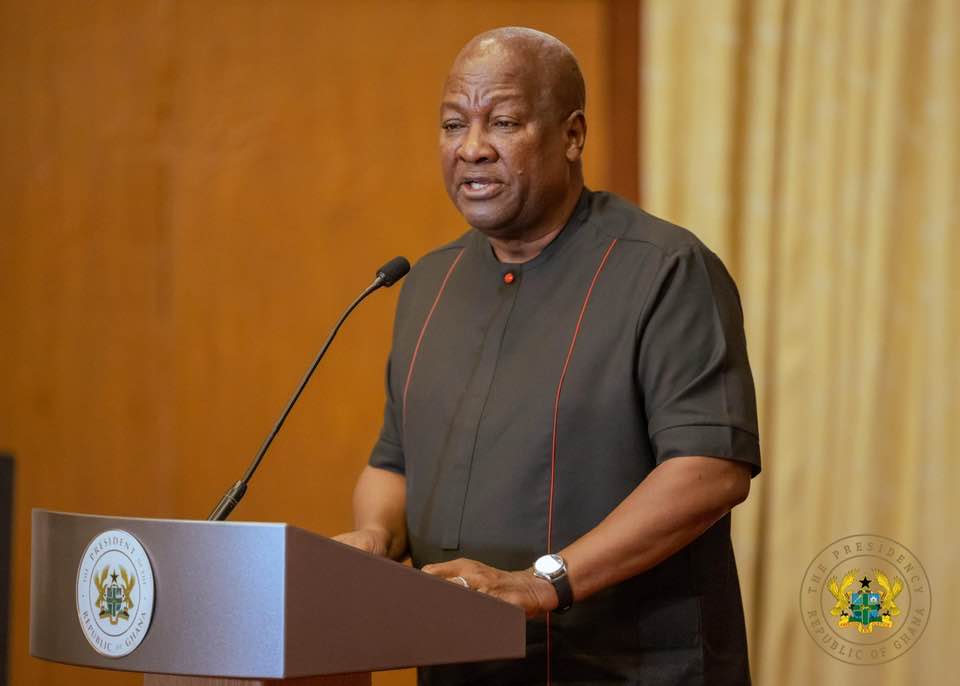
“I am therefore directing the Minister for Local Government to create a framework where traditional rulers and district assemblies can meet occasionally to review the progress of work on critical infrastructure that government is undertaking in your various traditional areas and districts,” he announced.
President John Dramani Mahama
The framework, according to the President, will include regular coordination meetings, physical site inspections, progress reviews, and designated liaison arrangements between district chief executives and traditional authorities.
Northern Tour Reinforces Development Priorities
President Mahama also referenced his recent accountability tour of northern Ghana, where he engaged directly with chiefs, youth groups, farmers, traders, religious leaders, and ordinary citizens.
He said the tour gave him a firsthand understanding of both the enormous development potential of the region and the urgent challenges confronting local communities.

According to the President, the lessons from those engagements have further reinforced his belief that stronger partnerships with traditional authorities are essential to delivering inclusive growth and sustainable development.
As government moves to operationalize the new framework, the meeting with the Northern Regional House of Chiefs is being viewed as a significant step toward redefining the relationship between state institutions and traditional leadership in Ghana’s evolving development agenda.
READ ALSO: “Stability Achieved, New Economy Incoming!” – Ato Forson Declares Ghana’s Post IMF Revolution