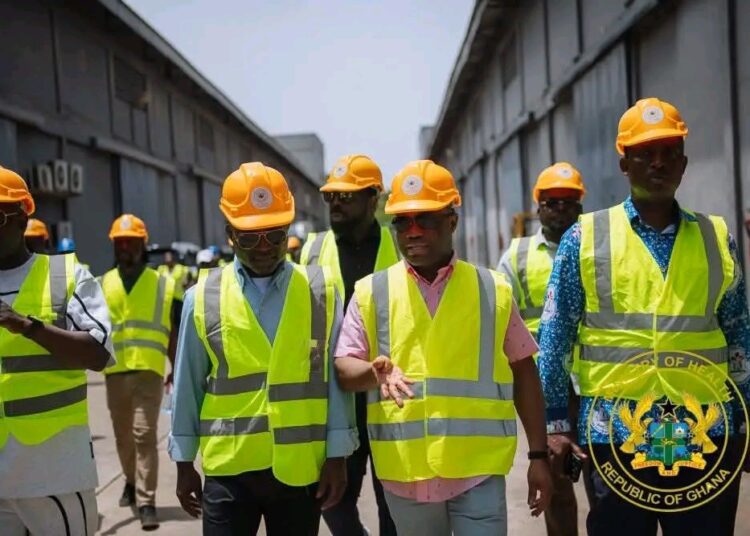
The Free Primary Healthcare Programme has received a significant boost as the Government of Ghana procures 24,534 pieces of medical equipment to support its nationwide rollout. The Minister for Health, Kwabena Mintah Akandoh, inspected the equipment this week as part of preparations for the implementation of the policy under President John Mahama’s flagship healthcare agenda.
The large consignment, expected to be distributed to health facilities across the country, is aimed at strengthening service delivery and improving access to essential healthcare at the primary level.
Equipment to enhance healthcare capacity nationwide
The procured medical equipment covers a broad range of essential tools needed for diagnosis, monitoring, and treatment in primary healthcare facilities. These include baby incubators, radiant warmers, oxygen concentrators, X-ray machines, vital signs monitors, glucometers, patient monitors, infusion devices, laboratory analysers, delivery beds, hospital beds, and ultrasound machines.

According to the Ministry of Health, the equipment will be deployed nationwide to address critical gaps in healthcare infrastructure, particularly in underserved communities.Health Minister Kwabena Mintah Akandoh noted that the initiative is a strategic move to strengthen the foundation of Ghana’s healthcare system.
“This intervention is aimed at retooling government hospitals and ensuring they are adequately equipped to deliver quality care.”
Kwabena Mintah Akandoh, Minister of Health
He explained that the provision of modern equipment will enable health workers to deliver timely and efficient services, ultimately improving patient outcomes.
Driving the Free Primary Healthcare Programme
The Free Primary Healthcare Programme is a flagship policy designed to remove financial barriers to essential health services and promote universal access to care. The procurement of the equipment is seen as a critical step toward ensuring the programme’s success.
Officials say the initiative is focused not only on treatment but also on prevention and early diagnosis, which are key to reducing the burden on secondary and tertiary healthcare facilities.
“The rollout of this equipment will significantly boost efficiency at the primary level and pave the way for the successful implementation of the programme,”
a statement from the Ministry of Health
The government has emphasised that strengthening primary healthcare is essential to building a resilient health system capable of responding to both routine and emergency health needs.
Focus on maternal, neonatal, and preventive care
A substantial portion of the equipment is dedicated to maternal and neonatal healthcare, reflecting efforts to reduce mortality rates and improve outcomes for mothers and newborns.Items such as baby incubators, radiant warmers, and oxygen concentrators will support newborn care and resuscitation, while delivery beds and hospital beds will enhance conditions for safe childbirth.

In addition, diagnostic tools like glucometers and vital signs monitors will aid in the early detection and management of conditions such as diabetes and hypertension.The inclusion of laboratory analysers and ultrasound machines is also expected to improve diagnostic accuracy and support preventive healthcare services at the community level.
Health experts have consistently highlighted the importance of early intervention, noting that strong primary healthcare systems can significantly reduce the need for more advanced and costly treatments.
Nationwide Rollout and Expected Impact
The Ministry of Health has indicated that the distribution of the 24,534 pieces of equipment will begin soon, with facilities across the country set to benefit from the intervention. Tony Goodman, spokesperson for the Ministry, described the development as a major milestone in Ghana’s healthcare reform efforts.
“This initiative reflects government’s commitment to building a resilient healthcare system that prioritises preventive care and early treatment.
Tony Goodman, spokesperson for the Ministry of Health
He added that the deployment of the equipment will enhance the efficiency of healthcare delivery and ensure that patients receive timely care at the primary level.The government is optimistic that the intervention will lead to measurable improvements in healthcare access, particularly for rural and underserved populations.
Strengthening Ghana’s Healthcare Future
The procurement and planned distribution of the equipment mark a significant step in advancing Ghana’s healthcare agenda. By equipping facilities with modern tools, the government aims to improve service quality, expand access, and reduce inequalities in healthcare delivery.

As the Free Primary Healthcare Programme moves toward full implementation, its success will depend on effective distribution, proper maintenance of equipment, and continued investment in human resources.
If successfully executed, the initiative is expected to transform primary healthcare delivery in Ghana, ensuring that essential services are accessible, efficient, and responsive to the needs of all citizens.
READ MORE: GSE Closes For Easter With Mixed Fortunes And Rising Index