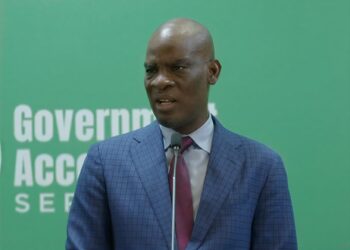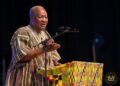

President John Dramani Mahama has reaffirmed his commitment to building a fair and inclusive private sector, firmly rejecting political victimisation as a barrier to business growth in Ghana.
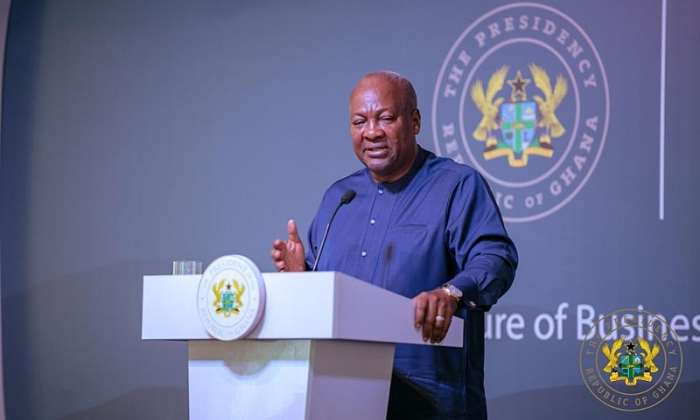
Speaking at the Kwahu Business Forum under the theme “The Future of Business: The Role of the Financial Sector,” he stressed that economic progress must be driven by competence rather than political affiliation.
“I don’t have political colours when I look at the Ghanaian private sector,” he stated, underscoring his administration’s position that all businesses deserve equal opportunity regardless of perceived political alignment.
The President noted that Ghana’s democratic structure, which often sees changes in government every eight years, has inadvertently created a cycle where companies associated with previous administrations face exclusion or contract termination. He described this pattern as harmful to investor confidence and long term economic stability.
Political Victimisation Identified as Major Constraint
Mahama acknowledged that political victimisation remains a persistent issue affecting the growth of the private sector. He explained that businesses often become vulnerable when they are labeled as supporters of a particular political party, leading to disruptions whenever there is a change in leadership.
He recounted concerns raised about the awarding of contracts under government programmes, where some critics suggested that opportunities should be distributed along partisan lines. The President rejected this notion, insisting that such an approach would undermine national development.
“Don’t they have the capacity to do the job?” he asked, referring to companies perceived to be aligned with opposing political groups. He maintained that any firm with the expertise, equipment, and workforce should be considered for national projects.
For Mahama, the success of government initiatives should be measured by the quality and completion of projects, not by the political identity of those executing them.
Focus on Results Over Partisan Interests
The President emphasized that his administration is focused on delivering tangible outcomes rather than engaging in political favoritism. He argued that prioritizing competence ensures efficiency and maximizes the impact of public investment.
“It is not about who does the project. The credit is that at the end of my term of office, I was able to repair all those roads,” he said, highlighting a results driven approach to governance.
He added that businesses operating in Ghana contribute to the local economy by employing Ghanaians and supporting supply chains, making it counterproductive to exclude them based on political considerations.
Beyond addressing political bias, President Mahama urged Ghanaian businesses to build resilience by reducing their dependence on government contracts. He noted that companies heavily reliant on state patronage are particularly exposed to risks during political transitions.

“We must not all rely on government supplies,” he cautioned, explaining that diversification is key to sustaining business operations regardless of changes in government.
He observed that some companies struggle when administrations change because their business models are closely tied to public sector contracts. To address this, he encouraged entrepreneurs to explore alternative markets and strengthen their competitiveness.
Creating a Fair Regulatory Framework
President Mahama called for the establishment of a regulatory environment that guarantees fairness, transparency, and equal access to opportunities. He stressed that a level playing field is essential for attracting investment and promoting sustainable growth.
“We must create an environment where the regulation is fair, everybody has the same opportunity, and everybody is able to get a good return on their investment”.
President John Dramani Mahama
According to the President, when businesses operate in a predictable and supportive environment, they are more likely to reinvest profits into expansion, innovation, and other productive ventures.
The President highlighted the critical role of the private sector in driving Ghana’s economic transformation. He explained that a strong and independent business community contributes significantly to job creation, industrial expansion, and overall economic resilience.
He noted that reinvestment by private firms can stimulate growth across multiple sectors, including real estate, manufacturing, and services, ultimately boosting the country’s gross domestic product.

President Mahama reiterated that the government’s responsibility is to create conditions that enable businesses to thrive, while the private sector must seize these opportunities to expand and innovate.
A Vision for Inclusive Economic Progress
The President concluded by reaffirming his administration’s commitment to fairness and inclusivity in economic governance. He stressed that eliminating political victimisation is essential to building trust and ensuring long term stability in the business environment.
He urged stakeholders across the political and business landscape to support efforts aimed at strengthening the private sector, noting that national development depends on collective action and shared responsibility.
The address at the Kwahu Business Forum signals a broader policy direction focused on merit based opportunities, private sector independence, and sustainable economic growth, positioning Ghana for a more stable and inclusive future.