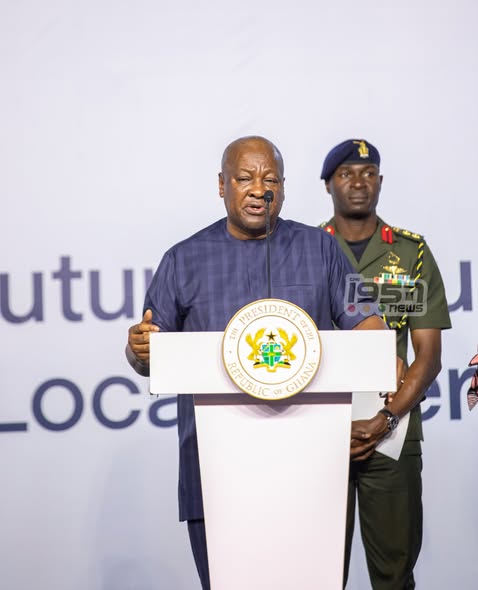
President John Dramani Mahama has revealed a dramatic financial turnaround at the Electricity Company of Ghana (ECG), noting that monthly revenue collections have surged to $1.9 billion under the current administrative leadership.
Speaking at the Kwahu Business Forum, the President highlighted that this fiscal leap represents a near-doubling of previous figures, which historically hovered between $900 million and $1.1 billion.
He attributed this success to a decisive change in management that prioritized efficiency over the “huge procurements” that previously dominated the utility provider’s operations.
“But after we changed the management of ECG, aside from the huge procurements that were being done, they were also not collecting enough of their revenue. They were making almost 42% losses, commercial and technical losses. And so revenue that was collected monthly was about $900 million, $1 billion, maybe $1.1 billion. Since the new management came, revenue collection has jumped up to $1.9 billion in one instance, almost $2 billion.”
President John Dramani Mahama
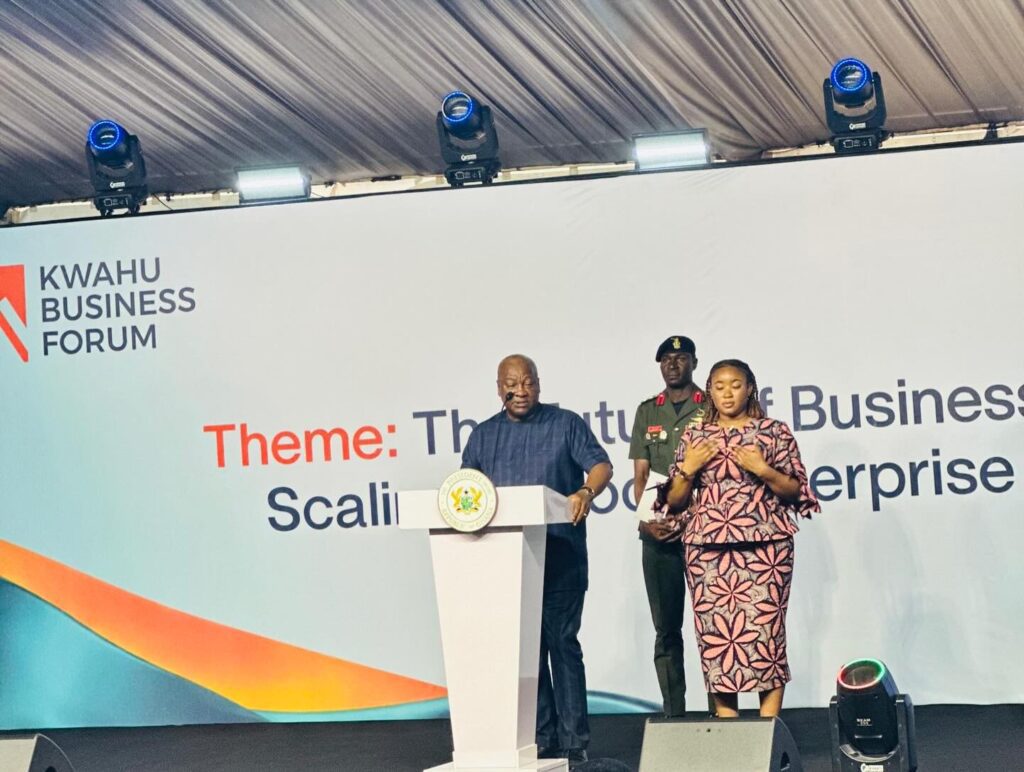
This revenue growth marks a critical departure from an era defined by staggering commercial and technical losses, which the President noted were “making almost 42% losses” prior to the management overhaul.
By curbing these leakages, the state-owned enterprise has moved from a position of chronic deficit to one of relative liquidity. President Mahama explained that the enhanced inflows are now being strictly funneled through the “waterfall mechanism,” a structured payment system designed to ensure that all stakeholders in the energy value chain receive their fair share of collected funds.
“And then we have what we call the waterfall mechanism. And so all that money was supposed to go into the waterfall mechanism. And the first thing we do is we take out the money for ECG’s own expenses, their salaries and other administrative expenses.”
President John Dramani Mahama
Restoring Integrity to the Cash Waterfall Mechanism

The President criticized past interferences with the Cash Waterfall Mechanism (CWM), noting that “ECG would take what it wanted” before declaring a meager remainder for other sector players.
This lack of transparency “kept leading to a deficit,” as the Independent Power Producers (IPPs) and other service providers were frequently sidelined. Under the new regime, the government has mandated a transparent hierarchy of payments where administrative costs are settled first, followed immediately by obligations to the IPPs, thereby preventing the accumulation of new “legacy debt.”
Ending the Cycle of Energy Sector Deficits
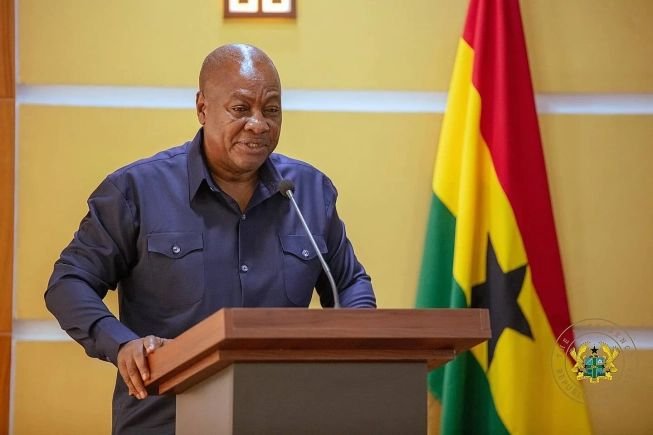
This improved fiscal discipline is directly addressing the legacy debt that has long crippled the power sector.
The President confirmed that the government has reached a landmark agreement with power producers to systematically “pay down the legacy debt” while remaining current on monthly invoices for power produced.
This “pay-as-you-go” approach ensures that the total sector deficit is no longer escalating, providing a more stable environment for both domestic and industrial consumers.
Sector Stability and Economic Dividends

The turnaround at ECG is providing a much-needed lifeline to Ghana’s broader energy landscape.
By stabilizing payments to IPPs, the risk of “dumsor” or erratic power outages triggered by fuel or generation shortages has been significantly mitigated.
Furthermore, the already cleared in wider energy sector debts as noted in recent Ministry of Finance reports complements this ECG success, restoring the country’s international credibility and the World Bank Partial Risk Guarantees.
For the average Ghanaian, this means a more reliable power grid and a reduced fiscal burden on the national budget, as the utility moves toward becoming a self-sustaining entity rather than a drain on the public purse.
READ ALSO : Mahama Calls for Emergency Cabinet Meeting to Cushion Rising Fuel Prices