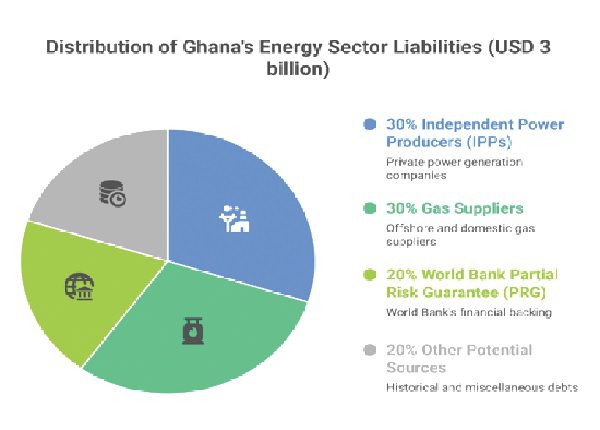
Ghana’s persistent energy-sector debt is emerging as more than a financial burden, with the Ghana National Petroleum Corporation (GNPC) warning that payment challenges across the value chain could undermine the reliability of domestic gas supply.
Emmanuel Tamakloe, Manager of Gas Business at GNPC, said the financial health of the energy value chain is directly connected to the country’s ability to maintain gas supply and invest in the infrastructure required to support future demand.
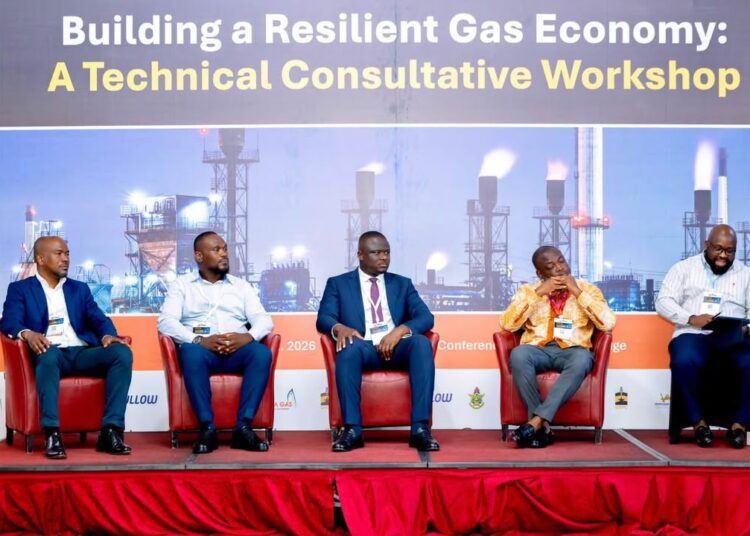
He made the observation during the Public Interest and Accountability Committee’s (PIAC) Technical Consultative Workshop in Accra, where stakeholders examined measures for building a more resilient gas economy.
Payment Security Underpins Gas Supply
Mr Tamakloe’s central argument was that the country cannot treat energy-sector debt as an issue confined to government accounts or the balance sheets of individual institutions.
Gas supply depends on a chain of transactions involving producers, aggregators, transporters, power generators and other consumers.
When payments are delayed or obligations accumulate, the pressure can eventually move upstream, affecting the ability of suppliers to maintain operations and finance additional investment.
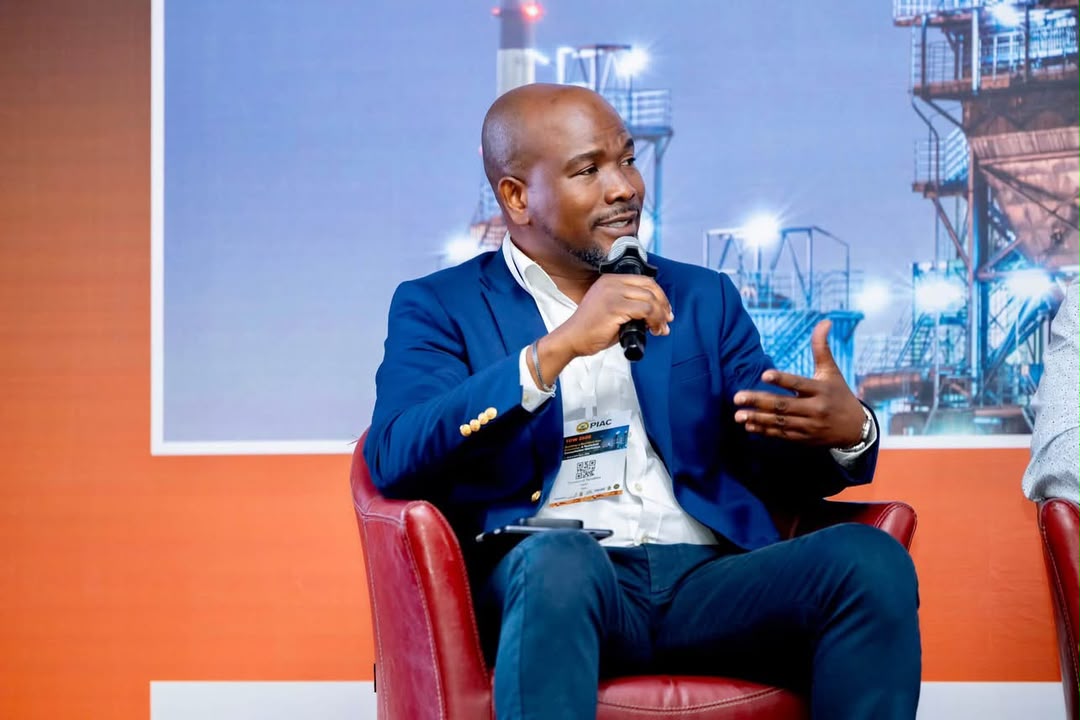
“Energy sector debt is as much a financial problem as it is a supply security issue.”
Emmanuel Tamakloe, Manager of Gas Business at GNPC
For Ghana’s gas market, the implication is significant. Reliable physical supply requires reliable commercial arrangements. If suppliers are uncertain about when they will receive payment, their capacity to sustain existing operations or commit capital to new infrastructure can be weakened.
Revenue Collection At Centre Of Reform
Mr Tamakloe identified stronger downstream revenue collection as one of the measures required to break the cycle.
Where revenue collected from consumers does not adequately cover the costs incurred across the energy chain, the resulting gaps accumulate as arrears and financial obligations.
Improving collections would therefore provide more predictable cash flows and strengthen the ability of participants further upstream to meet their own obligations.
The issue is particularly relevant to gas because the fuel is increasingly important to Ghana’s electricity system.
A financially weak downstream market can ultimately create difficulties for the entities responsible for supplying the gas needed by thermal power plants.
That creates a link between financial discipline and physical energy security: weak collections can produce payment delays, while payment delays can affect supply reliability.
Transparent Cost Recovery Needed
The GNPC executive also highlighted the need for sustainable and transparent cost recovery across the energy value chain.
For gas suppliers and infrastructure operators, cost recovery is essential to maintaining assets and supporting new investment.
However, cost recovery also has to operate within a framework that provides visibility to buyers and consumers.
If costs are poorly structured or recovered unpredictably, financial pressure can shift from one participant to another rather than being resolved.
A more credible system would therefore require greater clarity over the costs associated with producing, processing, transporting and consuming gas, alongside mechanisms that ensure those costs can be recovered sustainably.
This is particularly important as Ghana seeks to expand domestic gas use while also developing new supply sources and infrastructure.
Coordination Across Energy Institutions
Mr Tamakloe also pointed to institutional coordination as another requirement for breaking the debt cycle.
The energy sector involves several institutions with different mandates, while financial obligations frequently move across the same value chain.
Weak coordination can make it difficult to identify where payment gaps originate, how they are accumulating and which interventions can resolve them without simply transferring the burden elsewhere.
Greater coordination could allow government and industry participants to identify financial pressures earlier and address them before they become larger supply risks.
For Ghana’s gas economy, this would also improve planning around future infrastructure investment, since suppliers and investors require greater certainty over the commercial environment before committing capital.
Credible Payment Mechanisms Needed
Another priority identified by Mr Tamakloe was the establishment of credible payment-security mechanisms across the energy value chain.
Such mechanisms are important because long-term gas and infrastructure investments require confidence that contractual obligations will be honoured.
Without that confidence, financing new infrastructure becomes more difficult and potentially more expensive, particularly where investors perceive uncertainty around the ability of downstream customers to pay.
Payment security can therefore influence not only existing gas supply but also Ghana’s ability to expand the system.
The challenge is to build a market where suppliers can rely on predictable payments, while consumers ultimately benefit from a system that remains affordable and reliable.
Financial Credibility And Energy Security
The broader message from the GNPC presentation is that Ghana’s gas-security strategy cannot be separated from the financial architecture supporting the energy sector.
Increasing domestic gas production, expanding infrastructure and securing alternative sources will have limited impact if the market that purchases and transports the gas remains financially fragile.

A credible energy market requires stronger collections, clearer cost recovery, effective coordination and payment mechanisms capable of supporting long-term commercial relationships.
For Ghana, the stakes extend beyond the balance sheets of individual energy institutions. Persistent financial weaknesses can affect investment, infrastructure development and ultimately the reliability of energy delivered to consumers.
Mr Tamakloe therefore stressed the need to build a financially credible energy market capable of supporting affordable, reliable and secure energy supply.
The argument places financial reform alongside physical infrastructure and domestic resource development as a central component of Ghana’s effort to build a resilient gas economy.
READ ALSO: Mahama Presses UN For Permanent African Seat With Full Veto Rights