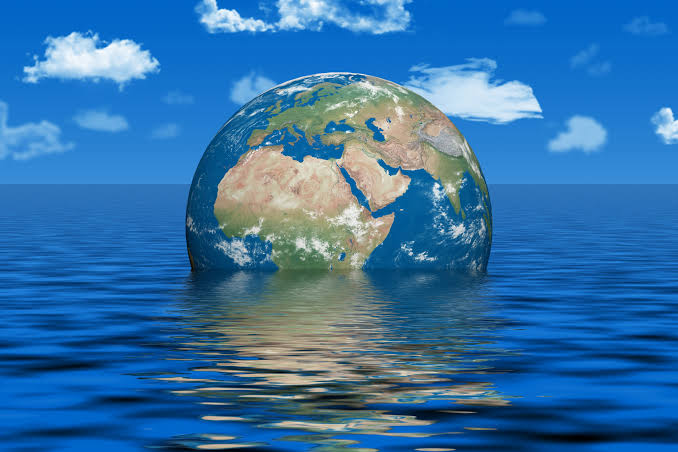
World leaders are confronting the growing threat of rising seas as accelerating sea-level rise puts coastal communities and vulnerable countries at greater risk, with more than one billion people potentially exposed to coastal hazards by 2050 and urgent action being called for to address the escalating threat.
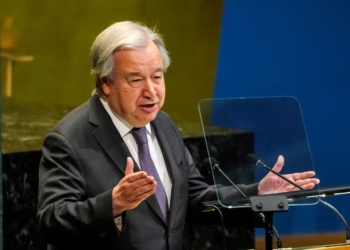
Global sea levels rose by almost six millimetres in 2024, marking the largest annual increase ever recorded, according to UN Secretary-General António Guterres, who warned that continued warming could push sea levels up by as much as one metre by the end of the century without drastic reductions in greenhouse gas emissions.
The scale of the exposure is already substantial. Around 770 million people live less than five metres above the high-tide line, while approximately 900 million people reside in low-lying coastal zones. That number of people potentially exposed to coastal hazards could exceed one billion by 2050.
The figures have placed sea-level rise at the centre of an increasingly urgent international debate over climate adaptation, development, finance and the future of vulnerable coastal communities.
Guterres opened a high-level UN event by highlighting the consequences for homes, food systems, infrastructure and the territorial integrity of countries whose geography leaves them particularly exposed to rising waters.
The danger is also unevenly distributed. Countries and communities that have contributed relatively little to global climate change are frequently among those facing the greatest exposure to its consequences, creating a growing question of climate justice alongside the environmental challenge.
According to Khalilur Rahman of Bangladesh, President of the UN General Assembly, “Sea-level rise does not respect borders, but while the threat is shared, the burden is not.”
The financial consequences are already severe for vulnerable countries. Small island developing States lost $153 billion to climate hazards between 1970 and 2020, an amount exceeding 10 times their average annual gross domestic product.
Behind those figures are communities losing homes, livelihoods and economic security, while governments face mounting costs associated with protecting infrastructure and preparing populations for increasingly severe coastal hazards.
The scale of future adaptation requirements makes the financing challenge particularly stark. Developing countries are estimated to need between $310 billion and $365 billion every year for climate adaptation by 2035. International public adaptation finance, however, reached only $26 billion in 2023.
That disparity has intensified calls for predictable, accessible and concessional financing, particularly for countries whose fiscal capacity is already constrained by debt and other development pressures.
Rahman urged governments to translate the Political Declaration on Sea Level Rise into practical measures, arguing that prevention and preparedness represent some of the most cost-effective investments available.
He also called for adequate resources for the Fund for Responding to Loss and Damage, alongside measures capable of easing debt pressures on vulnerable developing countries.
The UN discussions also placed legal and political questions alongside the physical consequences of rising seas. The proposed declaration addresses issues including international law, human rights, statehood and maritime boundaries, recognising that the consequences of sea-level rise can extend into questions of sovereignty and the legal status of affected populations.
Guterres called for action across three fronts: reducing emissions, protecting communities and closing legal gaps.
He also urged global emissions to peak immediately and decline by 60 per cent by 2035, while calling for adaptation finance to triple. Governments, he added, need to integrate resilience into development planning, expand early-warning systems and give affected communities a greater role in decisions concerning their future.
Sea-Level Rise Becomes a Development and Justice Challenge
The political declaration being considered by the General Assembly seeks to establish a common framework for responding to those interconnected challenges, placing science, data and international law at the centre of future action.
The declaration calls for responses based on “the best available science and knowledge” while reaffirming the need to implement international law in addressing sea-level rise.
It also emphasises the responsibility of states to respect, protect and fulfil human rights in responding to the effects of rising seas.
Another provision addresses the question of statehood, recalling that once a state is established, the disappearance of one of its constituent elements would not necessarily result in the loss of its statehood.
That provision carries particular significance for small island states and other vulnerable countries whose territories could face severe physical changes as oceans expand and coastal areas become increasingly exposed.
Francisco Carvalho, Prime Minister of Cabo Verde and co-facilitator of the UN Declaration on Sea Level Rise, described the adoption of the text by consensus as evidence that countries can still find common ground through multilateral cooperation.
For Cabo Verde and other small island developing States, the issue is closely connected to national identity and the survival of communities whose histories and economies are tied to the sea.
Carvalho described sea-level rise as “neither a distant threat nor a theoretical concern”, particularly for island states seeking to preserve their “historical and cultural identity deeply rooted in the land and the sea”.
The declaration also frames rising seas as an issue of justice, human rights and peace, reflecting concerns that the costs of climate impacts could deepen existing inequalities between countries.
“A sustainable future cannot be built if the most vulnerable are left behind,” Carvalho added.
Goodwin Friday, Prime Minister of Saint Vincent and the Grenadines, similarly framed the challenge in developmental rather than purely environmental terms.
Sea-level rise is not “simply environmental, but a developmental, economic and humanitarian concern that demands collective action,” he noted.
The Caribbean nation’s exposure illustrates why adaptation has become central to national development planning. Around 85 per cent of Saint Vincent and the Grenadines’ population and 90 per cent of its critical infrastructure are concentrated along a narrow coastal belt.
Friday placed resilience at the heart of national development planning, stressing the economic logic of preparing before disasters intensify.
“Investing in resilience now is more cost-effective than paying the far greater price for loss and damage later,” he added.
READ ALSO : Africa will not Remain Passive Arena for scramble for Resources – Prez Mahama