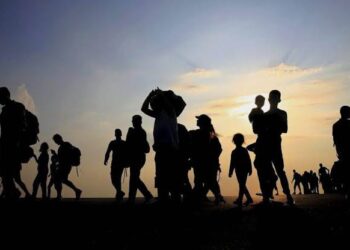
The International Organization for Migration (IOM) has warned that millions of Ukrainians who returned home after fleeing the war risk being displaced again this winter, as damaged housing, repeated attacks on energy infrastructure and rising heating costs threaten their ability to remain in their communities.
According to the organisation, the deteriorating living conditions, disrupted essential services and limited household incomes were making it increasingly difficult for returnees to rebuild their lives, with those who came back within the past three months showing the strongest intentions to leave again.
Arthur Erken, IOM Regional Director for Europe and Central Asia, stated that “for millions of Ukrainians, the challenge is no longer simply whether they can return home. It is whether they can remain there safely, and right now the conditions are making it difficult.”
IOM’s latest findings reveal that the risks are mounting as Ukraine approaches another winter after more than four years of full-scale war, with families and communities struggling to absorb further shocks amid continuing attacks on critical infrastructure.
Damaged Homes and Energy Attacks Threaten Returnees
IOM estimates that 1.45 million people who have returned to their homes are now living in frontline districts, including approximately 565,000 in the Kharkiv region, where the scale of shelter needs remains substantial.
In rural frontline communities, three in four returnees require materials to repair damaged walls, while nearly two in three need roofing materials and insulation to make their homes habitable during the approaching cold season.
The organisation indicated that repeated attacks on energy infrastructure had further weakened essential services, compounding the difficulties faced by households already struggling to recover from displacement and the destruction of their homes.
The risks are particularly acute for those who have only recently returned. IOM’s findings indicate that people who came back within the previous three months are the most likely to consider leaving again, highlighting the uncertainty surrounding the sustainability of returns under current conditions.
Across Ukraine, nearly 3.6 million people remain internally displaced, while an estimated 3.8 million have returned to their places of residence after being displaced since February 2022.
Heating Costs and Power Disruptions Deepen Winter Risks
The threat of renewed displacement extends beyond damaged homes, as many households face difficulties securing adequate heating despite the availability of energy supplies.
During the previous cold season, only 32% of households reported being able to heat their homes adequately. The situation was worse in frontline areas, where only one in four households managed to maintain sufficient indoor warmth.
Nearly six in ten households also reduced their heating consumption to save money, reflecting the financial pressures confronting families as they attempt to meet basic needs amid prolonged conflict.
IOM warned that the combination of unaffordable heating, damaged housing and unreliable energy supplies could leave vulnerable residents exposed to severe winter conditions.
Six in ten residents of major cities depend on district heating systems, while one in five urban households lack a backup power source, leaving them vulnerable to disruptions when energy infrastructure is damaged.
Moreover, an estimated 2.1 million older people reside alone in multi-apartment buildings across Ukraine, raising concerns about their ability to cope with prolonged interruptions to heating and electricity.
IOM Calls for Urgent Funding and Winter Preparations
IOM has called for immediate international support to repair damaged homes, improve insulation and maintain essential services, alongside investment in sustainable, decentralised energy solutions that can help communities withstand future disruptions.
The organisation warned that its ability to respond to the crisis remains severely constrained by a funding shortfall. Less than seven per cent of its 2026 Ukraine Crisis Response Plan had been funded at the time of the statement, limiting the assistance available to vulnerable households ahead of winter.
“With winter approaching, the window to act is narrowing. Less than 7 per cent of IOM’s Ukraine Crisis Response Plan for 2026 has been funded, severely limiting the assistance available ahead of winter. Additional support is critical now, before winter conditions deepen existing needs and put more families at risk of displacement.”
Arthur Erken
IOM stressed that assistance delivered before temperatures fall further would be critical to helping families remain safely in their communities and reducing the likelihood of another wave of displacement.
READ ALSO: GSE Trades 6.87 Million Shares as MTN Ghana Leads Volume