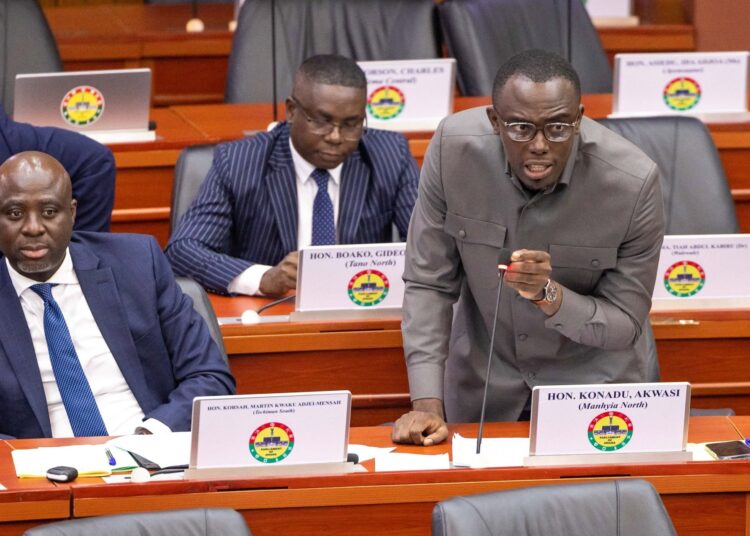
Hon. Akwasi Konadu, Member of Parliament for Manhyia North, has proposed six far-reaching interventions, including mandatory parliamentary oversight, to resolve the escalating disputes and institutional controversies surrounding the Nawara mining concession.
The proposal comes in response to deep-seated regulatory friction, allegations of irregular takeovers, and violent confrontations involving security personnel that threaten peace and stability in mining communities such as Nsuapemso.
By advocating for a structured, multi-institutional intervention, the lawmaker seeks to address systemic administrative opacity while safeguarding legitimate private capital within Ghana’s extractive sector.
“It is my considered opinion that, 1. Full regulatory disclosure: The Minerals Commission must explain the legal basis for the concession’s termination and subsequent authorisations. 2. Independent investigations: The reported deaths, shootings and allegations concerning gold and equipment must be thoroughly investigated. 3. Respect for court orders: All parties and public authorities must comply with applicable judicial orders.”
Hon. Akwasi Konadu
In a broader push for structural accountability, Hon. Konadu stressed that Ghana’s mineral resource wealth belongs strictly to the Ghanaian populace rather than politically connected elites, making parliamentary scrutiny imperative.
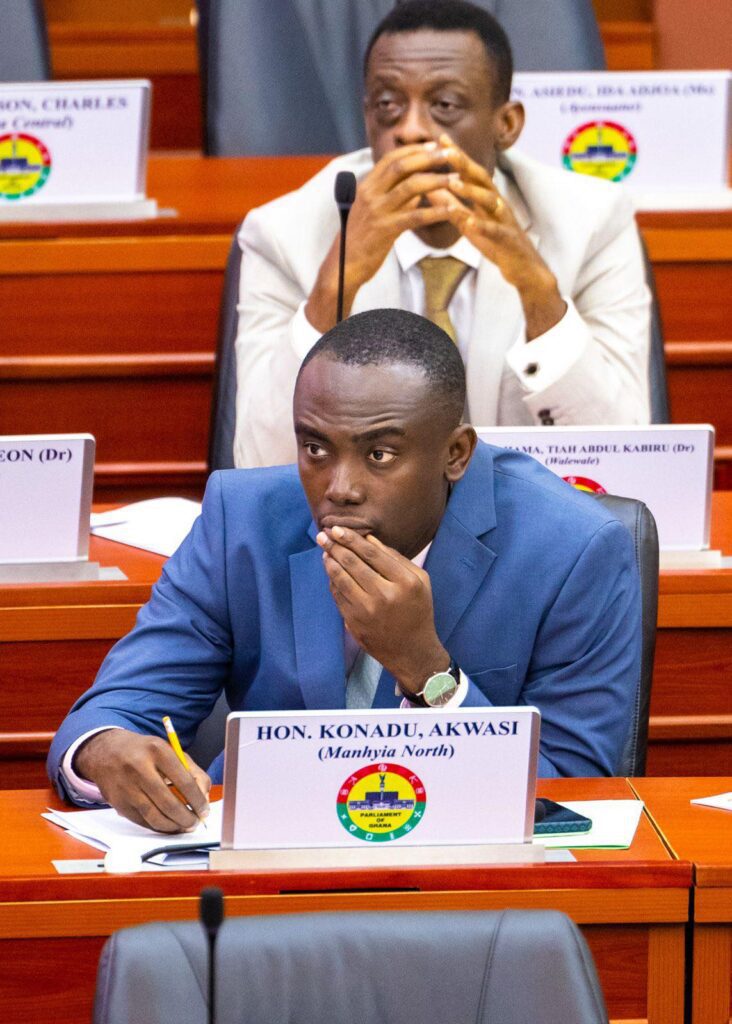
The Manhyia North legislator cautioned that administrative overreach, political interference, and selective enforcement risk severely damaging investor confidence, undermining host community security, and breeding deep public distrust toward state regulatory institutions.
Institutional Governance and Regulatory Transparency
The call for robust parliamentary intervention highlights a critical structural gap in how administrative authorities manage natural resource concessions across the sub-region.
Under Ghana’s legal framework, the Minerals Commission and the Ministry of Lands and Natural Resources exercise broad administrative powers over the granting, suspension, and revocation of mineral rights.
However, when regulatory terminations occur alongside allegations of irregular transfers or administrative high-handedness, they cast doubts on institutional fairness and weaken the predictability required for long-term capital investment.
Independent regulatory disclosure serves as a vital safeguard against arbitrary decisions that threaten state stability.

Ensuring that the Minerals Commission publicly accounts for its legal mechanisms prevents state power from being weaponized against private entities.
As Hon. Konadu observed, “No business should lose lawful rights through intimidation, arbitrary administrative action or the improper use of state power.”
Transparency in mining administration remains non-negotiable for maintaining foreign direct investment and institutional trust.
Security Deficits and Human Rights Risks in Extractive Zones
Beyond administrative disagreements, the escalation of mining disputes into physical violence highlights severe enforcement challenges within resource-rich areas.
Conflict zones like Nsuapemso suffer when armed confrontations, shootings, and loss of life disrupt host communities and destabilize local economies.
The introduction of state security forces or private armaments into commercial property disputes complicates criminal accountability and leaves local populations vulnerable to collateral harm.

Thorough, independent investigations into security operations and missing assets are essential to upholding human rights standards within the extractives industry.
When fatalities and property seizures occur without transparent police inquiries or judicial resolutions, rule-of-law indicators decline dramatically.
Public security apparatuses must operate strictly within legal parameters, ensuring that human rights are protected and that private entities cannot use security enforcement for commercial leverage.
Safeguarding Equal Economic Opportunity and Judicial Supremacy
The Nawara conflict serves as a decisive litmus test for the rule of law and equal protection within Ghana’s business climate.
A stable market economy relies on the absolute supremacy of judicial orders, which must bind public officials and private actors alike.
When administrative decisions appear to bypass active court directives or favor politically connected individuals, the equal protection guaranteed to ordinary entrepreneurs is severely compromised.
Strengthening parliamentary oversight through the Select Committee on Lands and Natural Resources provides a essential legislative balance to executive discretion.
This oversight mechanism allows the state to re-examine regulatory coordination, address potential conflicts of interest, and protect legitimate enterprises without encroaching on judicial or law enforcement duties.
Ultimately, reaffirming that public office cannot serve private family advantage preserves the integrity of the state and guarantees that national natural resource endowments serve the collective interest of all citizens.
READ ALSO: GEA, SanlamAllianz Partner to Protect MSMEs