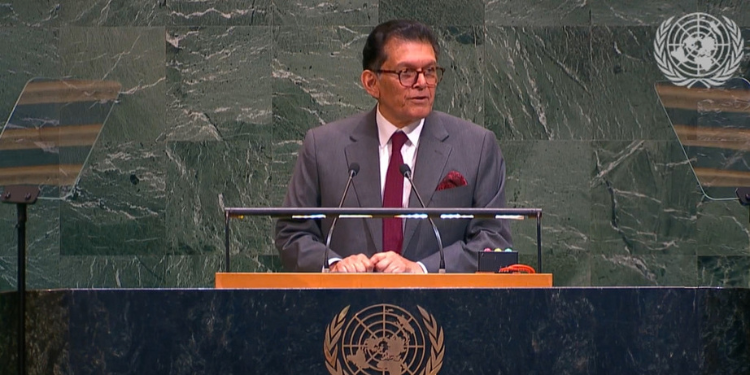
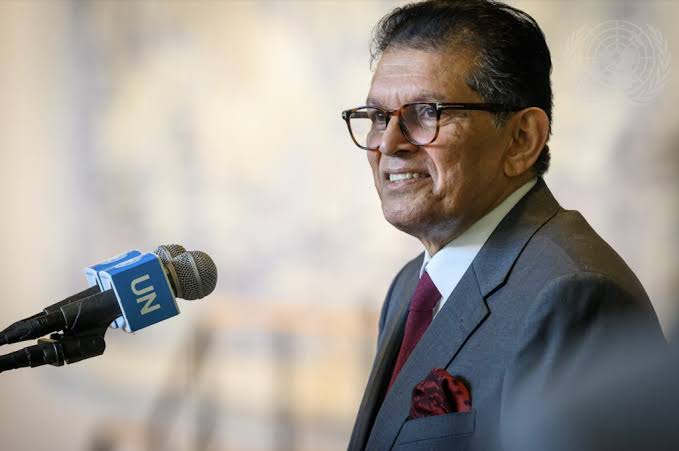
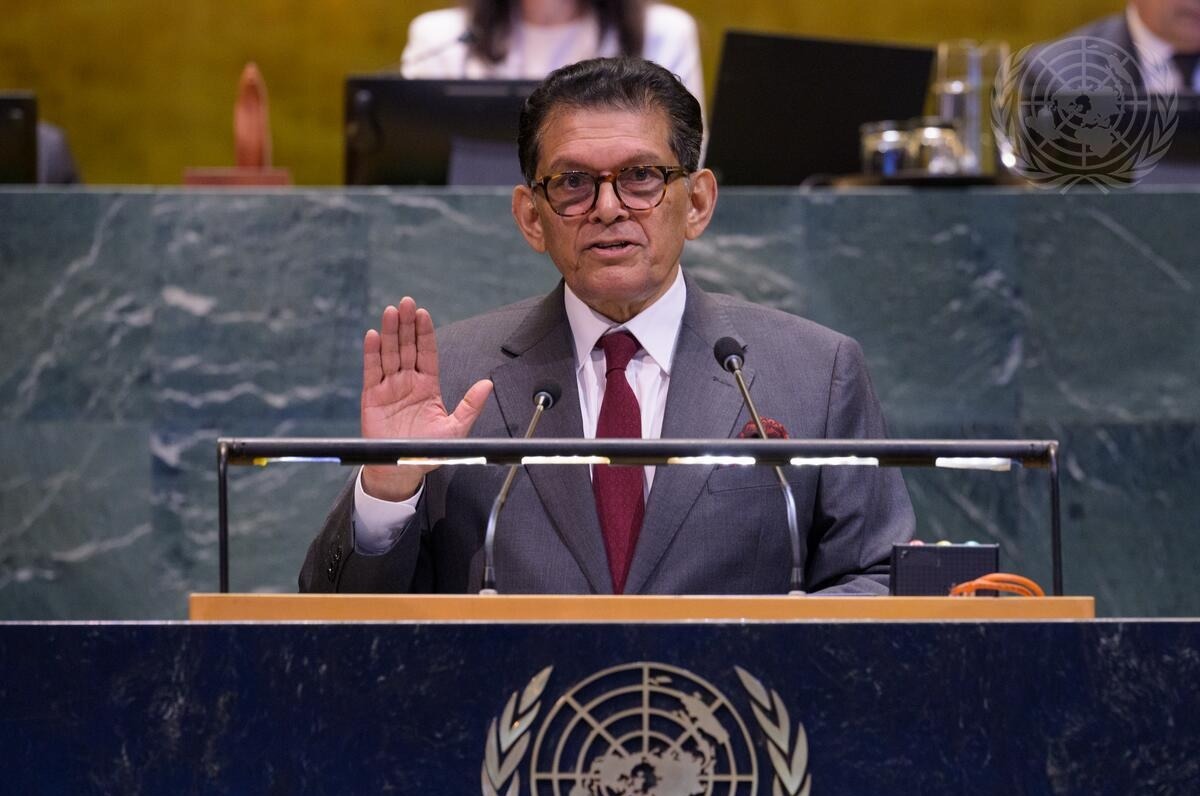
United Nations General Assembly President Khalilur Rahman has called on the organisation to confront its institutional shortcomings and undertake fundamental reforms to rebuild public trust, arguing that its 80-year survival alone does not demonstrate success.
According to Khalilur Rahman, “Outside these walls, people are not asking whether the United Nations still exists. They are asking whether it works.”
The UN remains the principal global forum for diplomacy, peace and security, humanitarian coordination and international development, yet its ability to respond decisively to major crises has repeatedly been constrained by political divisions among member states.
Rahman acknowledged those failures, including the unresolved Palestinian question and continuing wars that have produced large-scale displacement, humanitarian suffering and political instability.
His argument, however, was not that the organisation has become irrelevant. He pointed to areas where UN-backed action has produced measurable results, including the return of nearly five million people to their homes in Iraq and the continued delivery of humanitarian assistance in Haiti despite severe security challenges.
He also highlighted the contribution of peacekeeping operations, recalling the description of peacekeepers by a representative from a war-torn country as builders of “roads and communities”, rather than simply “Blue Helmets.”
Such examples formed part of a broader case that the UN’s record cannot be measured solely through the crises where its member states have failed to reach agreement.
Rahman’s call for reform instead centres on restoring confidence through institutional changes that respond to the realities of the current international system.
According to Rahman, “Trust is not given. It is earned.”
He added, “Passive ownership is not enough. If we do not claim proactive ownership of this place, we cannot expect it to heal.”
He identified three areas requiring attention: honest recognition of institutional weaknesses, structural reform that goes deeper than reductions or adjustments to budgets, and greater participation by businesses, scientists and civil society in global decision-making.
Artificial intelligence equally formed a particularly important part of that argument. The rapid development of AI is creating policy questions that extend across borders, while governments and international organisations are still developing mechanisms capable of overseeing technologies that can influence economies, security systems, public discourse and everyday life.
Rahman urged the UN to avoid falling behind the pace of technological change, calling for “prudent and reliable guardrails” developed with scientific expertise from outside government.
He added, “we cannot allow an arms race for control of AI to carry us over the precipice.”
UN Reform and the Future of Global Governance
The question of institutional reform becomes particularly significant in relation to the UN Security Council, where the structure of permanent membership continues to reflect the geopolitical realities of 1945 rather than the distribution of power and responsibilities in the contemporary international system.
Rahman renewed calls for a more representative Security Council, linking the effectiveness of the wider UN system to the council’s ability to function credibly.
“When the Security Council works, the United Nations works,” he stated.
Rahman also pressed for greater African representation, indicating that “Africa needs a seat at the table, not to be on the menu.”
African governments have repeatedly called for reform that would give the continent permanent representation and greater influence over decisions concerning international peace and security.
The issue has gained renewed prominence as conflicts in Sudan and other parts of Africa continue to require international diplomatic and humanitarian intervention.
Representation, however, is only one dimension of the institutional challenge.
The UN is also confronting a widening mismatch between the resources devoted to military activity and those available for development. Rahman highlighted the decline in development assistance alongside the continued increase in global military expenditure.
Development assistance fell by 23% year-on-year to approximately $175 billion, while global military spending approached $3 trillion after 11 consecutive years of growth.
The contrast illustrates the financial pressures facing efforts to achieve global development targets at a time when governments are allocating increasingly large resources to defence and security.
Moreover, Rahman pointed to evidence that international cooperation can produce substantial improvements in living conditions.
Nearly one billion people have gained access to safe drinking water over the past decade, while electricity now reaches 92% of the world’s population. Internet access has also increased from 40 per cent to 74%.
Those figures provide a counterpoint to the perception that multilateral institutions have failed across the board. They demonstrate that coordinated international action can contribute to improvements in basic services and connectivity, even as major development gaps remain.
The challenge is that progress has been uneven, while many countries continue to face conflict, poverty, debt pressures and limited access to essential services.
Rahman also turned attention to the spread of hate speech and the use of technology to amplify divisive narratives.
He warned that hateful messages targeting women and girls, minorities, migrants, refugees and persons with disabilities are spreading across borders at unprecedented speed and scale, sometimes for political purposes.
“We must choose dialogue and tolerance and foster a culture in which human rights are respected not only in law, but in our daily interactions, and we must stop the cherry picking of those rights that fit our respective cultures or the politics of the day.”
Khalilur Rahman
The proliferation of digital platforms and emerging technologies has added another dimension to the problem. Artificial intelligence and other tools accelerate the production and distribution of false information, manipulate public debate, and amplify messages that encourage hostility or violence.
According to Khalilur Rahman, “whether it is islamophobia, antisemitism, homophobia, or misogyny, it’s all the same hatred, repackaged and relabelled. Let us use the tools of our age not to deepen fear, but to widen understanding and advance human dignity, for everyone, everywhere.”
READ ALSO: Black Sherif Becomes First Artist to Headline Legon Stadium Twice