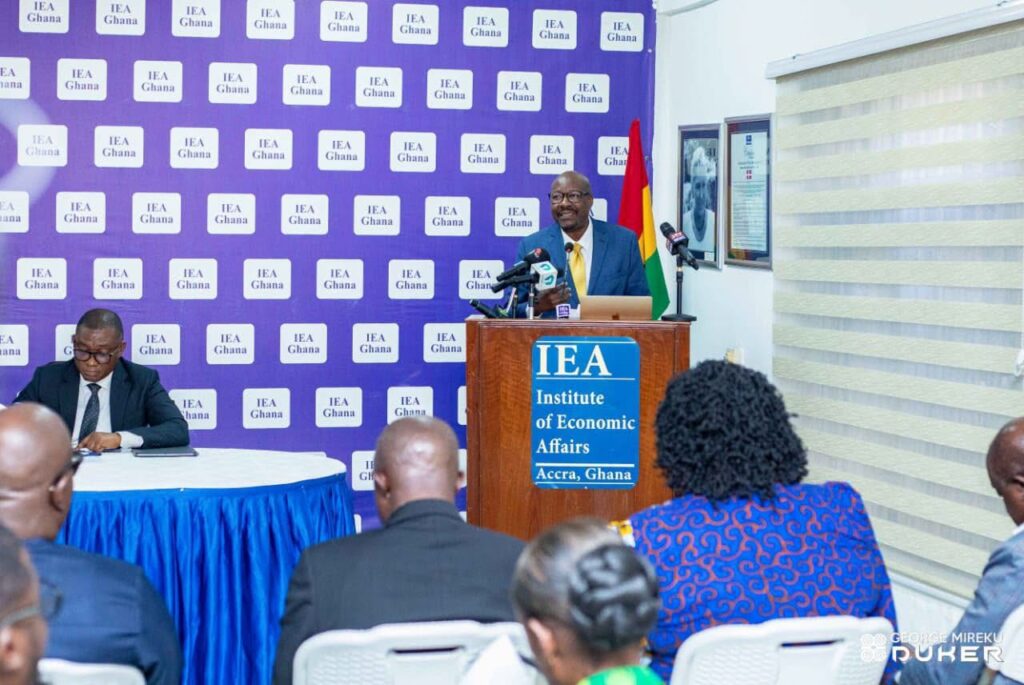
Mr. Victor Anko-Tsede, a legal practitioner and resource governance expert, has called for unambiguous constitutional definitions to separate parliamentary oversight from executive responsibility in the extraction and management of natural resources.
According to the legal luminary, the current lack of structural precision regarding where parliamentary mandate begins and where executive operational duties remain creates serious institutional friction in resource governance.
He noted that without explicit constitutional boundaries, the state risks severe legal uncertainty that undermines major investment decisions and national economic strategy.
“The constitution should identify precisely where parliamentary approval begins and where executive responsibility remains. Because if parliament refuses approval after negotiation, what happens? What happens to contractual expectations? What happens to liability? These may be theoretical questions, but they are questions which eventually arrive in the court.”
Mr. Victor Anko-Tsede
Expanding on this institutional dilemma, Mr. Anko-Tsede highlighted how overlapping mandates during resource transactions generate significant commercial ambiguity.
He emphasized that the constitution must clearly delineate regulatory boundaries across five key governance phases: policy approval, parliamentary oversight, negotiation, contract administration, and executive responsibility.
When state institutions operate without absolute clarity regarding their constitutional scope, statutory deadlock becomes inevitable, leaving foreign investors and domestic regulatory authorities in a costly state of legal limbo.
Constitutional Ambiguity In Extractive Contracts
The call by Anko-Tsede directly addresses a recurring constitutional headache in mineral and petroleum governance.
When the legislature intervenes late in the deal-making process often after the executive branch has completed complex, multi-year commercial negotiations the state exposes itself to immense contractual vulnerability.
If parliament subsequently exercises a retroactive veto, it disrupts established commercial expectations and leaves international partners questioning the binding authority of executive signatures.

This legal gap creates major commercial disputes when commercial parties attempt to enforce agreements that passed executive checks but failed post-negotiation parliamentary ratification.
“What happens to liability?” when international investors incur substantial capital expenditures based on executive promises, only to face legislative refusal later, Anko-Tsede questioned.
In the absence of direct constitutional remedies, such impasses frequently escalate into international arbitration, costing sovereign states millions of dollars in damages and legal fees.
The Jurisprudential Imperative for Legislative Boundaries
To safeguard natural resource assets, legal frameworks must establish a clean, predictable workflow that eliminates post-negotiation deadlocks.
Legal experts argue that parliamentary consent should either occur beforehand via policy frameworks or operate within strictly defined legislative timelines.

Allowing indefinite parliamentary intervention during contract administration undermines executive agency and destabilizes long-term resource management strategies.
Addressing these “questions which eventually arrive in the court” requires proactive constitutional reform rather than relying on judicial intervention after disputes erupt.
By codifying precise operational boundaries, the constitution can ensure robust legislative oversight without stripping the executive branch of its essential administrative capacity to finalize and execute binding commercial agreements.
Safeguarding National Assets Through Governance Reforms
Reforming constitutional provisions on resource oversight is essential to creating a transparent, stable environment for natural resource extraction.
Comprehensive legislative boundaries provide international mining and energy firms with the legal certainty needed to deploy long-term capital, while simultaneously guaranteeing that parliamentary oversight effectively guards national interests against predatory terms.

Ultimately, establishing harmonious limits between state branches is not merely an exercise in legal philosophy; it is a prerequisite for sovereign resource protection.
As Anko-Tsede observed, leaving these governance grey areas unresolved forces courts to arbitrate executive-legislative stalemates a scenario that inevitably damages investor confidence and delays national development.
Clear constitutional lines remain the ultimate remedy to guarantee that resource deals deliver sustainable, conflict-free economic growth.
READ ALSO: Stable Utility Tariffs Limit Ghana’s Q4 Inflation Pressure