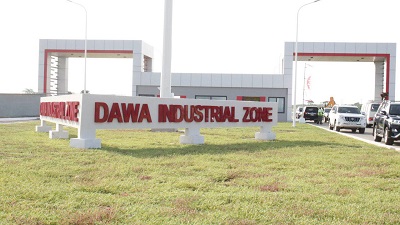
The International Finance Corporation (IFC) is backing a new phase of private renewable-energy investment in Ghana’s industrial zones, with a US$39.5 million financing package supporting the development of a 100-megawatt solar project in the Dawa Industrial Zone.
The financing, being provided in partnership with LMI Holdings, is expected to expand renewable electricity supply to more than 100 businesses operating across the Tema and Dawa Industrial Zones, covering manufacturing, agro-processing, logistics and other industrial activities.
The project is significant for Ghana’s energy sector because it links renewable-energy deployment directly to industrial competitiveness.
Rather than treating solar generation simply as an addition to national generating capacity, the investment is being developed around concentrated industrial demand where reliable electricity is critical to production.
Solar Investment Targets Industrial Demand
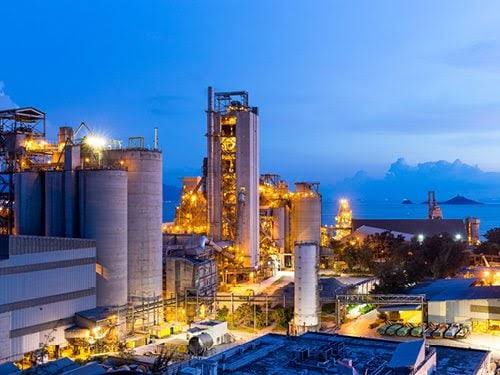
The financing will support the completion of the first 100MW phase of a planned 200MW solar photovoltaic facility in the Dawa Industrial Zone.
The US$39.5 million package represents the second tranche of a wider US$100 million financing facility. IFC had previously committed US$21 million in the first tranche during FY24, with that financing disbursed in FY25.
The project is expected to create about 250 direct and 500 indirect jobs during construction, while 19 permanent operational positions are expected to be sustained after construction.
The immediate energy significance, however, lies in its potential to provide industrial customers with an additional source of electricity that is less exposed to conventional fuel costs.
For businesses operating in Tema and Dawa, electricity is not simply an operating expense. Reliability and price directly influence production schedules, investment decisions and the competitiveness of locally manufactured goods.
IFC said the project would help industrial customers reduce the carbon intensity of their operations while improving efficiency and supporting expansion.
“Reliable and affordable energy is essential to Ghana’s efforts to expand manufacturing and increase local value addition.”
The investment therefore sits at the intersection of two policy priorities: strengthening Ghana’s electricity supply and creating conditions for deeper industrialisation.
Energy Reliability Meets Industrialisation
Ghana’s industrial ambitions have long been constrained by the cost and reliability of electricity.
The expansion of dedicated renewable generation within industrial zones offers a way of addressing part of that challenge without relying entirely on additional conventional generation.
The IFC-LMI project also builds on existing infrastructure developed through the two institutions’ earlier partnership.
That cooperation supported a 16.82MW rooftop solar facility at the Tema Industrial Zone as well as an 11,000-cubic-metre-per-day water treatment plant at Dawa. The rooftop installation is described by IFC as the largest operating facility of its kind in Africa.
The latest project consequently represents an expansion of an existing industrial infrastructure model rather than a standalone renewable-energy investment.
LMI’s industrial-zone infrastructure includes electricity, water, logistics and digital services, meaning the solar project forms part of a wider effort to provide the basic infrastructure required by businesses operating within the zones.
That integrated approach is important. Solar capacity on its own cannot resolve industrial energy constraints if electricity cannot be delivered effectively to businesses or if other infrastructure bottlenecks remain.
Financing Model Brings Private Capital
The structure of the financing is also relevant to Ghana’s broader energy-investment challenge.
The US$39.5 million package combines IFC financing, support from the International Development Association’s Private Sector Window and directly mobilised private capital.
This is consistent with the growing role development finance institutions are playing in helping emerging markets attract private capital into infrastructure projects that may otherwise face difficulty reaching financial close.
The approach matters for Ghana because the scale of investment required across generation, transmission, distribution and renewable energy cannot be met through public financing alone.
IFC has separately indicated that it is seeking to deepen private-sector investment in Ghana, with a potential investment pipeline of about US$1.2 billion across various sectors.
The solar financing therefore forms part of a wider push to use development finance to reduce investment barriers and bring additional private capital into Ghana’s productive sectors.
Broader IFC Engagement Extends Beyond Solar
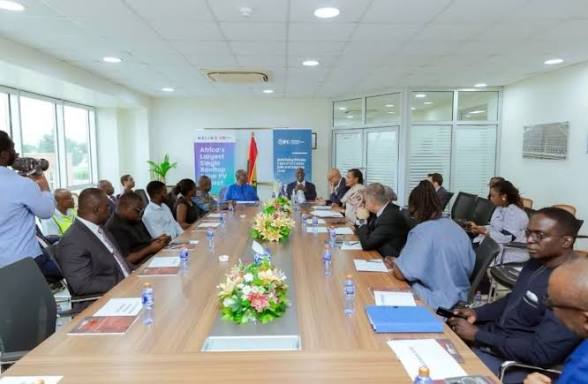
The solar project also comes alongside wider discussions between IFC and the Ghanaian government on infrastructure, energy and trade.
IFC Managing Director Makhtar Diop has disclosed discussions with government on a proposed seven-kilometre railway around Tema, aimed at improving the movement of goods and strengthening connections to inland and regional markets.

He also disclosed ongoing discussions around the expansion of Tema Port, including Berth 5, as Ghana seeks to strengthen its position as a logistics and trading hub.
On energy, Mr Diop said the IFC was discussing a major solar project for the Tema processing zone, where existing rooftop solar investments have not been sufficient to meet the zone’s electricity requirements.
“We agreed also to a very ambitious, I don’t want to give you the numbers, but I tell you that will be certainly one of the largest solar projects that you might have in Africa,”
IFC Managing Director Makhtar Diop
The combination of the solar investment, rail discussions and Tema Port expansion points to a broader infrastructure strategy around Ghana’s industrial corridor.
Energy supply, logistics and port capacity are closely connected: cheaper and more reliable electricity can improve industrial production, while efficient transport infrastructure can reduce the cost of moving inputs and finished products.
Renewable Energy Takes Industrial Role
For Ghana’s energy transition, the development is also significant because it places renewable generation directly within an industrial setting.
The country’s transition framework seeks to increase renewable-energy use while maintaining energy security and supporting economic development.
The IFC-LMI project aligns with that objective by adding renewable generation close to a concentrated base of industrial consumers.
The model could become increasingly relevant as Ghana seeks to expand manufacturing and local value addition.
The key test, however, will be whether projects of this nature can be scaled beyond individual industrial zones and replicated in other areas where businesses face high electricity costs or reliability constraints.
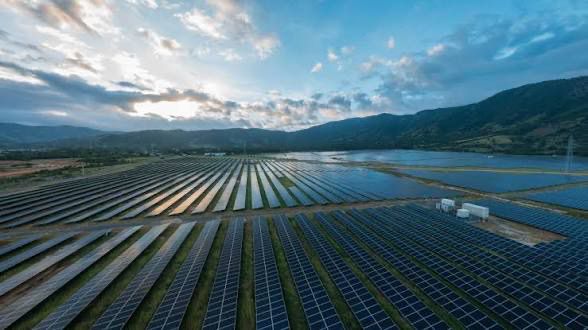
For now, the Dawa project represents a concrete example of development finance being directed towards renewable generation with a clearly defined productive-use market.
Its broader significance is that Ghana’s energy transition is increasingly moving from policy commitments into infrastructure designed to support actual economic activity.
If the investment delivers the expected additional electricity supply to industrial users, it could demonstrate how renewable energy can serve not only as a climate instrument, but also as part of the infrastructure base needed to make Ghanaian industry more competitive.
READ MORE: Minority Visits Christian Council, Calls For Religious Voice On Drug Crisis