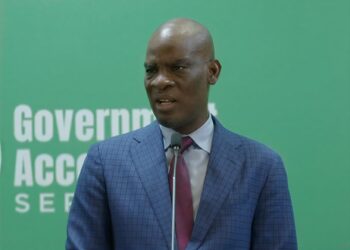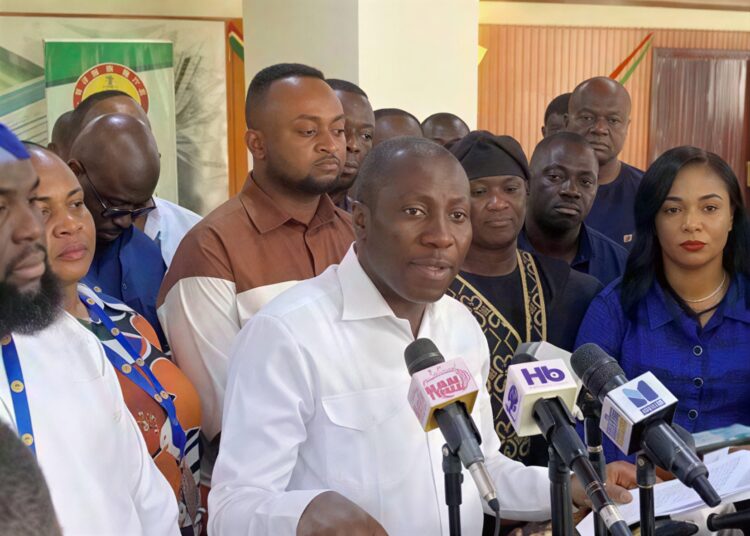
The Minority in Parliament has urged Ghana’s major religious bodies to take a stronger public position on the growing narcotics crisis, arguing that the issue should not be left solely to politicians. The appeal was made by the Assin South MP and Ranking Member on the Defence and Interior Committee, Honourable John Ntim Fordjour, during a courtesy call on the Christian Council of Ghana.
Honourable Fordjour explained that religious leaders occupy a unique position in national affairs because they have historically spoken on matters of public interest regardless of which political party controls government. He therefore appealed to the Christian Council, the Catholic Bishops’ Conference and other ecumenical bodies to continue providing an independent moral voice.
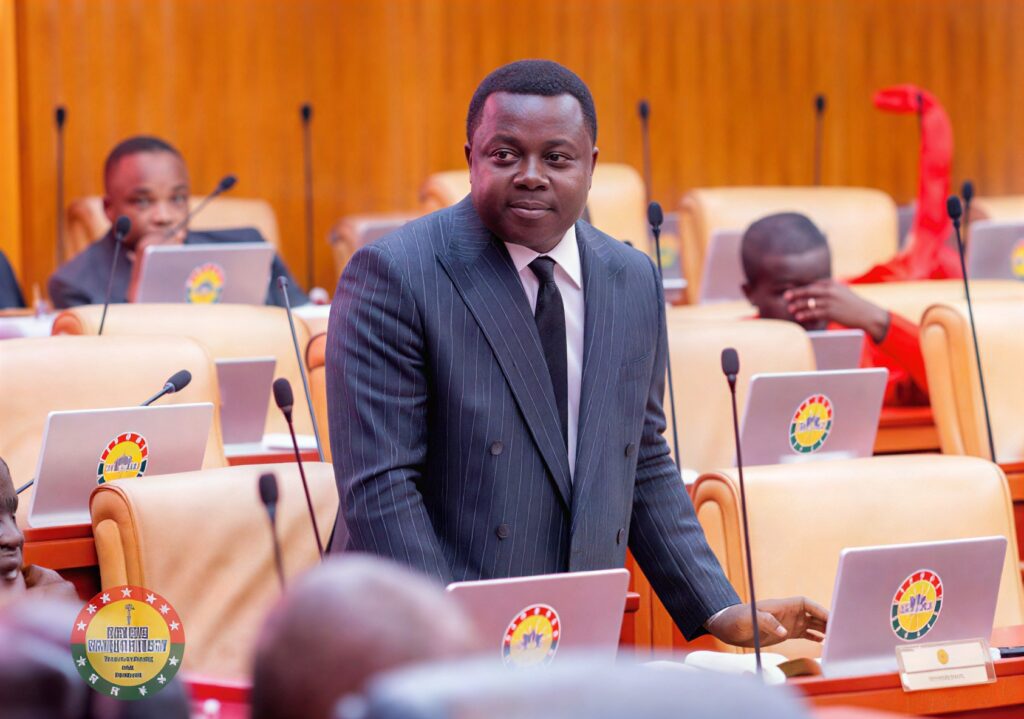
“They are credible, moral voice of conscience who have had cause to speak truth to power regardless who is in power, regardless which party’s in power, or who is the president over the years on many issues of national importance.”
Honourable John Ntim Fordjour
Referencing the recent intervention by the Ghana Catholic Bishops’ Conference, Rev. Ntim Fordjour commended the bishops for becoming one of the first major religious bodies to publicly call for a thorough inquiry into the narcotics situation. The Conference recently urged an urgent and coordinated national response following several drug seizures linked to Ghana, including the nearly 3.9 tonnes of cocaine intercepted in France.
However, the Minority spokesperson expressed disappointment over attacks directed at Catholic clergy after the bishops raised their position. He argued that the absence of a public condemnation from government officials has created an unfortunate situation in which religious leaders could be targeted for speaking on a matter of national importance.
Directing attention to the role of faith leaders, Honourable Fordjour reiterated that the narcotics issue carries implications beyond partisan politics. He called on religious organisations to speak without fear or favour because the consequences of the drug trade, if left unchecked, could affect families, communities and the country as a whole.
The Assin South MP also stressed that the Minority’s engagement with religious institutions is not intended to turn the narcotics debate into another political contest. Instead, the delegation wanted respected voices outside partisan politics to help sustain public attention and encourage the authorities to pursue a lasting response.
Christian Council Vows Not To Remain Silent On Drug Crisis
The Christian Council of Ghana also pledged to take up the growing narcotics problem and contribute to efforts aimed at preventing the crisis from causing further harm to society. The position emerged after the Minority members on Parliament’s Defence, Intelligence and Security Committee and Religious Affairs Committee paid a courtesy call on the Council in Accra.
The delegation, led by the Assin South MP and Ranking Member on the Defence and Interior Committee, Honourable John Ntim Fordjour, sought the Council’s intervention in the wake of several major drug seizures linked to Ghana. The engagement is intended to broaden the conversation beyond Parliament and encourage religious institutions to contribute to a national response.
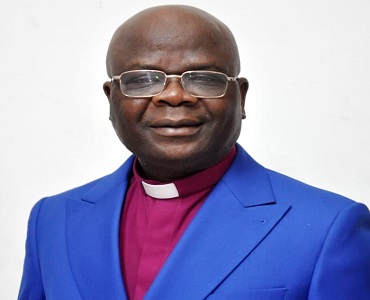
Chairman of the Christian Council, Rev. Enoch Thompson, acknowledged that the church is already aware of the developments and have been following reports surrounding the seizures. He indicated that the Council would take up the matter and would not remain silent on an issue capable of affecting the country’s young population.
The Christian Council’s position adds a religious dimension to a debate that has largely centred on security, law enforcement and political accountability. Recent national discussions have followed the interception of nearly 3.9 tonnes of cocaine in France from a container that had arrived from Ghana, alongside other narcotics cases cited by authorities and political actors.
Honourable Fordjour and the Minority delegation have argued that the scale of the seizures requires attention from institutions beyond the political class. Their position is that continued partisan exchanges could overshadow the underlying security challenge if religious and other civic institutions do not also contribute to the discussion.
The Ranking Member has previously called for investigations into major narcotics seizures linked to Ghana and questioned whether prosecutions have adequately reached the organisers and financiers behind the consignments. The Minority has also called for a full parliamentary inquiry into the circumstances surrounding major seizures and the effectiveness of investigations.
Against this background, the Council’s decision to engage the matter could widen the national conversation around prevention, accountability and the protection of young people. The Catholic Bishops’ Conference has similarly described drug trafficking as both a national security challenge and a moral crisis, urging authorities to investigate the networks behind major consignments.
READ ALSO: Camidoh Drops New Four-Track EP Titled ‘Amina’ Today