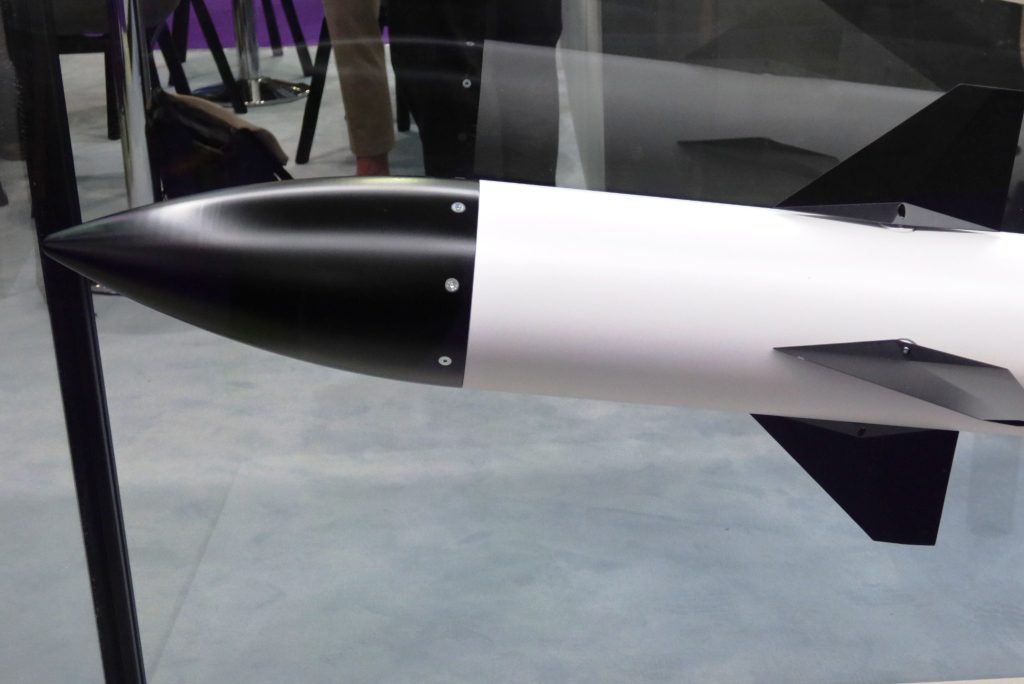
Defence Secretary, John Healey, has announced a major step forward in strengthening both national and allied air defence capabilities, confirming that Cambridge Aerospace is set to supply a new generation of interceptor missiles known as “Skyhammer” to UK Armed Forces and key Gulf partners.
Speaking at the London Defence Conference, John Healey said that the Ministry of Defence plans to purchase advanced interceptor missiles to counter drone assaults.
According to John Healey, the government is taking the same strategy as UK’s help for Ukraine, speeding contracts with the most creative British businesses in order to fast increase support to Gulf partners and equip the armed forces with anti-drone technology.
“Our government backing for Cambridge Aerospace is a prime case of a veteran-founded UK defence start-up scaling at pace to deliver new interceptor missiles within weeks for our Armed Forces and Gulf partners, and good jobs and security here in the UK.”
John Healey
The skyhammer system has been specifically designed to neutralise Iranian Shahed-style drones, which have been widely deployed in recent conflicts across Ukraine and the Middle East.
These unmanned aerial systems, often used in swarms and at relatively low cost, have exposed significant vulnerabilities in traditional air defence networks.
As a result, UK government is accelerating the deployment of more agile and scalable countermeasures capable of addressing both the volume and unpredictability of such threats.
With a range of 30 kilometres and a top speed of 700 kilometres per hour, Skyhammer is optimised for rapid interception in short- to medium-range scenarios.
The government is supporting a veteran-founded start-up that can provide operational capabilities in a matter of weeks instead of depending exclusively on long-standing defence primes and drawn-out acquisition delays.
The first batch of Skyhammer missiles and launchers is anticipated to be delivered as early as May, subject to final contract agreements. Other systems will be provided within the first half of the agreement.
This demonstrates how lessons from current conflicts are altering defence priorities. The extensive employment of loitering bombs and one-way attack drones in Ukraine has highlighted the necessity for low-cost, large-scale interception systems.
Similarly, in the Middle East, frequent aerial threats have increased demand for systems capable of rapid response and long-term operational use without incurring a significant budgetary burden.
CEO of Cambridge Aerospace Steven Barrett indicated that “with aerial threats to the UK and our allies increasing by the day, it is critical that we can defend ourselves effectively. Skyhammer was designed to do exactly that bringing affordable mass to protect our skies,” adding “we welcome the Government’s commitment to supporting UK air defence with scalable, sovereign solutions.”
Aside from its immediate military impacts, the agreement bears substantial economic and industrial weight. The expansion of production at Cambridge Aerospace is expected to create more than 50 new employment while supporting over 125 current ones, emphasizing the government’s overarching goal of placing defence as a driver of economic development.
This is consistent with the UK’s long-term objective to grow defence spending to 2.6% of GDP by 2027, the greatest steady increase since the Cold War era.
Expanding Defence Exports and Industrial Coordination
The multi-million-pound agreement extends beyond the provision of interceptor missiles and launchers to include system integration, technical assistance, and user training. This greater reach reflects a conscious effort to ensure that both UK people and partner nations have not only the technology, but also the operational knowledge needed to deploy and sustain it effectively in real-world settings.
The programme also builds on momentum generated during a recent defence industry roundtable held in London, where representatives from 13 leading UK-based companies engaged with Gulf ambassadors and defence attachés. Those discussions centred on expanding industrial cooperation and identifying practical pathways to strengthen support for regional allies facing increasingly complex security challenges.
Within this context, UK Ministry of Defence, acting through the National Armaments Director (NAD) Group, is intensifying efforts to streamline export mechanisms, particularly in relation to financing and licensing approvals. The objective is to reduce delays and improve responsiveness, enabling UK industry to deliver critical capabilities to partner nations more efficiently.
Supporting this effort is the creation of a dedicated Task Force within the NAD Group, designed to coordinate activity across government and enhance collaboration with Middle Eastern partners. In addition to facilitating export support, the Task Force will oversee the resilience of the UK defence supply chain amid ongoing conflicts, while also identifying and prioritising requirements for replenishment.
This integrated approach is intended to balance domestic readiness with international commitments, ensuring sustained capability across both fronts.
READ ALSO : New GoG Bond Trades at 12.11% Yield As GFIM Turnover Surges to GH¢3.48bn