A new Greenpeace International report has raised urgent concerns about the widespread use of plastic packaging in baby food, warning that infants around the world may already be ingesting microplastics as part of their daily diet.
The report, titled “Tiny Plastics, Big Problem: The Hidden Health Risks of Plastic Pouches for Baby Food,” highlights how modern parenting convenience has become deeply intertwined with plastic packaging, particularly in the form of squeeze-style food pouches that dominate supermarket baby food aisles globally.
According to the findings, babies today are virtually unable to avoid plastic exposure, with packaging used in toys, bottles, clothing, blankets, and food systems contributing to a constant presence of synthetic materials in early life environments.
The report argues that this exposure is particularly concerning during infancy, a critical stage of development when biological systems are more vulnerable to environmental contaminants.
The research was based on independent laboratory testing commissioned by Greenpeace International, which examined yoghurt-based and fruit-based puree products from major global brands, including Nestlé’s Gerber and Danone’s Happy Baby Organics, both packaged in plastic spout pouches widely sold across international markets.
The tests detected microplastics in both products, with levels varying significantly depending on the brand and formulation. In the Gerber samples, up to 54 microplastic particles were found per gram of food, while Happy Baby Organics samples contained up to 99 particles per gram. When translated into typical consumption portions, this equates to hundreds of particles per teaspoon and several thousand microplastic fragments per pouch.
The report estimates that a single pouch could contain more than 5,000 microplastic particles in the case of Gerber products, and more than 11,000 particles in Happy Baby Organics products, raising questions about long-term exposure and cumulative health impacts.
Researchers also point to the likely role of polyethylene, a common plastic used in pouch linings, as a potential source of contamination.
Alongside microplastics, the report identifies the presence of various chemicals associated with both packaging and food content, including endocrine-disrupting compounds detected in at least one of the tested products.
The findings add to a growing body of scientific literature suggesting that flexible plastic packaging may be a significant and under-recognised pathway for microplastic exposure in human diets, particularly in processed foods designed for infants and young children.
Greenpeace International argues that the dominance of plastic pouches in the baby food sector reflects broader structural issues in the global food packaging industry, where convenience, shelf life, and cost efficiency often outweigh concerns about long-term environmental and health impacts.
The organisation highlights that plastic packaging accounts for a substantial share of global plastic production and waste, contributing to environmental degradation across its entire lifecycle. From the extraction of fossil fuels to the disposal and fragmentation in ecosystems, plastic pollution has become a defining feature of the modern consumer economy.
Plastic Baby Food Packaging Under Fire Over Hidden Microplastic Risks
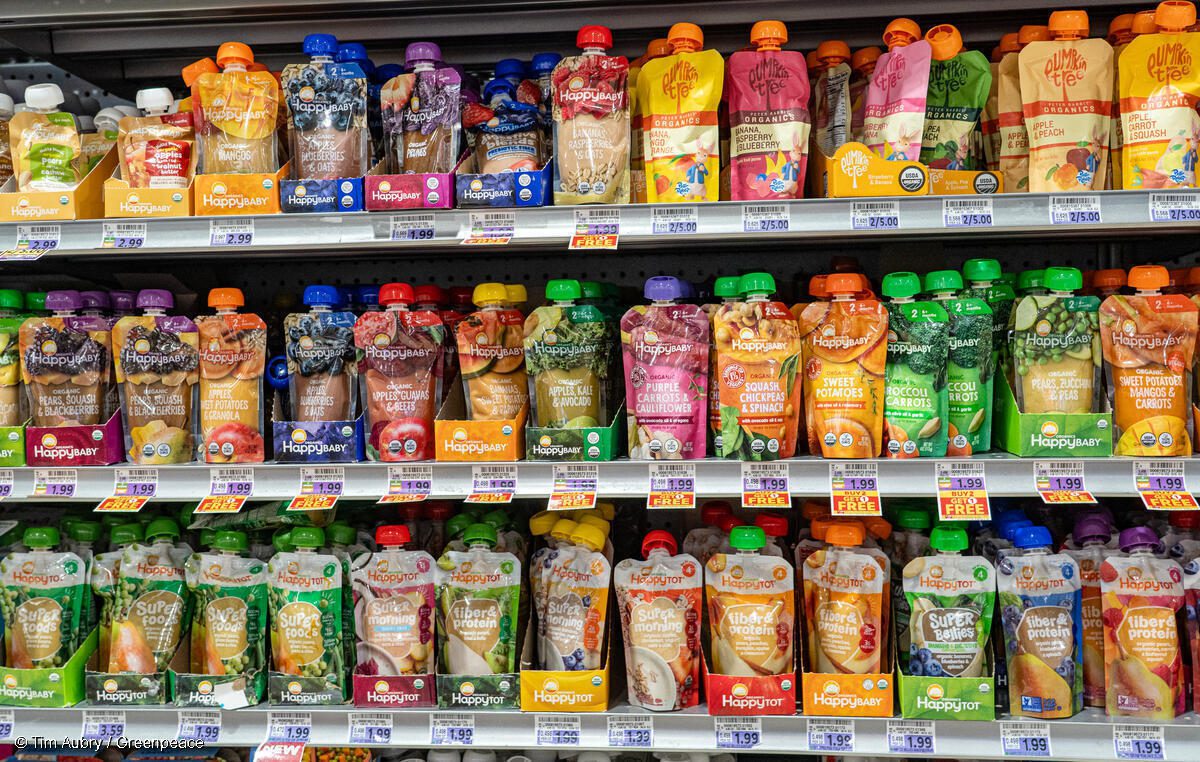
Moreover, the Greenpeace International report also raises concern about the systemic nature of contamination in food supply chains heavily dependent on plastic materials, noting that microplastics are now widely detected in air, water, soil, and food systems globally.
According to Greenpeace International, once released into the environment, plastics break down into increasingly smaller particles that can enter food chains and ultimately human bodies.
Major multinational companies such as Nestlé and Danone are singled out due to their significant market share in the baby food sector, collectively accounting for a large portion of global sales.
Greenpeace argues that with such influence comes heightened responsibility to transition away from plastic-dependent packaging models.
The report also notes that both companies have previously faced scrutiny over their contributions to global plastic waste. Despite voluntary commitments to reduce plastic usage and improve recyclability, Greenpeace claims progress has been insufficient and that current efforts do not adequately address the presence of microplastics or chemical migration into food products.
Industry-wide initiatives aimed at reducing toxins and improving packaging safety are also criticised for allowing loopholes that may still permit contamination risks, particularly in complex multilayer plastic materials commonly used in food pouches.
For many parents, the report raises difficult questions about trust, safety, and choice in the baby food market. While plastic pouches are often marketed as convenient, portable, and safe, Greenpeace warns that convenience may be coming at an unseen cost.
The organisation is calling for a fundamental shift in how baby food is packaged, urging companies to replace single-use plastic pouches with non-toxic, reusable, and refillable systems.
It argues that incremental changes are no longer sufficient given the scale of plastic pollution and emerging evidence of microplastic ingestion.
As scientific research continues to explore the health implications of microplastics, the report concludes that urgent action is needed to reduce exposure at its source, particularly for vulnerable populations such as infants.