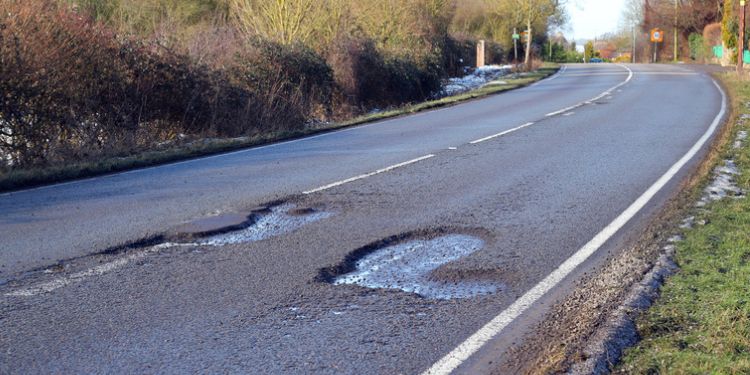
Councils across England will face tougher rules on how they spend road maintenance funding as the government moves to crack down on poor performance and accelerate efforts to repair the country’s deteriorating road network.
In an effort to guarantee that taxpayers see noticeable improvements in road conditions, new regulations could result in local highway authorities losing up to a third of their allotted revenue if they are unable to demonstrate successful maintenance.
The reforms apply to a £1.6 billion funding package for local highways, with around £525 million being withheld from councils unless they can prove transparency and strong performance in how road maintenance budgets are managed. Councils will be required to publish detailed reports showing that all highways funding is spent directly on road repair and upkeep, alongside long-term maintenance strategies and evidence of staff training within highways departments.
These changes come as pothole damage continues to place a heavy financial burden on motorists, costing the average driver around £500 annually in avoidable vehicle repairs.
According to Roads and Buses Minister, Simon Lightwood, drivers deserve smooth, safe journeys, adding, “we’re making sure every pound goes straight into fixing roads and tackling potholes, not being spent elsewhere.”
“Potholes aren’t just an inconvenience hey cost drivers hundreds, if not more, every time they cause damage to a vehicle. Fixing our roads is one of the most impactful things we can do to reduce the cost of owning and driving a car and we’re making sure every pound goes straight into doing exactly that.”
Simon Lightwood
The Minister of Roads and Buses further stressed that councils have been clearly warned they could lose up to a third of their funding if they fail to properly maintain local roads. He also noted that, for the first time, authorities will receive multi-year funding, enabling them to plan ahead effectively and address long-term road deterioration built up over the past decade.
Accountability Measures and Road Reform Push

The new financing mechanism is part of a larger government initiative to increase accountability for local infrastructure expenditure and guarantee that public investment results in quantifiable improvements in road condition.
Under the new rules, authorities must not only remedy current pothole damage, but also explain how they are investing in preventative maintenance. This involves long-term resurfacing operations designed to prevent road degradation rather than depending entirely on reactive maintenance.
The policy also introduces a stronger performance-based funding system. Local highway authorities will be assessed on both road conditions and how effectively they spend their allocated budgets. Councils that fail to meet required standards risk losing a significant portion of their funding, while those that demonstrate strong performance will retain full access to their allocations.
Alongside these enforcement measures, councils will receive greater financial certainty through multi-year funding settlements. This will allow local authorities to plan infrastructure projects more effectively, moving away from short-term fixes and toward long-term road management strategies.
According to RAC head of policy, Simon Williams, these measures should go a long way to addressing the poor condition of local roads.
“Ensuring money that is given to councils to improve their roads is actually spent on roads is critical, so the government’s focus on this will be welcomed by drivers. And, while fixing dangerous potholes is vital, it’s also very positive to see councils being encouraged to carry out preventative maintenance work, which will stop potholes forming in the future.”
Simon Williams
He further indicated that, having the certainty of funding over the next 5 years for councils to plan proper maintenance programmes should result in better quality roads for all.
Moreover, Edmund King, AA president, emphasised that fixing potholes remains the number one motoring issue for drivers, so it is right that councils are being scrutinised over their repair plans. “We urge local authorities to use their funding to resurface roads rather than simply patch up their streets. Proper investment in the road network helps create safer, smoother journeys for everyone,” he added.
The program expands upon an existing government performance framework that uses a red, amber, and green grading system to evaluate 154 local transportation authority based on financial efficiency and road conditions. Additionally, a public map has been made available so that locals may view the performance of their local councils and the ways in which reforms are being implemented.
As a result, thirteen red-rated councils will also get specific assistance from the government to improve underperforming authorities. Over the course of two years, each will get £300,000 in professional planning support with the goal of enhancing delivery, bolstering planning capacity, and assisting councils in raising road maintenance standards.
READ ALSO : Pope Leo Embarks Landmark Africa Tour Across Four Nations