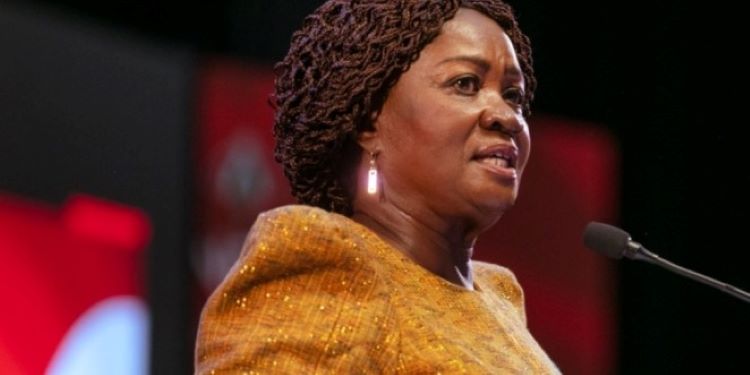
The administrative trajectory of Ghana’s maritime governance reached a definitive climax today, as the state formally institutionalized the nation’s first Marine Protected Area (MPA) – representing a national commitment to restore depleted fish stocks and protect the ecological integrity of the Gulf of Guinea.
In the high-level declaration held at Busua in the Ahanta West Municipality of the Western Region, Vice-President Professor Nana Jane Opoku-Agyemang officially delineated a 703-square-kilometer zone at Greater Cape Three Points as a restricted conservation sanctuary.
“I hereby formally declare Greater Cape 3 Point Marine Protected Area duly established. Government has chosen to act boldly and the Marine Protected Area that we declare today is a critical measure in our national strategy.
“The protection of this area goes far beyond conserving fish. It secures the ecological foundation on which sustainable fisheries and the communities that depend on them must be built”
Vice-President Professor Nana Jane Opoku-Agyemang
The Vice-President revealed that the establishment of the MPA is a critical fulfillment of Ghana’s commitment to the 30-30 Agenda adopted under the Kunming-Montreal Global Biodiversity Framework in 2022.
The government, she added, is moving away from purely extractive ocean management toward a “Blue Economy,” model that prioritizes long-term resilience over immediate, unregulated exploitation by gazetting this carefully mapped maritime territory.
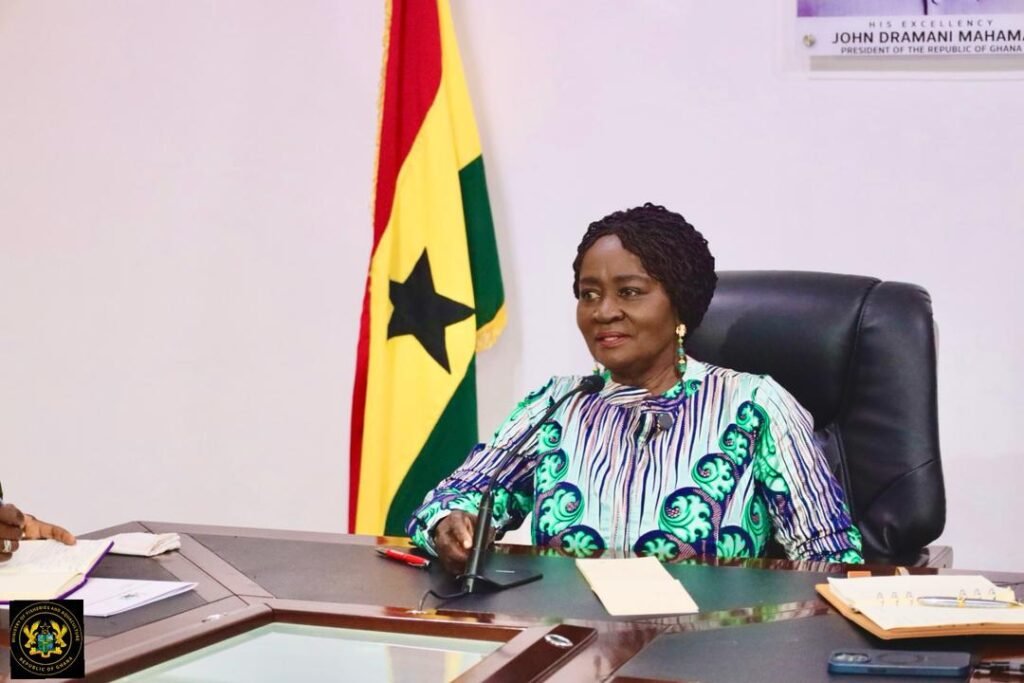
The declaration of the Greater Cape Three Points MPA is the result of decades of scientific advocacy and stakeholder negotiation. While the first official attempts to create a marine conservation area in Ghana date back to 1999, the specific push for the Cape Three Points zone gained technical momentum in 2010.
The process, which received Cabinet approval on October 7, 2025, was driven by a rigorous, science-led consensus involving the Technical Advisory Committee, academia, and civil society.
Addressing a diverse assembly of traditional leaders, fisheries associations, and international partners, Vice-President Opoku-Agyemang emphasized that the selection of this specific zone was based on its role as a critical spawning ground and biodiversity hotspot.
She framed the act of protection as a bold economic safeguard rather than a restrictive burden, explaining that the 703-square-kilometer area encompasses 21 coastal communities – turning these local hubs into the primary custodians of a national asset.
The Blue Economy Vision
For the Ministry of Fisheries and Aquaculture Development (MoFAD), the establishment of the MPA serves as the “irreversible” cornerstone of Ghana’s broader Blue Economy vision.
Sector Minister Hon. Emelia Arthur highlighted that the sustainability of the fisheries sector is inextricably linked to other marine-dependent industries, including tourism, energy, and lands and natural resources. She added that the MPA is to be a “biological bank,” where protected stocks can regenerate and spill over into adjacent fishing grounds, thereby increasing the overall productivity of the national fleet.
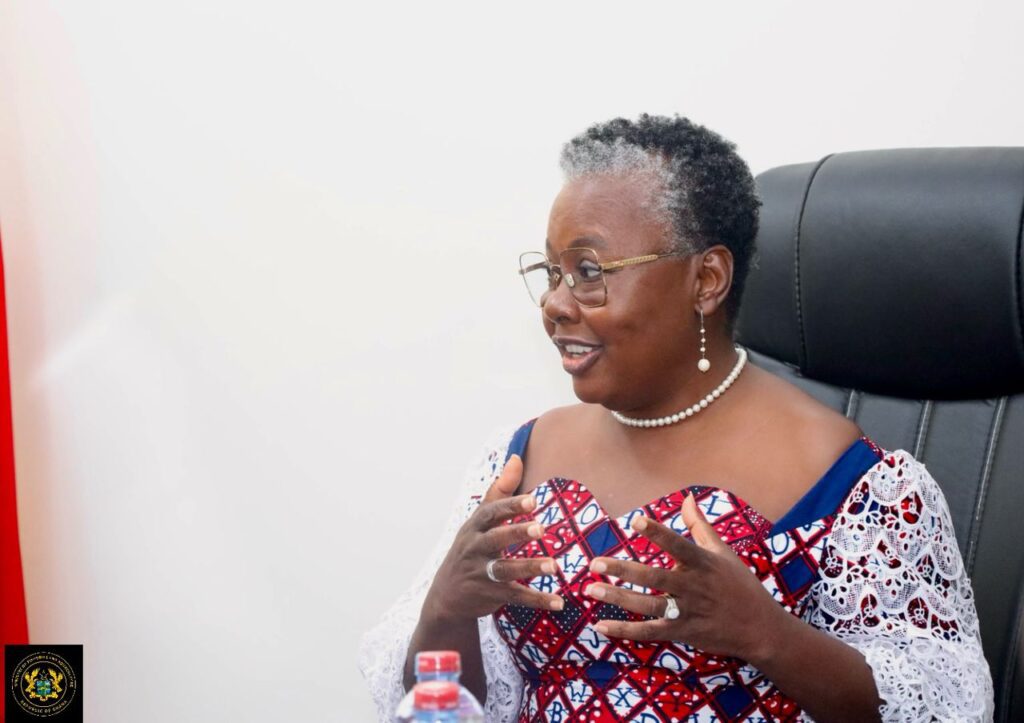
The logistics of the MPA involve a multi-sectoral approach where the environment, energy, and fisheries sectors collaborate to ensure that maritime resources are harnessed without being exhausted. Hon. Arthur described the declaration as a national turning point, signaling to the world that Ghana has decisively opted for a sustainable industrial pathway.
The move is expected to attract “Blue finance,” and international development partnerships focused on climate resilience and oceanic health.
“We are working together to ensure that our commitment to sustainably harness our ocean resources for economic growth, job creation and environmental resilience come to fruition. This moment will be remembered as the day Ghana took a firm step to protect her oceans, restore her fisheries and secure the future of her coastal communities”
Hon. Emelia Arthur, Minister for Fisheries and Aquaculture Development
The Minister reiterated that the success of the Greater Cape Three Points MPA depends heavily on the transition from state-led declaration to community-led management. Hen Mpoano, a non-profit organization that has provided technical leadership for the drive since 2010, is now pivoting toward strengthening local governance structures.
Director Mr. Kofi Agboga emphasized that the “real work,” involves building the capacity of the 21 beneficiary communities to monitor and protect their own waters. This governance model is being refined through south-south cooperation, with Ghana looking to learn from established MPAs in Kenya, Tanzania, and Senegal.
Through integrating local knowledge with global best practices, the oversight for the ocean aims to ensure that the restrictions on certain fishing practices are offset by improved yields and alternative livelihoods in tourism and aquaculture.
Mr. Agboga emphasized that the focus is on creating a sense of ownership among artisanal fishers who have historically been the most vulnerable to the depletion of marine stocks.
As the legal framework for the MPA takes effect, the implications for Ghana’s industrial narrative are profound. For years, the maritime sector has been plagued by Illegal, Unreported, and Unregulated (IUU) fishing, which has pushed the country’s small pelagic stocks to the brink of collapse.
The 2026 declaration serves as a strategic “reset button,” providing a legal basis for stricter enforcement and a geographic focus for restoration efforts.
READ ALSO: Italy Suspends Defence Agreement With Israel