The Ministry of Fisheries and Aquaculture Development (MoFAD) is set to declare Ghana’s first Marine Protected Area (MPA), a milestone that comes after a grueling two-decade journey of research, inter-ministerial dialogue, and growing alarm over the state of the nation’s territorial waters.
For a country whose identity and food security are inextricably linked to the sea, the transition from open-access fishing to regulated marine reserves is being hailed by experts as a historic move that signals a turning point for West African ocean governance, and the final line of defense against a total collapse of the sector.
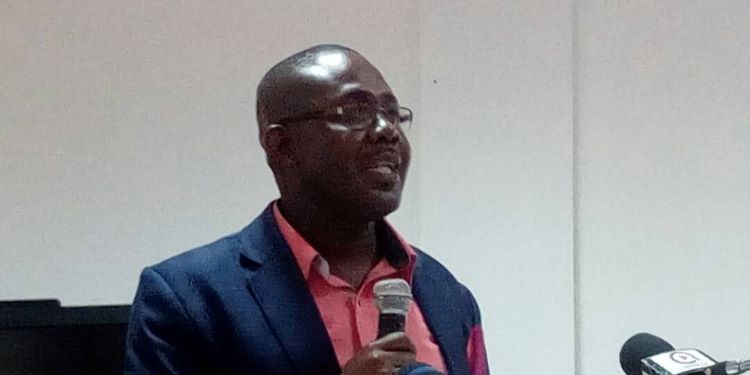
The urgency of this declaration was underscored by Prof. Francis K. E. Nunoo, a leading authority in Fisheries Sciences at the University of Ghana (UG).
Speaking as part of the Ministry’s “VoicesForTheMPA” spotlight series, Prof. Nunoo clarified that while the terminology might sound technical, the objective is simple: creating a legally defined “marine reserve,” where fish stocks can finally find rest from the relentless pressure of human activity.
“Marine Protected Areas are one of the tools for protecting, managing and conserving fish stocks. It is a very critical type of management because there is very little resort to enforcement. When we as Ghanaians recognize that there’s a problem to be fixed and we agree that we need to fix it, we just have to go through the appropriate legal means and then designate the area”
Prof. Francis K. E. Nunoo, Fisheries Sciences at UG
The Professor noted how Ghana’s path to this moment has been anything but swift. For over 20 years, an inter-ministerial committee has wrestled with the logistics and legalities of designating a specific geographical area for protection. During this time, Ghana has watched as its regional neighbors – including Benin, Nigeria, and Senegal – successfully implemented their own MPAs.

For a nation that prides itself as a “flagship” leader in African fisheries management, the delay has been a point of concern for conservationists and policymakers like Prof. Nunoo.
According to him, the MPA is a critical management tool that bypasses the traditional pitfalls of high-intensity enforcement and establishes clear boundaries, secures public buy-in, and operates on a foundation of national agreement, when the severity of the fisheries crisis is duly recognized.
A Sector Under Siege
For Prof. Nunoo, the primary catalyst for this move is the catastrophic decline in Ghana’s small pelagic stocks, as these species, which form the backbone of the local diet and the artisanal fishing economy, have reached a breaking point.
The pressure on the resource is multi-dimensional, stemming from an era of “unrested fishing,” where adult spawning stocks and juveniles are captured simultaneously, leaving no room for the natural cycle of replenishment.
Beyond overfishing, the rise of Illegal, Unreported, and Unregulated (IUU) fishing has also decimated the ecosystem, with both small-scale canoes and massive industrial vessels implicated in using destructive methods that target the entire life cycle of the fish.
The Professor warned that this “all-out war” on the sea, coupled with the escalating effects of climate change – specifically rising water temperatures – has created a perfect storm that traditional management methods have failed to calm.

“People are fishing using all the various bad methods and these methods are destroying the adults, they are destroying the pregnant females, that is the spawning stock and they are destroying also the juveniles. So literally covering the entire life of the fish, the fish has no rest and it is being captured in droves”
Prof. Francis K. E. Nunoo, Fisheries Sciences at UG
The move toward an MPA follows years of trial and error with other management techniques. Ghana has experimented with mesh size regulations (attempting to enforce a minimum of 25cm to let smaller fish escape), boat number restrictions, and the implementation of closed seasons. Even the cultural tradition of “no fishing on Tuesdays,” has been integrated into the national strategy.
Despite these efforts, the data remains grim – the stocks continue to dwindle, suggesting that periodic breaks and equipment rules are insufficient to counter the sheer volume of pressure on the water. That is where the MPA comes into play, representing a shift toward a more permanent, spatial solution.
“We need to do something more,” the Professor added, explaining that the government hopes that setting aside a sanctuary that remains untouched, will create an effect where the protected area serves as a nursery that eventually repopulates the surrounding fishing grounds.
At its core, the declaration of the MPA is an act of economic preservation, as hundreds of thousands of Ghanaians depend on the sea for their livelihoods, from the fishermen on the coast to the women who process and sell the catch in inland markets. If Ghana loses its status as a productive fishing nation, the impact on food security and rural income would be devastating.
Prof. Nunoo’s advocacy for the reserve is rooted in the reality that “once a fishery perishes, the recovery period is measured in decades, not years.” As a result, acting now is the Ministry of Fisheries and Aquaculture Development’s attempt at halting a downward spiral before it becomes irreversible.
The MPA is the “something more,” that the sector has needed for twenty years – a legal and geographical commitment to ensuring the Ghanaian sea remains a source of life for future generations.
As MoFAD prepares the final legal frameworks for this designation, the focus will inevitably shift to community engagement. For the MPA to succeed where other regulations have faltered, the artisanal and industrial sectors must view the reserve not as a lost fishing ground, but as a long-term investment in their own survival.
The declaration will finally put Ghana on par with its regional peers and re-establish its leadership in West African maritime conservation. After a twenty-year journey, the “Voices for the MPA” are finally being translated into policy, marking 2026 as the year Ghana chose to give its oceans a chance to breathe.
READ ALSO: Ghana to Formally Honour Koch After Historic Moon Mission