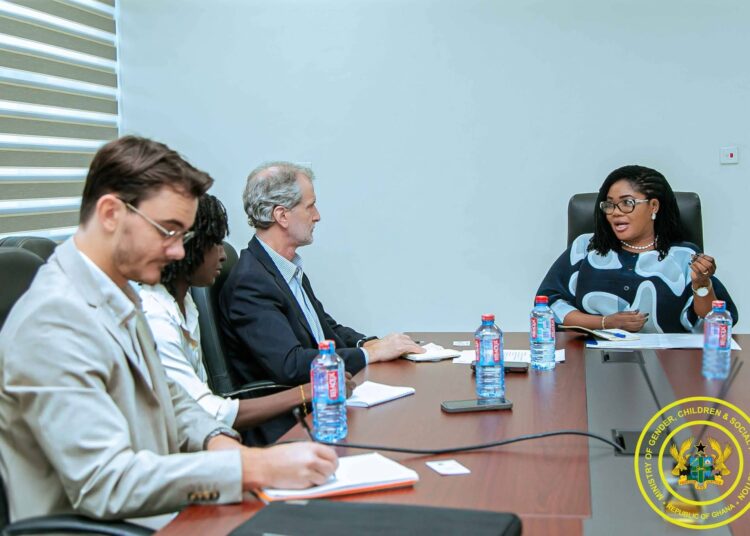
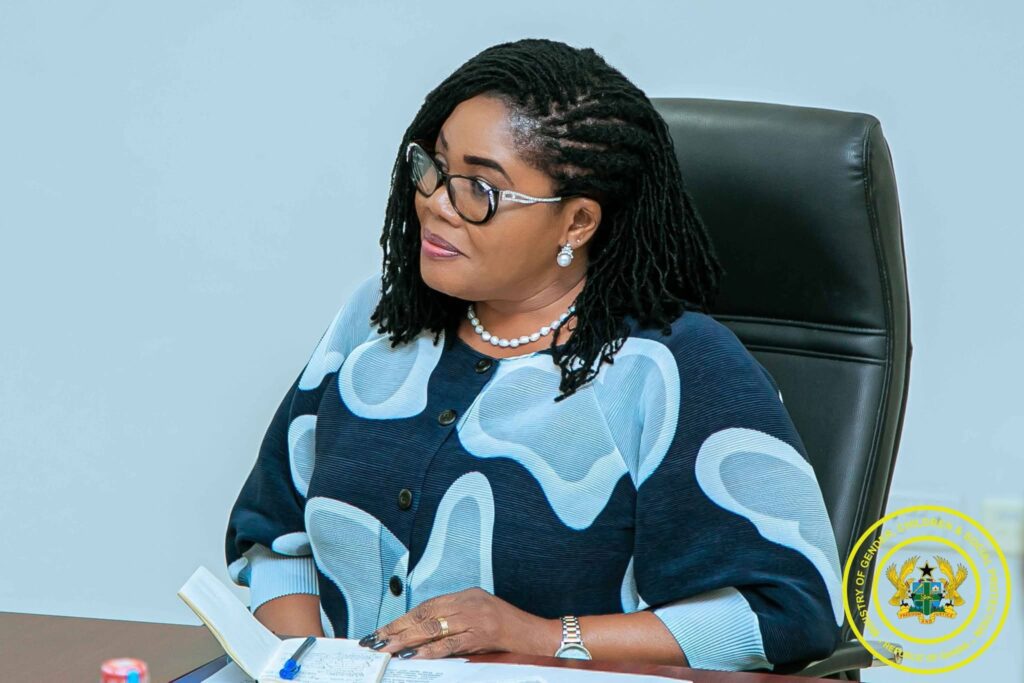
The Minister for Gender, Children, and Social Protection, Dr. Agnes Naa Momo Lartey, has reaffirmed the government’s dedication to strengthening social protection systems.
She communicated the decision during a high-level meeting with Mr. Robert S. Chase, the World Bank’s Social Policy Manager for West and Central Africa. Mr. Chase paid a courtesy call on the Gender Minister in his official visit to Ghana, indicating efforts to collaborate and help solidify the social protection systems in the country.
The meeting emphasized developing the collaboration between the Government and the World Bank, notably among them is rolling out key initiatives under the Ghana Productive Safety Net Project 2, an initiative set to promote social safety nets and improve livelihoods, as well as the Livelihood Empowerment Against Poverty (LEAP) cash transfer.
The meeting is also expected to outline technical support for the Ghana School Feeding program, identifying loopholes and making recommendations when necessary, and other social intervention programs.
Dr. Lartey reaffirmed the government’s dedication to strengthening social protection frameworks, describing them as critical tools in addressing poverty, inequality, and social exclusion.
She emphasized that Ghana’s approach is not only about providing immediate relief but also about fashioning out sustainable avenues for economic empowerment.
Government To Expand LEAP
She further emphasized the positive outcomes of the social intervention programs, notable among them is the LEAP, asserting that the government is set to broaden the scope of beneficiaries from 350,000 to 400,000, making it accessible to the needy in the various societies.
This will include the elderly, persons with disabilities, and people from extremely poor households. Dr. Lartey pointed out the need for collaboration with other stakeholders in order to achieve the goal, thereby calling on the private sector to join the fight in the alleviation of poverty and enhancing social protection.
“The LEAP program continues to demonstrate its value in improving household welfare and reducing extreme poverty. Expanding its reach is essential to ensuring that no one is left behind.”
Minister for Gender, Agnes Naa Momo Lartey
Among the issues discussed was the transition of beneficiaries out of social intervention programs. The Minister opined that measures are being undertaken to ensure that individuals exiting such programs are equipped with the requisite skills and prospects that will help to sustain them economically.
This, she said, is in alignment with the government’s vision of ensuring that beneficiaries are transitioned from dependency to self-reliance.
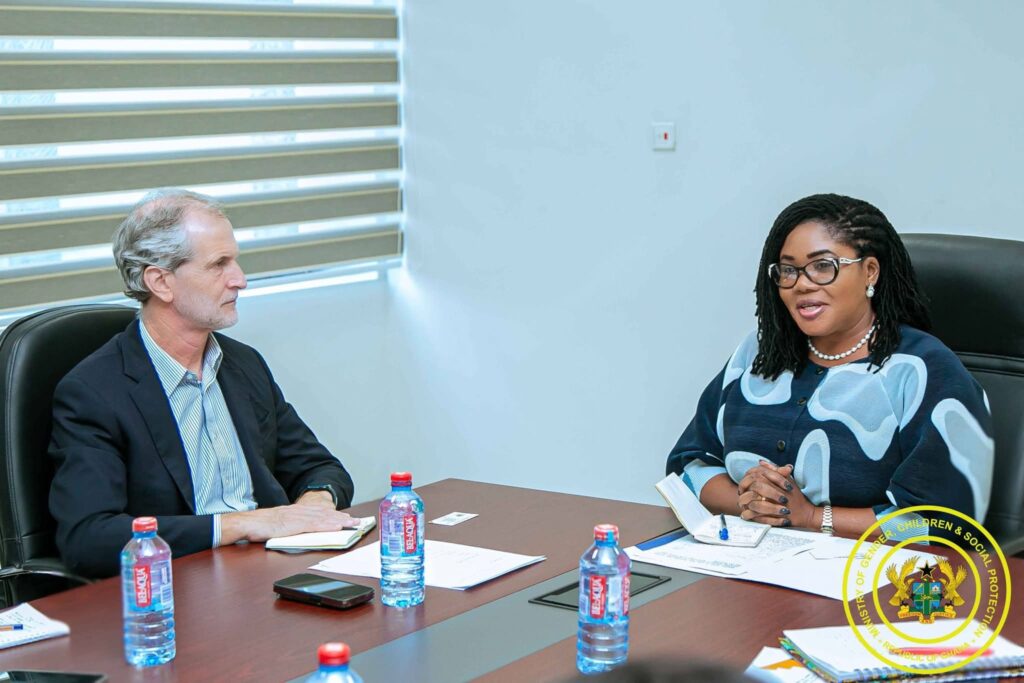
The Minister highlighted crucial legislative developments, which include the Social Protection Act and the Affirmative Action Act. The legislative provisions are set out to ensure coordination within the area. Dr. Lartey pointed to the passage of the Social Protection Act and the Affirmative Action Act as significant milestones.
The Social Protection Act and Affirmative Action laws were enacted to improve coordination among partners, promote accountability, and ensure inclusivity across all social protection initiatives.
Mr. Chase applauded Ghana for the progress made so far and restated the World Bank’s commitment to supporting the country in achieving the objectives in the area of social protection.
Ghana, he said, has become a replica in the area of social protection across the region and urged that it should be sustained. “The World Bank remains committed to working closely with the Government of Ghana to strengthen systems that protect the most vulnerable and promote inclusive growth,” he said.
Mr. Chase further urged the effective utilization of resources as he opined, “Our focus is on ensuring that resources are effectively utilized to achieve meaningful and lasting impact.”
He affirmed the World Bank’s willingness to support Ghana’s effort to allocate resources to help Ghana achieve the objective, especially by utilizing resources to improve the lives of the less privileged in the society.
Formulating and implementing policies that are geared towards social protection plays a pivotal role in addressing inequalities and ensuring the equitable distribution of resources.
With a clear commitment from both the government and its development partners, Ghana appears poised to make significant strides in its mission to protect the vulnerable and promote inclusive national development
READ ALSO: Crude Prices Surge Past $100 as Strait of Hormuz Fears Closure Again