The industrial landscape of the Greater Accra Region is undergoing a massive structural expansion that moves beyond the traditional boundaries of Tema, following the Ghana Free Zones Authority (GFZA) signaling its intent to aggressively scale the nation’s export capacity.
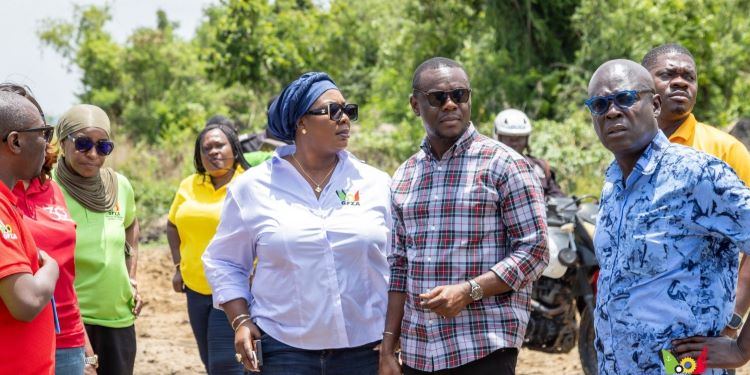
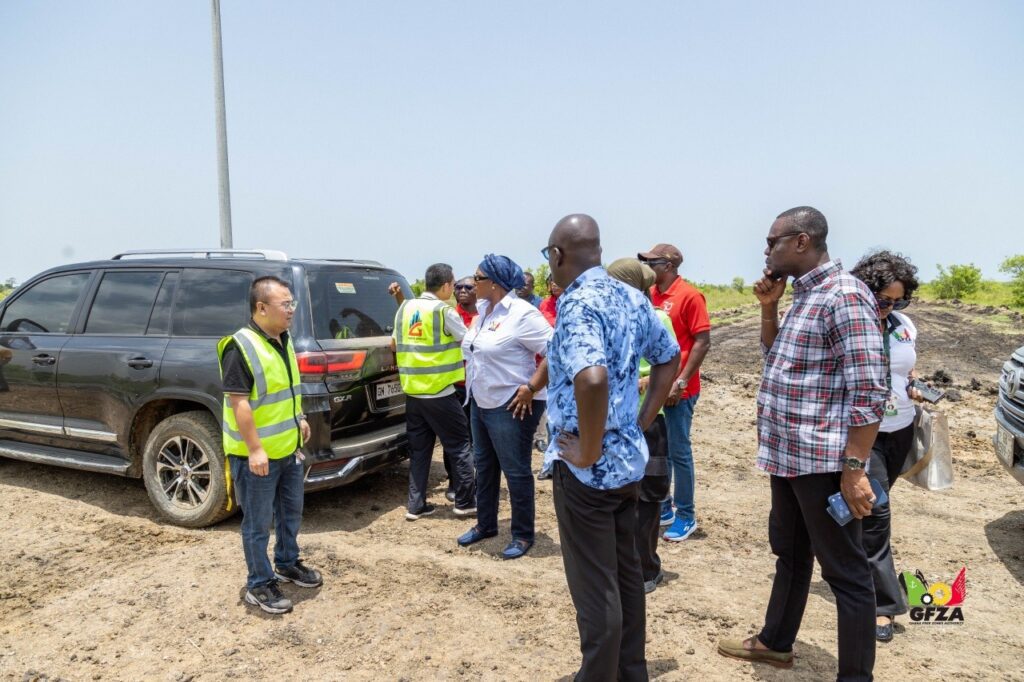
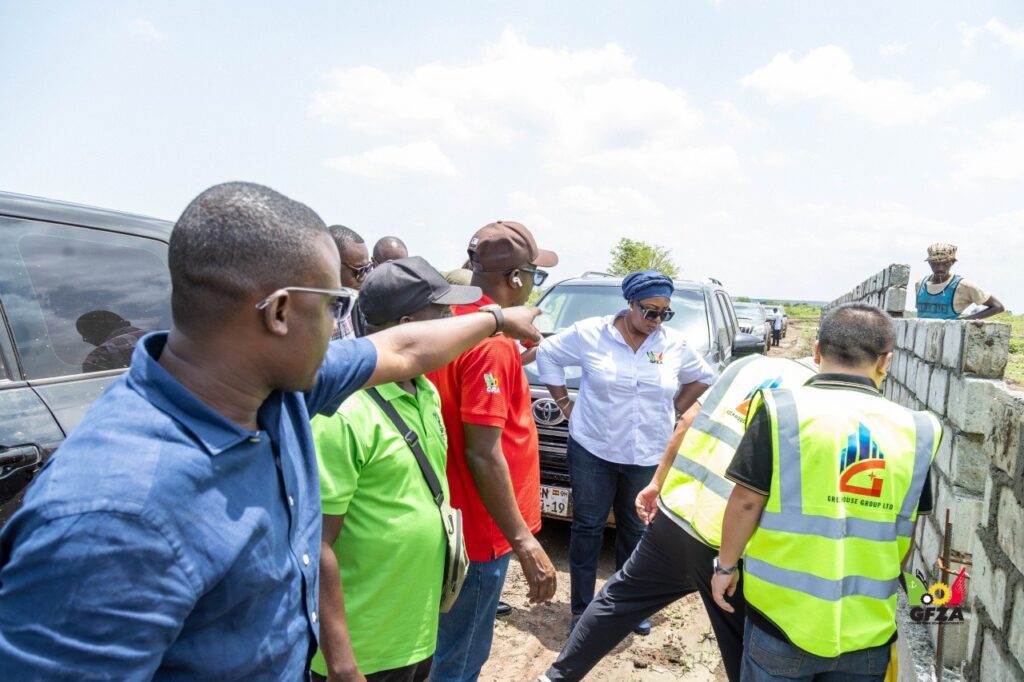
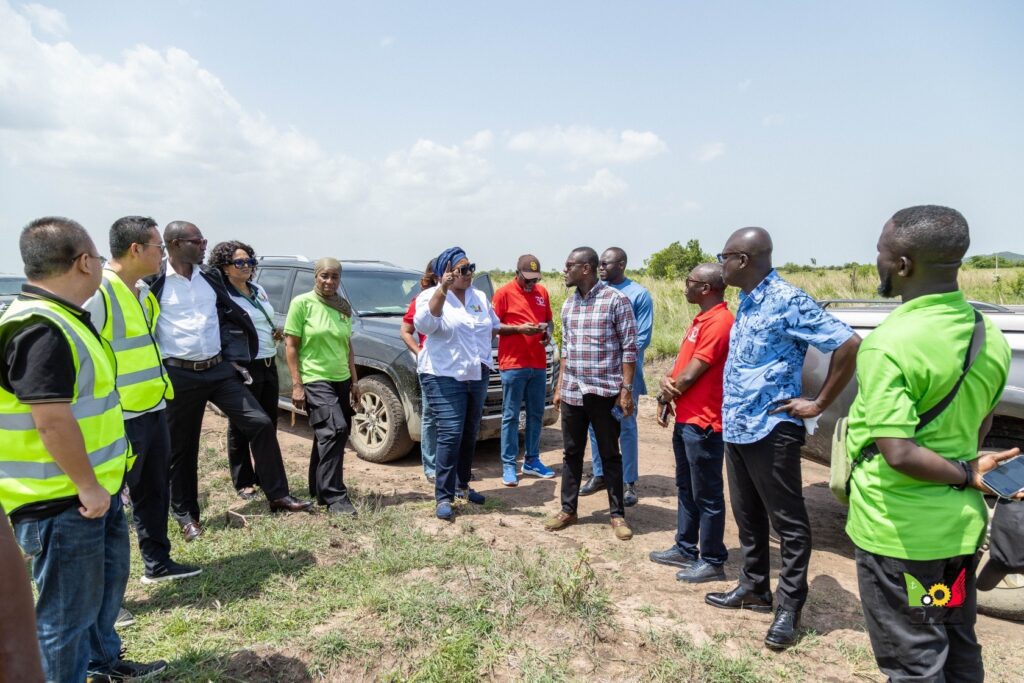
Led by CEO Dr. Mary Awusi, a high-level technical team conducted a decisive inspection of Ghana’s newly designated Export Processing Zone (EPZ) at Afienya. Spanning a staggering 1,238 acres, this site is not just a land-banking exercise; it is the physical manifestation of a new, faster breed of Ghanaian industrialization.
“The visit forms part of ongoing efforts to operationalise the Afienya EPZ, and to position it as a premier destination for investment under Ghana’s Free Zones Programme. The development comes at a time of growing investor confidence in the Ghanaian economy, driven by prudent economic management and a stable investment climate”
Ghana Free Zones Authority
According to the GFZA, the Afienya EPZ is designed to kill the delay and close the agonizing gap between receiving a license and actually turning on a machine – a primary friction for foreign and local investors under the “gestation period” that has persisted for years.
The GFZA is shifting the burden of infrastructure development from the investor back to the state by positioning this zone as the nation’s premier “Plug-and-Play” facility. This is a strategic pivot intended to capitalize on the 2026 surge in economic confidence, ensuring that when capital arrives, it finds a ready socket, not an empty field.
The Authority noted that the most innovative feature of the Afienya EPZ is its focus on operational readiness. In the competitive theater of the African Continental Free Trade Area (AfCFTA), speed is a commodity and investors are no longer looking for just land; they are looking for time.
The “Plug-and-Play” model means the GFZA will provide serviced industrial plots equipped with ready-to-use infrastructure. This allows manufacturers to bypass the grueling months of negotiating utility connections and basic site preparation.
This approach acknowledges a hard truth in global manufacturing: a factory that starts production in six months is infinitely more valuable than one that starts in two years. The GFZA hopes to effectively lower the barrier to entry for high-impact industries by equipping Afienya with prepared infrastructure frameworks.
For the Authority, this isn’t just about convenience; it is about creating an environment where the “time-to-market,” for Ghanaian exports is the shortest in West Africa.
The Afienya-Tema Link
According to stakeholders, the choice of Afienya as the site for this 1,238-acre expansion is a masterclass in logistics, as its proximity to the Tema Port – the beating heart of West African trade – provides a direct umbilical cord to global shipping lanes.
However, Afienya offers something the saturated Tema Industrial Area can no longer provide: room to breathe. Developing this secondary hub, is the GFZA’s relief valve for the industrial congestion of the capital and is expected to allow for the development of large-scale, modern factory layouts that are impossible in the crowded quarters of central Tema.
This strategic proximity ensures that while the factories are removed from the urban gridlock, their supply chains remain tightly integrated with the port, reducing haulage costs and streamlining the export pipeline.
The urgency of the Afienya inspection is fueled by a tangible shift in market sentiment. The GFZA reported a “steady increase in interest,” from both local entrepreneurs and international conglomerates.
This isn’t speculative; it is a response to Ghana’s current economic management. Investors are looking for a safe harbor for their manufacturing operations, and the GFZA is moving to ensure the supply of serviced land meets this rising demand.
Through this strategically located, serviced land provision, the Authority is reinforcing Ghana’s place as a competitive hub, sending a clear message to the global investment community that the country is open for business and has built the infrastructure to prove it.
The GFZA noted during the visit that the scale of the Afienya project required more than a symbolic walkthrough. Dr. Mary Awusi was accompanied by the Deputy CEO of the GFZA Mr. Lateef Apau Wiredu, the Director of Monitoring Mrs. Joyce Amamps, and the Head of Compliance (Mr. Michael Larbi).
This underscored the GFZA’s prioritization of the operational integrity of the zone. The involvement of the Head of Estate and Zones, Mr. Benjamin Obeng also indicated that the technical focus is on the physical layout and the “Plug-and-Play” connections.
This multidisciplinary team is tasked with ensuring that the 1,238 acres aren’t just a legal designation, but a functioning industrial ecosystem. From compliance to monitoring and estate management, the Authority is deploying its full administrative weight to ensure Afienya becomes the standard for all future EPZs in the region.
As the GFZA moves to fully operationalize the Afienya site, creating a pipeline for sustainable job creation and significant export growth, the broader impact on the Ghanaian economy cannot be overstated.
Afienya is being readied to become the engine room of the 2026 industrialization drive – a place where the friction of starting a business is replaced by the efficiency of a world-class facility.
READ ALSO: Guinness Ghana Injects GH¢100,000 Prize Package into TGMA 2026