A report by a respected arms watchdog group has disclosed that global military spending surged by almost 3% in 2025, fueled largely by ballooning defence expenditures in Europe and Asia.
The Stockholm International Peace Research Institute (SIPRI) said in its annual “Trends in World Military Expenditure” report that overall, almost $2.9 trillion was spent on military programs around the world in 2025, a 2.9% increase from a year earlier. SIPRI said that the figure represents 2.5% of the world’s gross domestic product (GDP), the highest percentage since 2009.
The US, China, Russia, Germany and India were the biggest spenders, collectively accounting for 58% of the global sum.
According to the report, European defence spending jumped 14% from 2024, to $864 billion, and in Asia-Oceania the increase was 8.1%, to $681 billion. It states that when the US is taken out of the statistics, global spending on defence rose 9.2% in 2025.
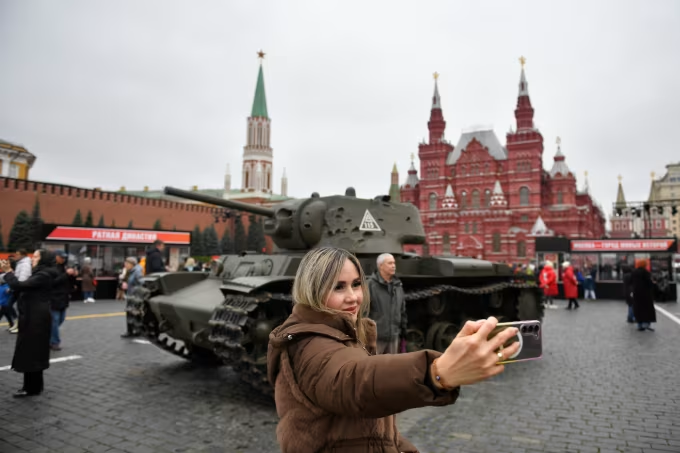
The US remains the world’s No. 1 spender on the military – $954 billion in 2025 – followed by China, an estimated $336 billion, and Russia with an estimated $190 billion.
However, it was US allies around the world that led the spending increase, revealing some generational changes.
Jade Guiberteau Ricard, a researcher with the SIPRI Military Expenditure and Arms Production Programme, said in a statement, “In 2025 military spending by European NATO members rose faster than at any time since 1953, reflecting the ongoing pursuit of European self-reliance alongside increasing pressure from the United States to strengthen burden sharing within the alliance.”
NATO countries with big increases include Belgium (59%), Spain (50%), Norway (49%), Denmark (46%), Germany (24%), Poland (23%) and Canada (23%). Germany’s total military spending of $114 billion ranks it No. 4 worldwide.
The report disclosed that in Asia, Japan increased military spending by 9.7% to $62.2 billion, the report said. As a portion of Japan’s GDP, the 1.4% spent on defence was the highest for the country since 1958. SIPRI Senior Researcher Diego Lopes da Silva said, “US allies in Asia and Oceania such as Australia, Japan and the Philippines are spending more on their militaries, not only due to long-standing regional tensions but also due to growing uncertainty over US support.”
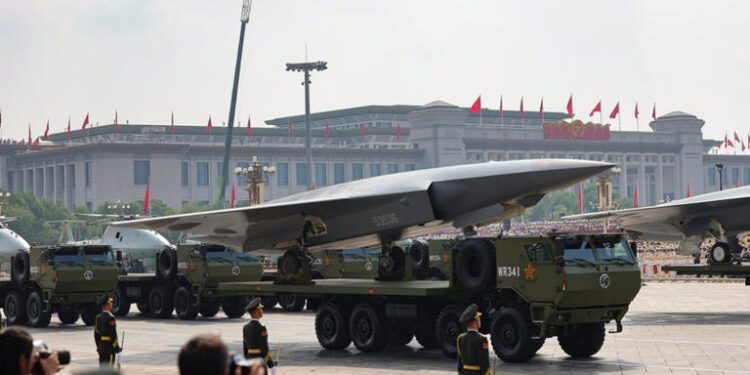
It states that China’s defence spending increased 7.4% – the largest year-on-year jump in the past decade and the 31st year in a row it has gone up – as Beijing moves to meet a 2035 goal to modernize its forces.
Meanwhile, Taiwan, the democratic, self-ruled island that the Chinese Communist Party claims as part of its territory despite never having controlled it, increased its military expenditures by 14.2% to $18.2 billion (2.1% of GDP), its biggest jump since at least 1988, according to the SIPRI.
In South Asia, India’s military spending, driven by a conflict with neighboring Pakistan, spiked 8.9% to $92.1 billion. New Delhi ranks No. 5 in the world, and it outspent Islamabad by $80 billion. Saudi Arabia was the biggest military spender in the Middle East at $83.2 billion, up 1.4% year over year.
As a percentage of GDP, Ukraine is the world’s biggest military spender, at an estimated 40%. Kyiv is in its fourth year fighting against a Russian invasion. Ukraine ranks No. 7 globally.Russia devoted 7.5% of its GDP to the military, as it spent 5.9% more than in 2024.
In Africa, military spending jumped 8.5% overall to $58.2 billion. That figure would rank the entire continent as No. 11 if it were a single country, behind Japan and ahead of Israel. Algeria is the continent’s biggest spender, and it ranks behind only Ukraine in GDP devoted to the military (25%).
More Increase In Defence Expenditure Expected
The SIPRI report noted that the current year promises to see even bigger increases in defense expenditures. “Given the range of current crises, as well as many states’ long-term military spending targets, this growth will probably continue through 2026 and beyond,” SIPRI Researcher Xiao Liang said in the report.
The US is expected to be a big driver in that. Congress has already approved more than $1 trillion in defense spending in 2026 as the war against Iran, now about to enter its third month, is costing Washington about a billion dollars a day. For 2027, the Trump administration is proposing a $1.5 trillion defense budget.
SIPRI researcher Lorenzo Scarazzato said that in 2025, military expenditure as a share of government spending reached the highest level ever recorded in both Russia and Ukraine. “Their spending is likely to keep growing in 2026 if the war continues, with revenues from Russia’s oil sales increasing and a major European Union loan expected by Ukraine,” he added.
READ ALSO: Power Outages Threaten Students’ Preparation for Exams – Akuapim North MP Demands Action