

The landscape of Ghana’s blue economy has reached a pivotal turning point as the Fisheries Commission, through its Fisheries Scientific Survey Division (FSSD), recently moved to professionalize and insulate the nation’s tuna export sector.
In a high-stakes Tuna Observer Refresher training session, officials highlighted a landmark achievement that fundamentally alters Ghana’s position in the global seafood market: the official Marine Stewardship Council (MSC) certification of the Ghana Tuna Fishery.
According to the Fisheries Commission, this “gold standard” designation is not merely a badge of honor but a rigorous operational mandate that requires the state to prove, through verifiable data, that its tuna stocks are managed with scientific precision and environmental integrity.
“The FSSD successfully organized a Tuna Observer Refresher training aimed at strengthening observer performance, improving data quality, and enhancing safety standards onboard tuna vessels. The training emphasized the importance of accurate and timely report submission in supporting sustainable fisheries management”
Fisheries Commission
The MSC certification represents the culmination of years of stakeholder commitment and provides Ghana with unfettered access to premium international markets where sustainability is a prerequisite for trade.
However, as the FSSD leadership noted during the training, maintaining this certification is an ongoing audit process that rests almost entirely on the shoulders of the tuna observers. These individuals serve as the Commission’s front-line eyes and ears, and their ability to generate high-quality data is now the primary shield protecting Ghana’s reputation against international scrutiny.
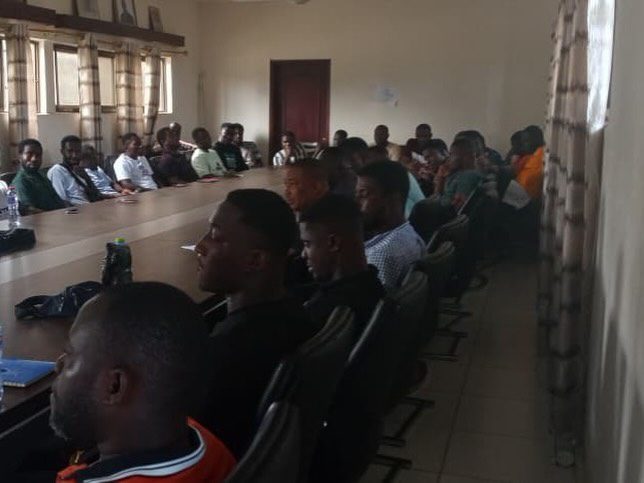
The core of the refresher training focused on a radical improvement in data quality and reporting speed. In the past, fisheries monitoring often struggled with the lag time between vessel arrival and the processing of biological data, and the FSSD is now enforcing strict adherence to accurate, timely report submissions to support sustainable management.
Observers were instructed to treat every data point – from species composition to catch weight – as a critical component of a national security asset. The Commission emphasized that the global market no longer accepts vague estimates; it demands a granular accounting of what is being extracted from the ocean.
A specific point of emphasis was the estimation and reporting of endangered species. For a fishery to remain MSC-certified, it must demonstrate that it is not causing irreparable harm to the wider marine ecosystem. The observers were reminded that the precise documentation of “bycatch” – non-target species that are accidentally caught – is mandatory.
Science Of Observation
The training further transitioned into the complexities of sampling procedures and protocols at sea, as collecting biological samples on a moving tuna vessel is a physically demanding and scientifically sensitive task.
The FSSD introduced standardized best practices for data collection to ensure that every observer, regardless of the vessel they are assigned to, follows a uniform scientific methodology. This standardization is to eliminate the “human error” factor that often plagues field-level data, ensuring that the Commission can aggregate information into a cohesive national strategy.
To close the loop on this data collection cycle, the Fisheries Commission noted that it is now prioritizing the post-trip debriefing process. This involves a formal review of the observer’s findings immediately upon their return to port so that any anomalies or compliance issues detected at sea are flagged and addressed in real time.
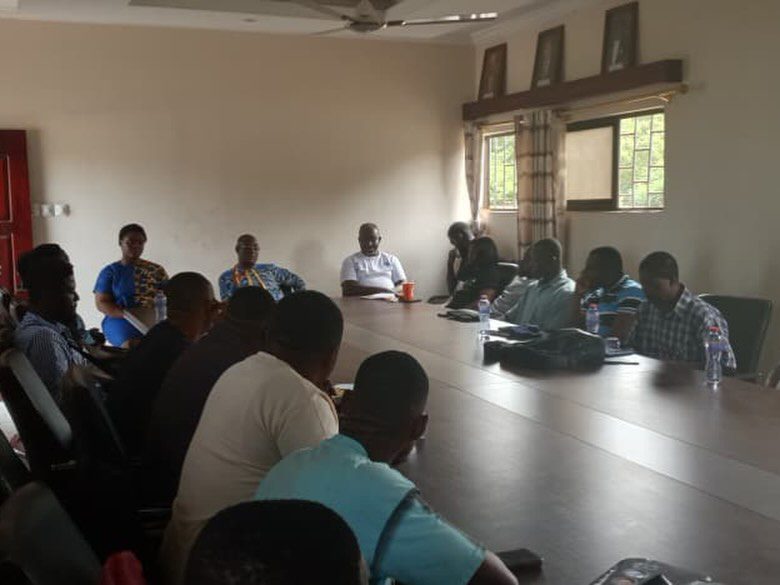
This feedback loop is essential for maintaining the integrity of the tuna sector, as it allows the commission to identify patterns of non-compliance before they escalate into systemic failures that could jeopardize the nation’s export licenses.
Beyond the technical data, the FSSD addressed the inherent dangers of the observer’s working environment. With life onboard a tuna vessel involving navigating heavy machinery, unpredictable weather, and the complexities of working in isolation for extended periods, safety was positioned as a non-negotiable pillar of the observer program.
The commission issued a directive for all observers to consistently utilize appropriate Personal Protective Equipment (PPE) at all times while on duty. This move toward a safety-first culture is intended to reduce workplace injuries and ensure the Commission’s human capital is adequately protected.
Accountability was also a major theme of the safety sessions, with the FSSD implementing more effective communication protocols regarding deployment schedules. Observers are now required to maintain regular contact with the division to ensure their movements are tracked and their safety is accounted for while at sea.
This level of oversight is part of a broader effort to modernize the workforce and instill a sense of professional discipline.
The successful conclusion of the Tuna Observer Refresher training marked the beginning of a new era for Ghana’s fisheries, and management took the opportunity to commend the observers for their dedication, recognizing that their work is often performed under grueling conditions far from the oversight of the main offices.

However, the commendation came with a reminder that the stakes have never been higher. As Ghana moves deeper into the 2026 fishing season, the ability to sustain the MSC certification will be the ultimate test for the Fisheries Commission’s management capabilities.
READ ALSO: Ghana Banking Sector Roars Back With Stronger Fundamentals