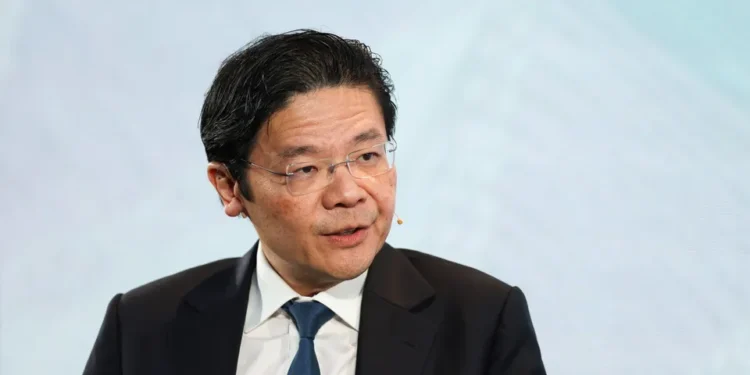
Singapore’s Prime Minister, Lawrence Wong has warned that economic growth will slow in the city-state this year due to the war on Iran.
In a May Day speech, he said that the war was not expected “to be over anytime soon”, and supply disruptions may worsen in the months ahead. “Here, in Asia, we are especially affected because of our high dependence on energy and other critical supplies from the Gulf,” Wong said.
“Globally, inflation will rise, spreading from energy to food and then other essentials. Some economies may well slip into recession, and Singapore will feel the impact directly. Our growth this year will slow, and inflation will be higher, and all this will put real pressure on businesses, workers and households.”
Lawrence Wong
He asserted that now, stagflation risks are rising again. The International Energy Agency has already warned that the current energy crisis could prove even more severe. “So we must brace ourselves and be prepared for a more difficult period ahead,” he said.
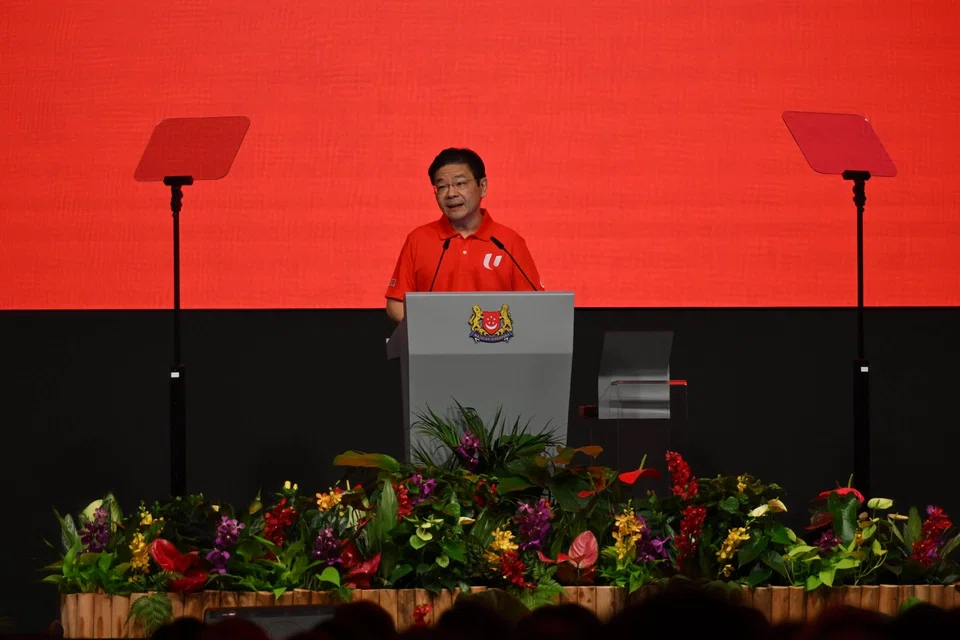
In April, the Monetary Authority of Singapore raised its 2026 forecasts for both core and headline inflation to a range of 1.5 to 2.5 per cent, up from 1 to 2 per cent previously, citing rising imported energy costs.



The official growth forecast for 2026’s gross domestic product remains at 2 to 4 per cent, but will be revised when full first-quarter figures are released later in May.
Also, Singapore’s Prime Minister warned that even if the Strait of Hormuz reopens, a return to normal will likely not be immediate. He noted that the ongoing energy crisis could prove more severe than the oil shocks of the 1970s, with conditions unlikely to return to normal.
He pointed out that ports and energy infrastructure have been damaged. “Shipping lanes will need to be cleared of mines,” he said, adding that the need to restore market confidence mean recovery will take months at minimum.
Similarly, in a post on social media, UN Secretary-General Antonio Guterres said that ships being unable to safely navigate the Strait of Hormuz is disrupting energy, transport, manufacturing and food markets and strangling the global economy. “The consequences of the Middle East crisis grow dramatically worse with each passing hour,” Guterres said, calling for dialogue.
“Now is the time for dialogue, for solutions that pull us back from the brink & for measures that can open a pathway to peace.”
Antonio Guterres
Singapore In Strong Position To Withstand Challenges
Moreover, Wong asserted in his speech that despite the challenges, Singapore can look ahead with “quiet confidence” and it does not face this crisis from a “position of weakness.”
The government made many of the hard choices early, from building up fiscal reserves to developing energy infrastructure such as Jurong Island and the underground Jurong Rock Caverns storage facilities. These have left Singapore in a stronger position to weather the storm.
He pointed out that this foundation has made Singapore a key node in global energy flows, with the world’s leading energy companies refining, storing and trading oil here and drawing on diverse supply networks when one source is disrupted. The Singaporean Prime Minister stressed that it is an advantage built over decades, “not by chance, but through deliberate choices, sustained efforts and discipline.”
At the same time, the government has moved quickly with an initial response to support businesses and workers through the crisis. Last month, it rolled out a S$1 billion support package, including enhanced U-Save rebates, cash payouts, and bringing forward the disbursement of the next tranche of Community Development Council vouchers to June this year, from January 2027.
Wong acknowledged that Singaporeans may wonder whether support will still be available later, given that some measures have been brought forward. He offered reassurance that the government will act should conditions worsen. He stated, “We expect the situation to become more challenging over the course of the year and if that happens, we will do more to help.”
Wong stressed that Singapore has resisted the temptation to simply adopt solutions from elsewhere, instead developing its own approaches suited to local conditions.
“This is the ‘Singapore Way.’ We don’t just talk, we act. We don’t just plan, we deliver results and together we take Singapore forward.”
Lawrence Wong
In developing approaches suited to local conditions, the government introduced the Progressive Wage Model rather than implementing a minimum wage. It also rolled out a Job Seeker Support scheme, which ties reskilling to unemployment support, rather than having unemployment benefits.
READ ALSO: WAEC Bars Complicit Teachers To Safeguard Examination Integrity Nationwide