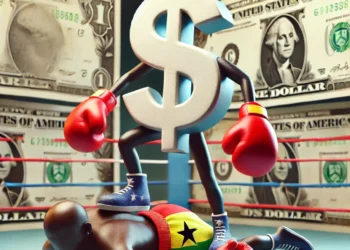
In a revelation that has sent shockwaves through Ghana’s economic and financial corridors, the Bank of Ghana (BoG) has reported a jaw-dropping operating loss of GH¢15.63 billion for the 2025 financial year.
This represents a staggering 65% surge from the GH¢9.49 billion loss recorded in 2024, thrusting the central bank’s negative equity even deeper into the abyss at a colossal GH¢93.82 billion.
As Ghana’s economy displays tentative signs of stabilization with easing inflation and a somewhat steadier cedi, this massive shortfall has exploded into a national controversy. Is this the bitter pill of economic rescue, the necessary sacrifice to tame runaway prices and restore confidence? Or does it expose dangerous policy pressures, political meddling, and structural weaknesses at the heart of Ghana’s monetary authority?
Opposition figures and analysts are not mincing words, with some estimating the true economic hit closer to GH¢34.9 billion or even GH¢44 billion when gold sales and other comprehensive income losses are fully accounted for.



The Raw Numbers: A Financial Earthquake
BoG’s audited 2025 financial statements paint a dramatic picture. Operating income climbed to GH¢22.28 billion, but this was dwarfed by exploding expenses of GH¢37.91 billion.
The prime suspect? Open Market Operations (OMO) costs, which nearly doubled to GH¢16.73 billion from around GH¢8.6 billion the previous year. These aggressive liquidity mop-up exercises, designed to combat inflation, came at an eye-watering price.
Compounding the drama, the bank offloaded nearly 18 tonnes (approximately 869,915 ounces) of gold reserves in the latter part of the year. This move generated a substantial GH¢9.57 billion gain, acting as a critical buffer. Without it, analysts warn the headline loss could have ballooned beyond GH¢25 billion.
Broader comprehensive losses, incorporating GH¢19.32 billion in Other Comprehensive Income (primarily foreign exchange valuation hits), push the total damage to around GH¢34.95 billion according to critics.]
Negative equity has worsened dramatically, ballooning from GH¢58.62 billion in 2024. This marks one of the largest non-crisis losses in the BoG’s modern history, eclipsing recent years and evoking painful memories of the GH¢60.8 billion disaster in 2022 during peak economic turmoil.
The Official Defense: Necessary Pain for Greater Gain
BoG officials and government supporters insist these figures represent the unavoidable cost of hard-won stability. High interest rates and intensive liquidity management drained resources but delivered tangible wins: inflation has cooled significantly, the cedi has shown resilience amid global pressures, and macroeconomic indicators have improved under the watchful eye of the IMF program.
Central banks globally sometimes operate at a loss during turbulent times. By shouldering these burdens—through elevated OMO bills and strategic reserve management—BoG claims it protects the wider economy from worse fates.

Commercial banks have thrived on high-yielding government securities, indirectly benefiting while the central bank absorbs the shocks. Proponents also hail the domestic gold purchase program as a bold move to support local producers and bolster reserves, even as sales were executed for portfolio rebalancing.
The Majority in Parliament has robustly defended the accounts, stressing enhanced transparency and framing the losses as accounting realities inherited from past challenges rather than signs of collapse. They point to overall economic recovery metrics as evidence that the strategy is working.
Critics Strike Back
The backlash has been ferocious. Dr. Gideon Boako, MP for Tano North and a member of the Finance Committee, lambasts the outcome as “the biggest non-crisis loss in BoG history” and a glaring “policy failure.”
He argues that the bank reversed hard-earned recovery momentum from 2024 by abandoning the dynamic Cash Reserve Ratio (which had helped control sterilization costs) and reverting to more expensive liquidity tools.
OMO expenses, critics allege, effectively transferred wealth from the central bank to profitable commercial banks. Questions abound over the gold transactions: why sell significant portions of reserves shortly after aggressive domestic purchases?
Dr. Boako and the Minority suggest political considerations may have influenced timing and decisions, favoring short-term optics over long-term institutional health.

The Institute of Economic Research and Public Policy (IERPP) has raised the alarm on “structural financial distress.” With negative equity at GH¢93.82 billion, achieving positive equity would require implausible annual turnarounds of nearly GH¢29 billion. The bank’s recovery plan is viewed by many as aspirational rather than enforceable.
Minority voices, including Kojo Oppong Nkrumah, claim the real operating loss sits at GH¢34.9 billion, escalating to GH¢44 billion when adjusting for gold sale proceeds. They accuse authorities of PR spin to mask deeper vulnerabilities.
Economic Ripples and Long-Term Dangers
The implications stretch far beyond balance sheets. Persistent negative equity undermines BoG’s credibility and perceived independence. While central banks possess unique tools like money creation, over-reliance risks reigniting inflation and eroding public trust. Taxpayers may ultimately bear the burden through future recapitalization or diminished policy effectiveness.
On the brighter side, stabilized macros have supported growth, attracted investment, and improved debt dynamics. Gold reserve strategies have helped build forex buffers, with reserves reportedly rising significantly. Yet repeated drawdowns fuel fears of eroding national wealth and future vulnerabilities in crisis response.
Exchange rate pressures and forex losses highlight ongoing challenges in reserve management amid global uncertainties. Analysts worry that unresolved BoG weaknesses could complicate IMF program exit and delay full fiscal-monetary harmony.
Innovation or Insolvency?
BoG maintains it retains ample policy tools, substantial investments worth GH¢116.42 billion, and provisions to navigate challenges. However, operating sustainably with deep negative equity requires fresh thinking: smarter liquidity instruments, tighter fiscal-monetary coordination, diversified reserves, and perhaps legislative support for recapitalization.

This saga underscores the delicate tightrope central banking walks—delivering stability without sacrificing long-term solvency. Losses might rescue the present, but unchecked, they threaten to mortgage Ghana’s monetary future.
As political temperatures rise ahead of key elections, every cedi on BoG’s balance sheet carries heavy weight. Ghanaians, grappling with daily economic realities, demand more than headlines: genuine accountability, sustainable policies, and results that translate into lower prices, stronger currency, and shared prosperity.
The GH¢15.63 billion (or far higher adjusted) loss will define debates for the remainder of the year. Is it a heroic chapter in economic rescue or a sobering lesson in policy pressure? Only time, and wiser stewardship will tell.
READ ALSO: Bears Crush Bulls in Ghana Stock Massacre