The government of Ghana has unveiled an ambitious strategy to fundamentally transform Ghana’s economy by shifting away from commodity dependence and informal economic activity toward a high-productivity, innovation-driven growth model aimed at boosting global competitiveness.
The bold vision, announced at the ACI World Congress 2026, signals what officials describe as a major economic re-engineering designed to position Ghana as a leading industrial and technological hub in Africa.
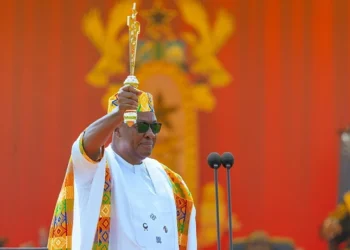
Deputy Finance Minister Thomas Nyarko Ampem said the country could no longer rely heavily on extraction-led growth if it hopes to achieve sustainable prosperity and economic resilience.
According to him, the government is pursuing policies centered on value addition, industrialisation, export expansion, and technological innovation to create a stronger and more competitive economy capable of withstanding global shocks.
“We want Ghanaian businesses to compete globally,” he stated, adding that policymakers are focused on building an economy powered by innovation, enterprise, and long-term prosperity.
End of Commodity Dependency Era
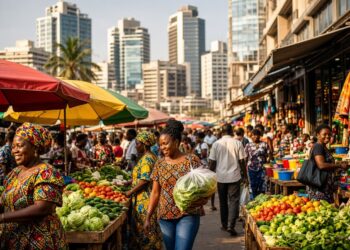
For decades, Ghana’s economy has largely depended on the export of raw commodities such as gold, cocoa, and crude oil. While these sectors have generated significant revenue, experts argue that overreliance on raw exports has exposed the economy to global price fluctuations and external vulnerabilities.

Government’s new direction seeks to reverse that trend by encouraging local processing, manufacturing, and industrial expansion.
Officials believe the shift toward value addition will not only create jobs but also increase export earnings and improve the country’s position within global supply chains.
The strategy also seeks to reduce Ghana’s dependence on imports by strengthening local industries and promoting domestic production across several sectors, including agriculture, manufacturing, and technology.
Analysts say the move could become one of the most significant economic policy transitions in recent years if effectively implemented.
Technology and Youth Entrepreneurship Take Center Stage
A major highlight of the government’s agenda is its strong focus on youth entrepreneurship and technology-driven businesses.
Authorities are encouraging young people to move beyond the traditional search for wage employment and instead create innovative enterprises capable of competing on the global stage.
The government believes Ghana’s youthful population presents a major opportunity for economic transformation if adequately supported with financing, digital infrastructure, and entrepreneurial training.
The push toward innovation comes amid growing interest in Africa’s technology ecosystem, where startups across fintech, agritech, and digital commerce are attracting international investment.
Officials say Ghana wants to position itself as a key player in that emerging landscape by supporting local innovators and expanding digital opportunities.
The plan also includes efforts to deepen digital financial inclusion to ensure more citizens and businesses participate in formal economic activity.
Agriculture and Manufacturing to Drive Export Growth
The government’s transformation agenda places strong emphasis on integrating agriculture into commercial export value chains while strengthening local manufacturing capacity.
Policymakers believe Ghana’s agricultural sector holds enormous untapped potential that can fuel industrial growth if linked effectively to processing and export industries.
By modernising agriculture and expanding agro-processing, authorities hope to create more value locally while increasing foreign exchange earnings.
Manufacturing is also expected to play a central role in the new economic model.
Officials argue that a stronger manufacturing base will improve productivity, create employment opportunities, and reduce the country’s vulnerability to external economic shocks.
Industry observers say the renewed emphasis on industrialisation could boost investor confidence and attract new capital into sectors with high growth potential.
African Capital for African Transformation
Another major theme emerging from the government’s strategy is the call for African capital to finance African development.
Deputy Finance Minister Thomas Nyarko Ampem stressed the need for domestic and regional financial markets to evolve into engines of enterprise, innovation, and sustainable growth.
According to him, African economies must increasingly rely on homegrown investment and stronger financial systems to accelerate transformation across the continent.
The push comes at a time when many African countries are seeking ways to reduce dependence on external borrowing while building stronger internal economic structures.
Government believes expanding local capital markets and encouraging long-term investment will be critical to sustaining Ghana’s transformation agenda.
Challenges Remain Despite Optimism
Despite the optimism surrounding the new economic vision, significant challenges remain.
Ghana continues to face structural constraints that have historically limited productivity growth, including infrastructure gaps, high production costs, limited industrial capacity, and financing difficulties for businesses.
Economic analysts caution that achieving the government’s ambitious targets will require consistent policy implementation, investor confidence, and strong institutional reforms.
However, many believe the shift toward innovation, industrialisation, and export-led growth represents a necessary step if Ghana is to compete effectively in regional and global markets.
As the government pushes ahead with its transformation plans, attention will now turn to how quickly these policies can translate into real opportunities for businesses, entrepreneurs, and ordinary citizens.
READ ALSO: Majority Defends Law Criminalizing False Publication, Says It Protects Public Peace