United Kingdom has announced a major new package of sanctions aimed at disrupting Russia’s drone production networks and what it describes as transnational systems exploiting vulnerable migrants to support Moscow’s war in Ukraine.
The measures target 35 individuals and entities linked to human trafficking operations, weapons manufacturing supply chains, and the procurement of critical components used in Russia’s expanding drone warfare programme.
This action is designed to strike at both the industrial base enabling Russia’s aerial attacks and the international networks that sustain it through illicit recruitment, deception, and cross-border supply chains.
According to the UK government, sanctioned groups have been recruiting migrants from across the world under false promises of employment and better opportunities, only to redirect them into Russia’s war effort.
Some of those recruited are reportedly sent to frontline positions with minimal training, while others are deployed to weapons factories producing drones and military equipment.
Additionally, the government also highlighted schemes such as Russia’s Alabuga Start programme, linked to drone production at a sanctioned facility, as part of this system.
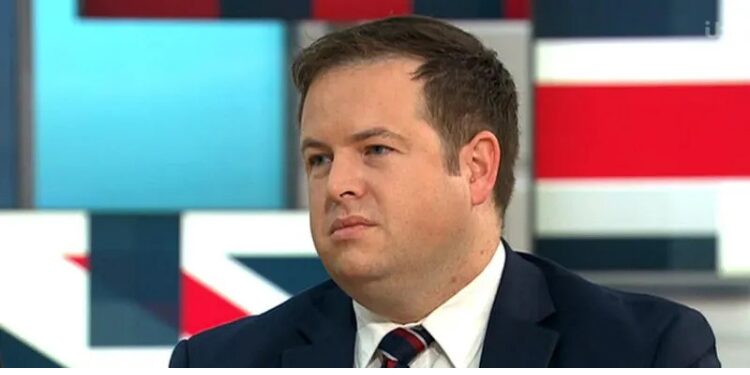
According to Sanctions Minister, Stephen Doughty, the practice of exploiting vulnerable people to prop up Russia’s failing and illegal war in Ukraine is barbaric.
“These sanctions expose and disrupt the operations of those trafficking migrants as cannon fodder and feeding Putin’s drone factories with illicit components to target innocent civilians and vital infrastructure.
“UK continues to lead international efforts to disrupt Russia’s war machine, ramping up pressure on its economy and confronting its hybrid threats. We stand shoulder to shoulder with Ukraine in defence of European security and our shared values.”
Stephen Doughty
This announcement comes amid a sharp escalation in Russia’s drone strikes against Ukraine. UK government indicated that Russia continues to carry out sustained attacks that kill and injure civilians and damage critical infrastructure.
In March 2026, Russia launched the equivalent of more than 200 drones per day into Ukraine, the highest monthly total recorded since the war began. Intelligence assessments suggest April may surpass that figure for a second consecutive month, reflecting what the government describe as an intensifying air campaign.
The government added that these attacks depend on a complex supply chain involving domestic Russian manufacturers and international suppliers providing electronic components, technical expertise, and logistical support.
The latest sanctions are therefore intended to disrupt these flows by targeting not only Russian-based actors but also intermediaries and companies operating in third countries that contribute to drone production.
Sanctions Target Drone Producer, Foreign Suppliers and Recruitment Networks Feeding Kremlin War Effort
Among those targeted is Pavel Nikitin, whose company develops Russia’s VT-40 drone, described as a low-cost, mass-produced attack drone widely used in strikes against Ukraine. UK officials say such systems are central to Russia’s ability to maintain the scale and frequency of its drone operations.
The sanctions also extend beyond Russia, hitting individuals and entities in third countries, including Thailand and China, accused of supplying critical drone components and other military goods.
Individuals affiliated with Russian state-backed recruiting networks are also among those targeted, accused of enabling the transit of foreign nationals via Russia and into Ukraine.
These individuals are reported to be part of a system that transports migrants from Egypt, Iraq, the Ivory Coast, Nigeria, Morocco, Syria, and Yemen before deploying them to the front lines under difficult conditions.
Polina Alexandrovna Azarnykh is one of those sanctioned; the UK government claims that she has been coordinating these actions with official support. According to officials, migrants are frequently sent into hazardous situations with little training to support Russia’s military effort.
UK government aims to decrease Russia’s military might by targeting both manufacturing facilities and external enabling networks through sanctions. To limit Russia’s ability to continue high-volume drone warfare, government officials underlined that interfering with supply chains is a primary priority.
Additionally, the UK government cited its Global Irregular Migration and Trafficking in Persons (GIMTiPS) sanctions system, which it claimed was the first framework in the world specifically designed to tackle organised immigration crime and unlawful migration through penalties. The system enables the UK to impose sanctions on people and organisations engaged in human trafficking, people smuggling, and associated supporting activities anywhere in the globe.
According to the government, this is the first time the government has targeted the “instrumentalisation of migration as part of a wider geopolitical conflict.”
READ ALSO: Raffles London to Host Ghana’s Aggressive Multi-Billion Push