Russia’s increasingly sharp warnings over Britain’s military support for Ukraine could be part of a broader effort by Moscow to define the limits of Western involvement in the war.
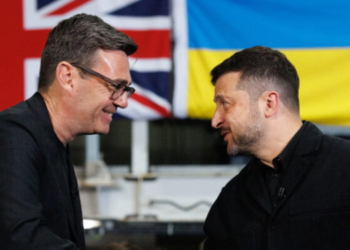
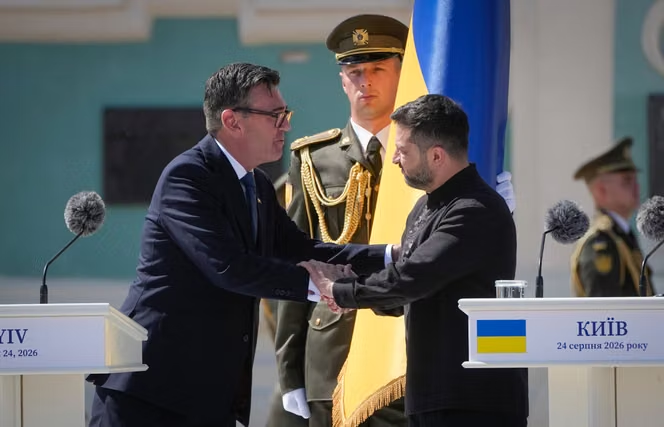
UK Prime Minister Andy Burnham’s first overseas visit as Prime Minister took him to Kyiv, where he reaffirmed Britain’s commitment to Ukraine and announced that UK would provide access to classified information needed to support Ukrainian production of the Franco-British SCALP/Storm Shadow long-range cruise missile.
The decision has drawn a response from Moscow, which has accused Britain of escalating the conflict by enabling Ukraine to develop greater capacity to produce long-range weapons.
In an exclusive interview with The Vaultz News, Dr Thom Oliver, Senior Lecturer in Politics at the University of the West of England, Bristol, noted that Russia’s response should be understood partly through the lens of strategic signalling, with Moscow seeking to convince Britain and other European states that certain forms of military assistance could cross a threshold leading to confrontation.
“There is also an interesting political dimension to the increasingly sharp exchanges between London and Moscow. Russia has repeatedly sought to portray Western military assistance as evidence that countries such as Britain are becoming direct participants in the conflict. ”
Dr Thom Oliver
The distinction is increasingly important as Britain’s military relationship with Ukraine evolves. Since Russia launched its full-scale invasion in 2022, successive British governments have supplied weapons, intelligence and other forms of military assistance to Kyiv. Under Burnham, however, the latest initiative moves beyond transferring weapons already held by Britain and toward enabling Ukraine to strengthen its own defence-production capacity.
The British government has authorised defence company MBDA to release information relating to British components of the SCALP/Storm Shadow missile, helping clear a path for Ukraine to develop domestic production. The missile is an Anglo-French long-range cruise weapon that has already been supplied to Ukraine and used in the war.
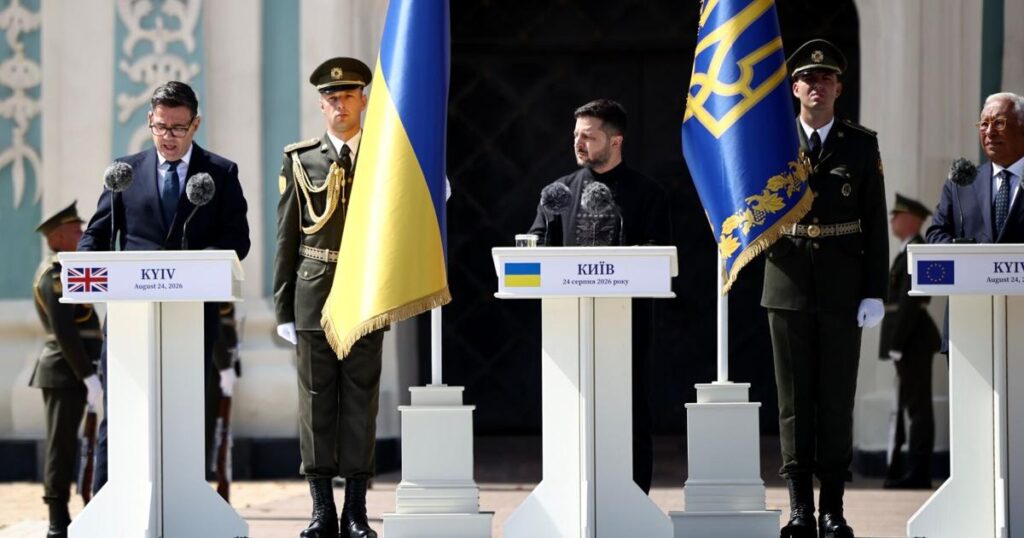
Burnham’s decision to make Kyiv his first international destination has reinforced that message. The symbolism was deliberate: rather than using his first overseas trip to establish a new diplomatic direction, the new prime minister chose Ukraine to demonstrate that the change of government in Westminster would not translate into a retreat from British support.
Moreover, according to Dr Oliver, Burnham’s decision to make Kyiv his first international destination is highly significant.
“Indeed, Burnham’s decision to make Kyiv his first overseas visit as Prime Minister is highly symbolic. It sends a message both to Ukraine and to Russia that a change of political leadership in Britain should not be interpreted as a weakening of British commitment.”
Dr Thom Oliver
He added that Burnham’s declaration that Britain remains “100% behind” Ukraine is equally significant because it showed the durability of a policy that has survived the leadership of Boris Johnson, Keir Starmer and now Burnham.
That continuity is particularly notable given the political upheaval in Britain since Russia’s full-scale invasion. While the three Prime Ministers have differed significantly in political style and domestic priorities, their governments have broadly maintained support for Kyiv.
Britain Resists Russian Red Lines as Escalation Risks Grow
The increasingly direct exchanges between London and Moscow nevertheless raise a difficult strategic question: how can Britain continue to support Ukraine without allowing the conflict to escalate into a confrontation with Russia?
Dr Oliver argues that this is where strategic signalling becomes particularly important.
“This creates a potentially dangerous process of strategic signalling. Moscow wants Britain and other European states to believe that there are limits beyond which their support risks confrontation with Russia. Britain, conversely, has a strong incentive not to allow Russia alone to define those limits.”
Dr Thom Oliver
At the same time, repeatedly expanding the range and sophistication of Western assistance carries its own risks, particularly when those capabilities can be used against targets deep inside Russian territory.
Dr Oliver therefore cautioned against interpreting the increasingly hostile rhetoric as evidence that either Britain or Russia necessarily wants a direct military confrontation.
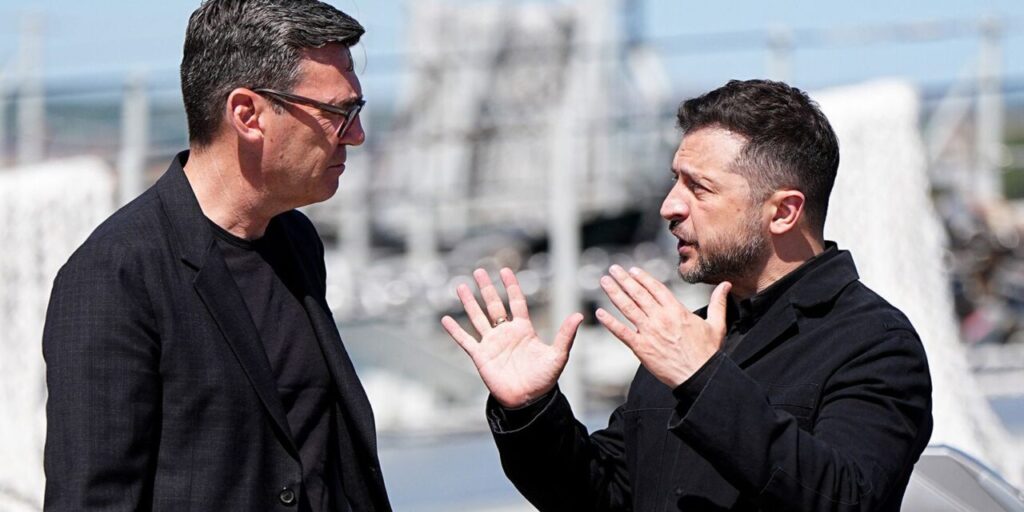
“The difficulty is that both governments must demonstrate resolve without allowing rhetoric and action to produce an unintended escalation. Strong language does not necessarily mean that either Britain or Russia actively wants a direct military confrontation.”
Dr Thom Oliver
He noted that some of the rhetoric is intended to deter the other side from crossing what it considers an unacceptable threshold. However, the risks become more difficult to manage as British technology and military capabilities become increasingly connected with Ukraine’s ability to conduct long-range strikes.
Furthermore, the larger European environment is just as significant. Burnham’s visit to Kyiv took place at the same time as the Coalition of the Willing, which brings together nations who want to continue providing Ukraine with diplomatic and military support.
The conference made clear that Britain is increasingly working through a broader European security framework rather than pursuing its Ukraine strategy in isolation.
According to Dr. Oliver, this collaboration is especially important for comprehending how Britain’s role has changed after Brexit.
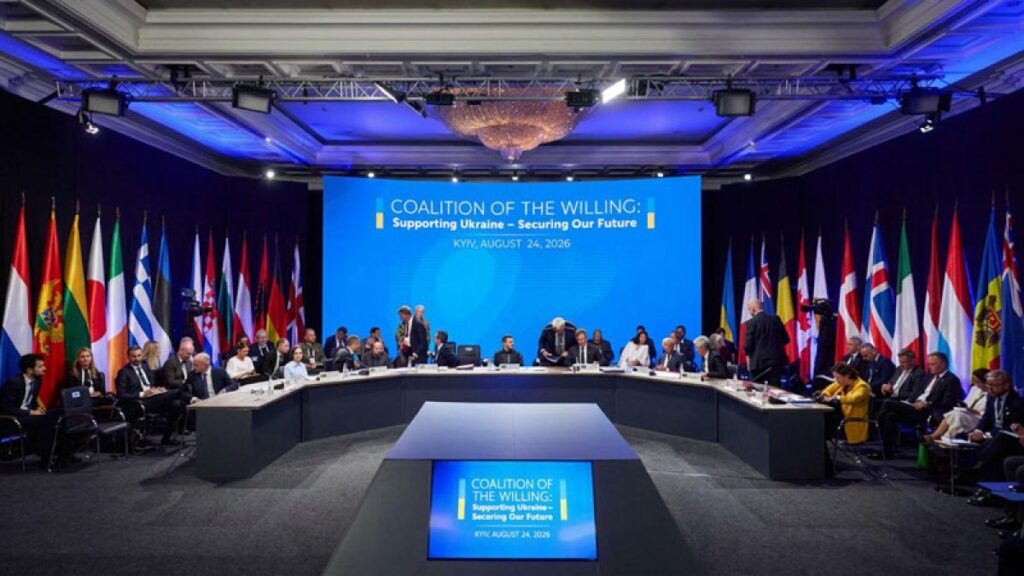
“It is equally important, however, not to view Britain as acting alone. UK’s approach is increasingly embedded within a wider European effort, including its leadership alongside France and Germany in the Coalition of the Willing.”
Dr Thom Oliver
Even though Britain is no longer a member of the European Union, Britain has used the crisis as a chance to strengthen its standing as a significant military and diplomatic player in Europe.
“There is consequently a broader story here about Britain’s post-Brexit role in European security. Whatever disagreements exist domestically over other aspects of foreign policy, Ukraine has provided successive British governments with an area in which the UK can present itself as an important European military and diplomatic actor.”
Dr Thom Oliver
Yet the consequences of the conflict extend beyond Britain’s relationship with Moscow or Europe’s security architecture.
For countries outside Europe, including Ghana and other African economies, developments in the Russia-Ukraine war affect food, energy and commodity markets. Disruptions to Black Sea trade and agricultural production translate into wider pressures on global prices, making decisions taken in London, Moscow and Kyiv relevant to economies thousands of kilometres from the battlefield.
Dr Oliver noted that the consequences of the war therefore extend beyond the immediate military confrontation.