Russia has warned that British facilities producing military equipment for Ukraine could face attacks from “unknown sources,” raising the prospect of a dangerous escalation between Russia and UK.
The warning came after Andrei Fedorov, a former Russian Deputy Foreign Minister and Kremlin adviser, suggested that Moscow could respond to Britain’s decision to share missile technology with Ukraine through measures that go beyond diplomatic protests and cyber operations.
The Krelim adviser noted in an interview that he could not rule out a “semi-military” response against Britain, including possible attacks on companies and factories involved in producing drones for Ukraine. He suggested that such action could be carried out by actors not formally identified as Russian.
“It could take the form of something might happen with enterprises, with factories which are producing drones for Ukraine. They could be attacked not by Russia, but by from unknown sources.”
Andrei Fedorov
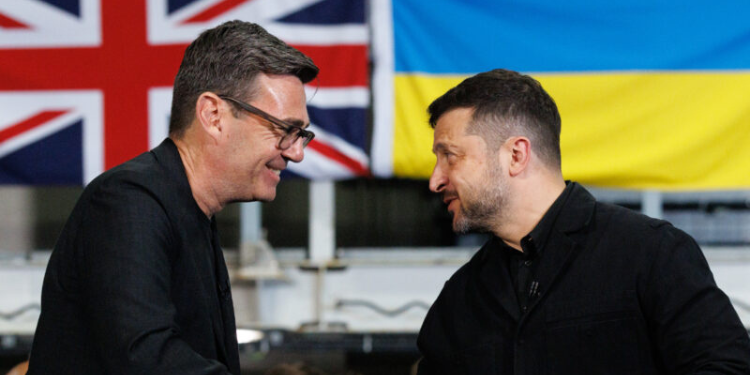
The remarks came as Andy Burnham made his first official visit since becoming Prime Minister, travelling to Kyiv to reaffirm Britain’s commitment to Ukraine and meet President Volodymyr Zelensky.
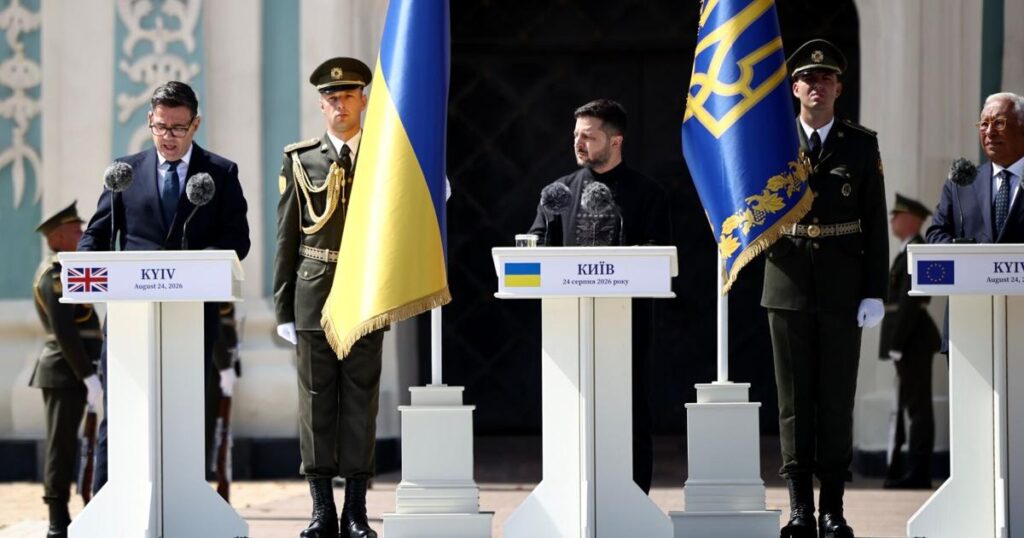
Britain has pledged to maintain pressure on Russia while working with European allies to strengthen Ukraine’s ability to defend itself against increasingly intense Russian attacks.
Britain has also agreed to provide Ukraine with blueprints for British-made components used in the French-developed SCALP cruise missile, a weapon closely related to Britain’s Storm Shadow.
The move is intended to enable Ukraine to manufacture the long-range weapon domestically, potentially strengthening Kyiv’s capacity to sustain its military operations without relying entirely on foreign deliveries.
Meanwhile, Kremlin spokesman Dmitry Peskov has criticised the decision, arguing that Britain’s actions were undermining prospects for peace. He added that the move prevented “even the slightest progress” towards ending the conflict and accused Britain of repeatedly escalating its involvement.
“Britain is involved in this war on the side of the Kyiv regime. Britain methodically and regularly adds fuel to the fire,” Peskov said.
Meanwhile, Andy Burnham responded bluntly when confronted with Moscow’s criticism. “Who started the fire? That’s the question, isn’t it?” he said.
Burnham to Seek Trump Support
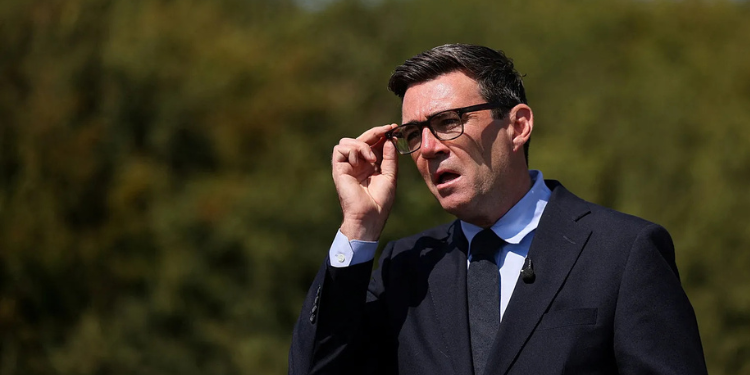
Alongside the growing tensions with Moscow, Burnham is preparing for another major diplomatic push aimed at strengthening Ukraine’s air defences.
The British Prime Minister stated that he is likely to travel to New York in September for the United Nations General Assembly, where he expects to join European leaders in lobbying US President Donald Trump over Ukraine’s urgent defence requirements.
The proposed visit would be Burnham’s first trip to the United States since becoming prime minister.
He stated that the details of the trip were not yet “fully confirmed,” but added that it was “likely” he would attend, particularly following discussions during his Kyiv visit.
A central issue is Ukraine’s shortage of Patriot interceptor missiles, which are considered among the most effective systems available to Kyiv for defending against Russian ballistic missile attacks.
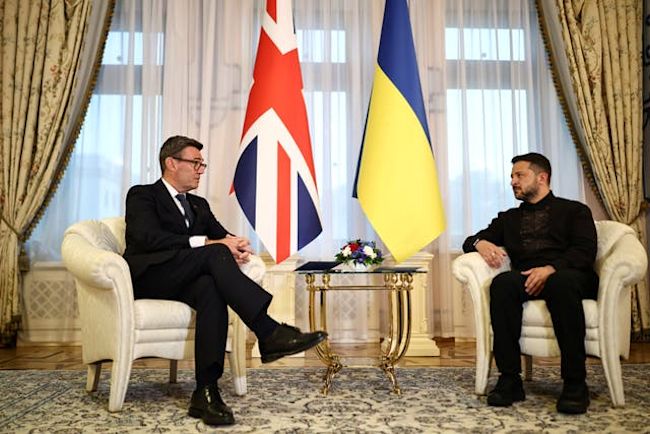
Ukraine has repeatedly appealed to its allies for additional Patriot interceptors ahead of winter, when Russia is expected to intensify attacks against energy infrastructure. Zelensky has disclosed that Kyiv needs around 300 Patriot missiles to strengthen its defences before the colder months.
Burnham noted that he is “really confident” the problem could be addressed, although he acknowledged that the solution would require more than simply relying on the United States.
“There are other players who could help in the mix who we have influence with,” he added “It’s probably going to be a solution that involves a lot of layers and a lot of negotiation.”
Trump’s prior unwillingness to share some of the most secret US military technologies complicates the diplomatic endeavour. He withdrew his earlier suggestion that Ukraine could be able to manufacture Patriot systems at home in July, claiming the technology was too crucial to distribute openly.
As Russia continues to unleash massive missile and drone assaults against Ukrainian cities and vital infrastructure, the need for interceptors has grown more pressing.
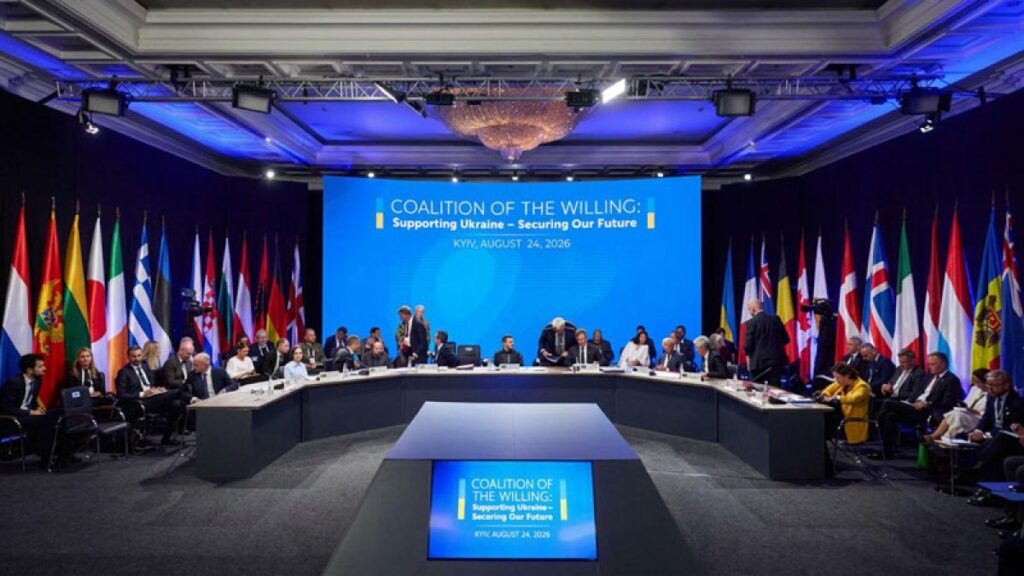
During his visit to Kyiv, Burnham chaired a meeting of the “coalition of the willing,” the grouping of countries supporting Ukraine’s defence effort, alongside French President Emmanuel Macron and German Chancellor Friedrich Merz.
In a joint statement, the leaders indicated that strengthening Ukraine’s air defences would be an “urgent priority” and condemned Moscow’s “systemic and escalating strikes against Ukraine’s cities, critical infrastructure and civilians.”
They also pledged to continue efforts to weaken Russia’s ability to finance the war through sanctions and measures targeting its so-called “shadow fleet.”
Burnham has sought to make clear that Britain’s support for Ukraine will not diminish despite the threats coming from Moscow.
READ ALSO: Gold Trading Operates On Low Margins – Bright Simons Warns