
Africa’s ability to compete in the emerging global industrial order will depend heavily on whether governments can challenge the high cost of energy investment and negotiate from stronger analytical positions, Executive Director of the Africa Centre for Energy Policy (ACEP), Benjamin Boakye, has said.
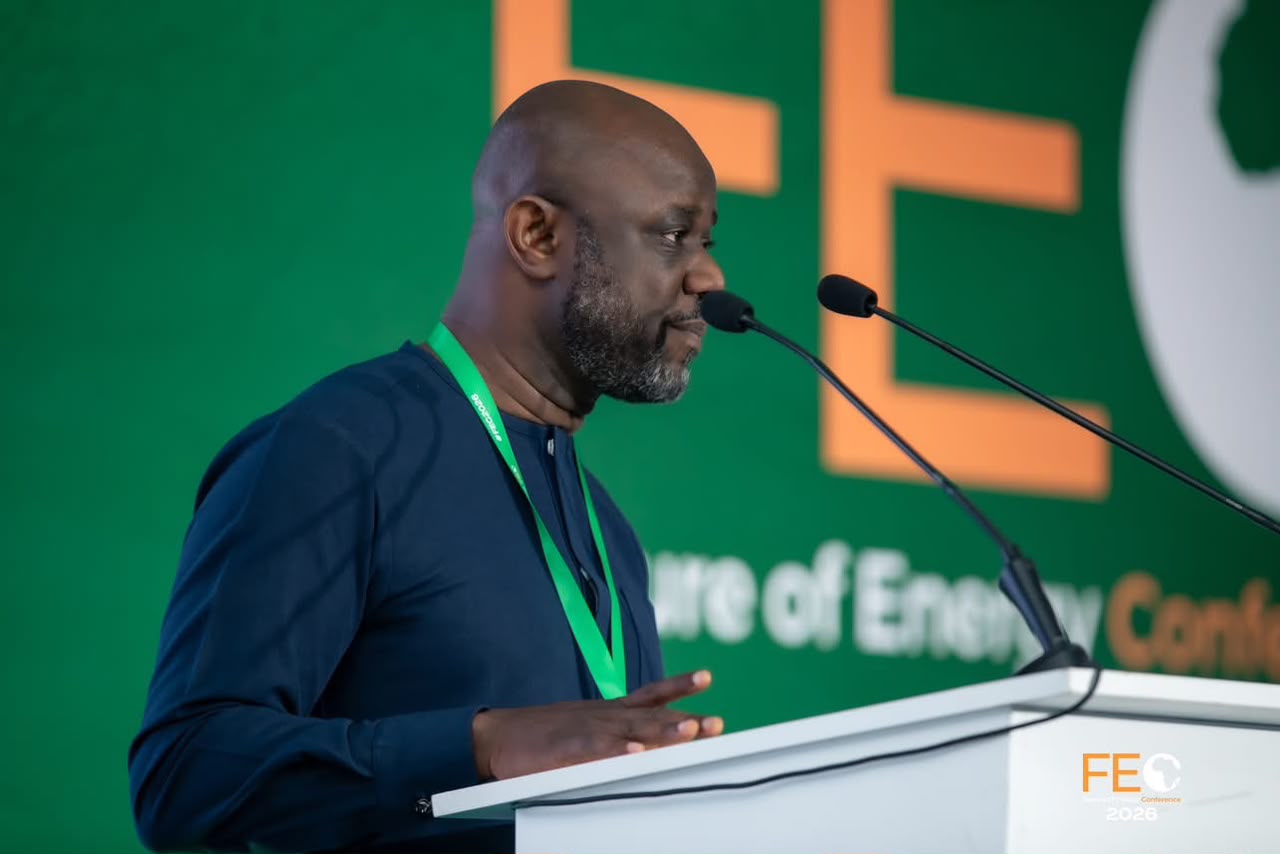
Speaking during an expert chat at the Future of Energy Conference 2026 on Competing In A New Global Industrial Order: What Must Africa Get Right, Mr. Boakye argued that African countries frequently accept investment terms without independently determining whether the prices demanded by investors are justified by the risks involved.
The concern is particularly significant in the energy sector, where high financing and capacity charges can translate into elevated electricity costs for industries and consumers.
According to Mr. Boakye, African governments often approach negotiations from the investor’s starting price rather than from an independently established assessment of project economics.
Questioning The Risk Premium
Mr. Boakye cited a comparison between Western electricity markets and African markets, noting that capacity charges in Western markets, where perceived investment risk is relatively low, could be around 1.5 cents, while investors approaching African markets could seek charges of approximately 8 cents.
The disparity, he argued, should trigger a more fundamental question about the precise risks being priced into African projects and whether those risks justify such a significant premium.
“Africa systematically over-rewards investors because it does not do the analysis.”
Benjamin Boakye, Executive Director, ACEP
ACEP responded to the challenge by establishing a counter-benchmark of no more than 3 cents, on the basis that the figure could adequately compensate for the risks genuinely perceived in the African market.
The initial investor response was that the benchmark was unrealistic.
However, the position changed when ACEP independently modelled the project and proposed that government could finance it if investors were unwilling to meet the benchmark.
Investors subsequently returned and indicated that the 3-cent benchmark could be achieved.
The experience illustrates a central weakness in Africa’s investment negotiations: bargaining power does not necessarily come from making stronger verbal demands, but from having a credible alternative supported by evidence, financial modelling and institutional capacity.
For African governments, the implication is substantial.
A government unable to independently establish the cost of a project is effectively negotiating against information supplied by the investor.
That imbalance can result in excessive returns, poorly structured guarantees and long-term fiscal obligations that ultimately become costs to the public.
Analysis Must Come Before Incentives
Mr. Boakye also challenged the widespread practice of granting tax incentives without first establishing the investment barrier that the incentive is intended to remove.
According to him, the problem is not necessarily that African governments provide incentives, but that incentives are frequently offered as a matter of routine rather than as a response to demonstrated economic constraints.
A waiver of import duty on machinery, for instance, could represent a rational incentive where the machinery would otherwise not enter the country.
In such a case, the government may not actually be sacrificing revenue because no investment would have occurred and no associated tax revenue would have been generated without the waiver.
The same logic, however, cannot automatically be applied to every tax concession.
“The failure is not that incentives are given but that they are given without analysis.”
Benjamin Boakye, Executive Director, ACEP
The analytical distinction matters because poorly designed incentives can transfer significant economic value to investors without materially changing investment behaviour.
A more disciplined approach would identify the specific factor preventing investment, determine the minimum intervention required to remove that barrier and measure the fiscal cost against the expected economic benefit.
Such an approach would also require African states to standardise investment processes and establish credible information on resource availability before deciding which industries should receive policy support.
Lessons From China And Tesla
Mr. Boakye pointed to China’s industrial development as an example of strategic sequencing rather than permanent dependence on foreign investors.
The approach described involved attracting investment into sectors where domestic capacity was initially absent, developing domestic capabilities alongside foreign participation and eventually building enough local capacity for the foreign investor to become less indispensable.
The Tesla example was cited to demonstrate the importance of strategic flexibility.
China initially required substantial domestic ownership participation in the electric vehicle sector, a condition resisted by Tesla founder Elon Musk.

Rather than excluding the investment altogether, China allowed the company to enter while continuing to build domestic industrial capacity.
Within several years, China had developed a dominant electric vehicle industry.
The lesson for Africa is not to copy China mechanically, but to recognise that industrial policy requires governments to distinguish between demands that are essential to national development and conditions that could unnecessarily prevent investment from entering.
A rigid insistence on every preferred condition can prevent investment.
Excessive flexibility, however, can leave countries with little domestic capacity after the investment has matured.
The strategic objective should therefore be to secure technology, skills, domestic suppliers and productive capabilities alongside foreign capital.
Stronger Negotiating Capacity Needed
The wider argument points to a shift in the way African governments should approach investment policy.
Foreign capital remains important, particularly for capital-intensive energy and mineral projects, but capital should not automatically determine the terms of industrial development.
Independent project modelling, transparent benchmarks and evidence-based incentives can improve the quality of negotiations while reducing the possibility of excessive risk pricing.
The approach is especially important as Africa seeks to attract investment into critical minerals, renewable energy, electric vehicles and industrial processing.
Without stronger analytical capacity, the continent risks financing industrialisation at prices that undermine the competitiveness industrialisation is supposed to create.
The emerging global industrial order will therefore reward countries capable of understanding the economics of investment rather than simply competing to offer the most attractive package.
READ ALSO: Ghana’s Economic Growth Accelerates to 6.4% Amid Reform Pressures