
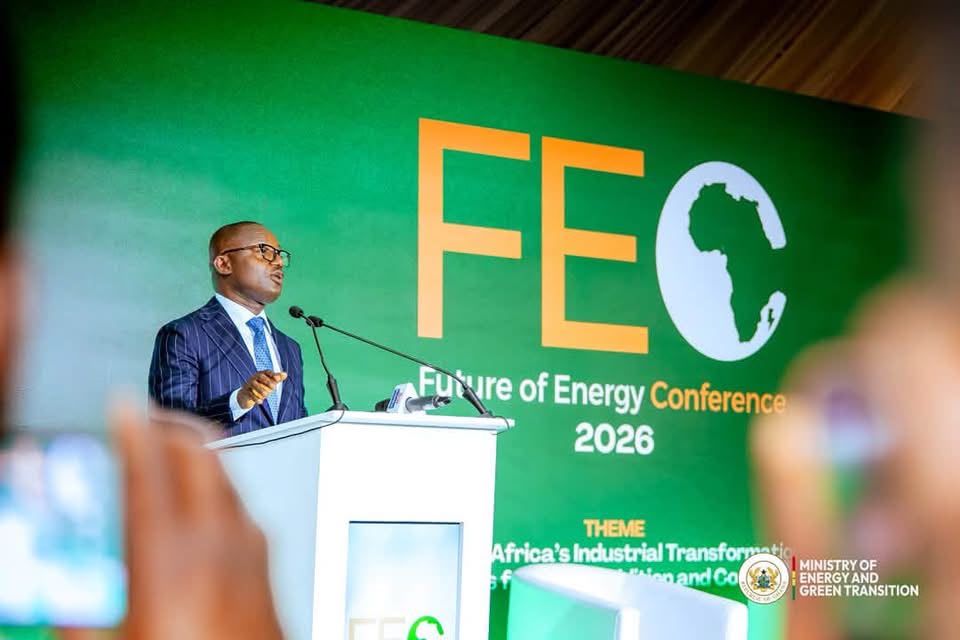
Africa’s ambition to industrialise and compete more effectively in global markets will remain constrained unless countries can deliver energy that is reliable, sufficient and affordable, Executive Director of the Africa Centre for Energy Policy (ACEP), Benjamin Boakye, has warned.
Boakye said the continent’s energy challenge should no longer be treated solely as an electricity-access problem.
In his view, the cost and quality of energy have become central determinants of whether African economies can successfully process their own raw materials, attract productive investment and build competitive industries.
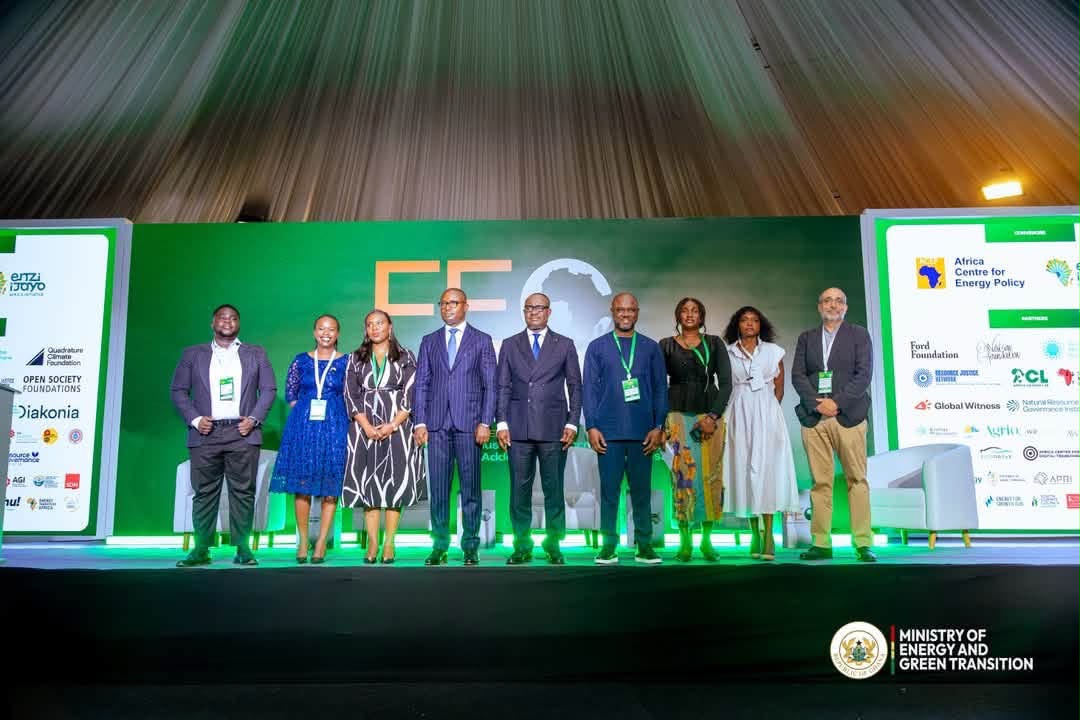
He made the remarks on Tuesday, August 25, 2026, during the opening of the Future of Energy Conference (FEC 2026) in Accra, organised under the theme “Powering Africa’s Industrial Transformation: Energy Systems for Value Addition and Competitiveness.”
The two-day conference runs from August 25 to 26 and brings together policymakers, businesses, academia, development partners and civil society to examine the relationship between energy systems and Africa’s industrial ambitions.
Boakye put the challenge bluntly:
“We can’t build global competitiveness on uncompetitive energy.”
Benjamin Boakye, Executive Director, ACEP
The statement goes to the heart of this year’s FEC agenda. Africa possesses significant oil, gas, hydro, solar and wind resources, alongside many of the minerals required for batteries and other clean-energy technologies.
Yet resource abundance has not consistently translated into affordable energy or competitive industrial production.
Energy Costs Are Becoming A Competitiveness Constraint
For African economies, the problem is increasingly about what electricity costs after generation, financing, fuel, transmission, distribution and other system costs are taken into account.
Boakye argued that expensive energy ultimately feeds into the cost of producing goods, making African products less competitive both within domestic markets and internationally.
He subsequently cited electricity costs of roughly 14–16 US cents per kilowatt-hour in Africa compared with about 6 cents in some other jurisdictions, highlighting the disadvantage faced by African manufacturers.
That disparity matters particularly as countries seek to move beyond exporting unprocessed commodities.
A mineral-rich economy may have the raw materials required for aluminium, battery components or other industrial products, but if the electricity required to process those resources is unreliable or prohibitively expensive, investors have less incentive to establish energy-intensive processing facilities locally.
The result is a familiar development contradiction: Africa exports resources that are essential to global industries while importing many of the higher-value products manufactured from those resources.
FEC 2026 is explicitly examining this structural problem, with ACEP identifying industrial energy costs, infrastructure readiness, technological pathways, regional integration and financing as central areas for discussion.
Ghana’s Energy Challenge Is Particularly Relevant
For Ghana, the argument has immediate implications.
The country has made substantial progress in electricity access, but access alone does not determine whether the power system is capable of supporting an industrial transformation.
Manufacturers require electricity that is available when needed, delivered at predictable quality and priced at a level that allows businesses to remain competitive.

Power interruptions, transmission constraints and tariff pressures can therefore become production costs even where national generation capacity appears adequate.
This is particularly important for Ghana’s ambitions around value addition in sectors such as mining, manufacturing and agro-processing.
It also explains why recent discussions around Ghana’s electricity grid have become more consequential.
Government announced at FEC 2026 that it had initiated a comprehensive review of the country’s electricity grid and infrastructure following recent system disturbances.
The exercise is expected to provide an independent assessment of the condition and performance of the power system.
The timing is significant.
Ghana cannot credibly pursue industrial competitiveness while treating generation, transmission reliability, tariffs and industrial demand as separate policy questions.
The competitiveness of an industrial economy depends on the entire electricity chain.
Reliable Energy Must Accompany Industrial Policy
Boakye’s argument also challenges policymakers to rethink the traditional distinction between energy policy and industrial policy.
If Ghana wants to process more minerals domestically, expand manufacturing or develop new industries around the energy transition, electricity planning must anticipate those industrial loads rather than simply respond to existing household demand.
ACEP’s FEC programme similarly argues that energy planning must be aligned with industrial and mineral-development strategies, including investment in generation, transmission capacity, reserve margins and grid stability.
This is where the concept of energy adequacy becomes important.
A system can have relatively high national access while still failing to provide the volume, reliability and price required by large-scale industry.
Likewise, additional generation capacity will not automatically solve the problem if transmission infrastructure cannot transport electricity securely to industrial centres.
The challenge, therefore, is not simply to generate more power.
It is to build an energy system capable of supporting productive economic activity at scale.
Energy Transition Must Not Raise The Cost Of Development
The argument becomes even more complicated as African countries pursue the energy transition.
Africa has enormous renewable-energy potential, but the transition itself requires capital, transmission infrastructure, storage, technology and technical expertise.
If these costs are transferred directly into already expensive electricity systems without appropriate financing and system planning, the transition could create another competitiveness challenge.
That does not make the transition less necessary.
Rather, it makes the economics of the transition more important.
Africa needs to expand renewable energy while ensuring that its power systems remain reliable and affordable.
It also needs to determine where natural gas, hydropower, storage and regional electricity trade can complement variable renewable generation.
For Ghana, this means the energy transition should be judged not only by how many renewable projects are commissioned, but by whether the resulting energy system can support economic activity at competitive cost.
Ghana Can Shape A Wider African Agenda
Boakye also called for Ghana to use its growing continental influence to advance the issue of affordable and resilient energy at the African level.
Ghana’s role under the African Union provides an opportunity to place energy affordability, security and industrialisation more prominently on the continental agenda, he said.
That matters because the problem extends beyond individual national grids.
Regional power trading, shared infrastructure, coordinated investment and larger electricity markets could help African countries overcome some of the limitations created by fragmented energy systems.

The African Continental Free Trade Area also becomes more meaningful when countries can produce goods competitively rather than simply remove trade barriers.
The underlying message from ACEP is therefore straightforward: Africa’s industrial transformation will ultimately be constrained by the energy system that powers it.
For Ghana, the implication is even sharper. The country has the resources, policy ambitions and industrial opportunities to capture greater value from its economy.
But unless energy becomes sufficiently reliable, predictable and affordable, those ambitions risk remaining largely on paper.
FEC 2026 is consequently putting energy costs where they belong, at the centre of the industrialisation debate.
The question is no longer simply whether Africa has enough energy resources.
It is whether the continent can turn those resources into competitive energy systems capable of powering competitive economies.
READ ALSO: Kofi Bentil Pushes Free Markets, Economic Freedom to Drive Africa’s Development