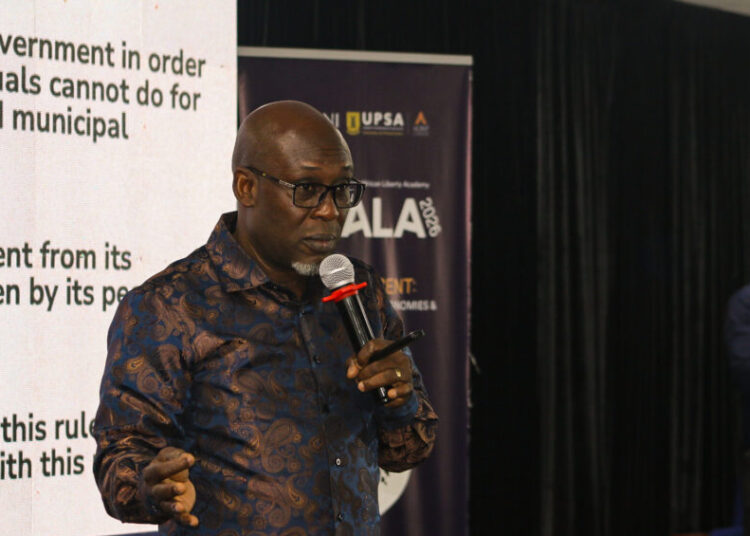
Kofi Bentil, Senior Vice President at the IMANI Centre for Policy and Education, has argued that African governments that depend heavily on foreign aid and external financing become less accountable to their own citizens, making the case for domestic taxation as a foundation of genuine government responsiveness at the Students and Young Professionals African Liberty Academy in Accra.
Speaking at SYPALA 2026, Mr Bentil linked property rights, taxation and citizen accountability into a single argument, contending that a government’s willingness to listen to its people depends directly on whether that government relies on those same people for its revenue.
Mr Bentil argued that the disconnect between African governments and their citizens has a specific, identifiable cause. “African governments do not listen to African citizens,” he said. “Do you know why? Because they don’t collect your taxes.”

He pointed participants toward the work of economist Dambisa Moyo as a starting point for understanding the broader argument against reliance on foreign aid.
He described his own history of activism on the issue, saying that he, IMANI Africa founder Franklin Cudjoe and a number of other libertarian-minded thinkers spent much of the past decade campaigning against Ghana’s dependence on aid from the United States, the World Bank and the IMF.
He recounted personally telling a World Bank country director that he wanted the institution to leave Ghana and instead provide the country with a tax framework, a request he said reflected his core objection to aid dependency rather than opposition to the institution itself.
Property Rights Include the Duty to Pay Taxes
Mr Bentil framed taxation as inseparable from the libertarian commitment to property rights he had outlined earlier in his remarks.
He said believing in property rights necessarily includes accepting that a portion of one’s property must be surrendered as tax to fund the government citizens rely on, rather than treating taxation purely as an imposition to be minimised. “Property rights also mean pay your taxes out of your property,” he said.
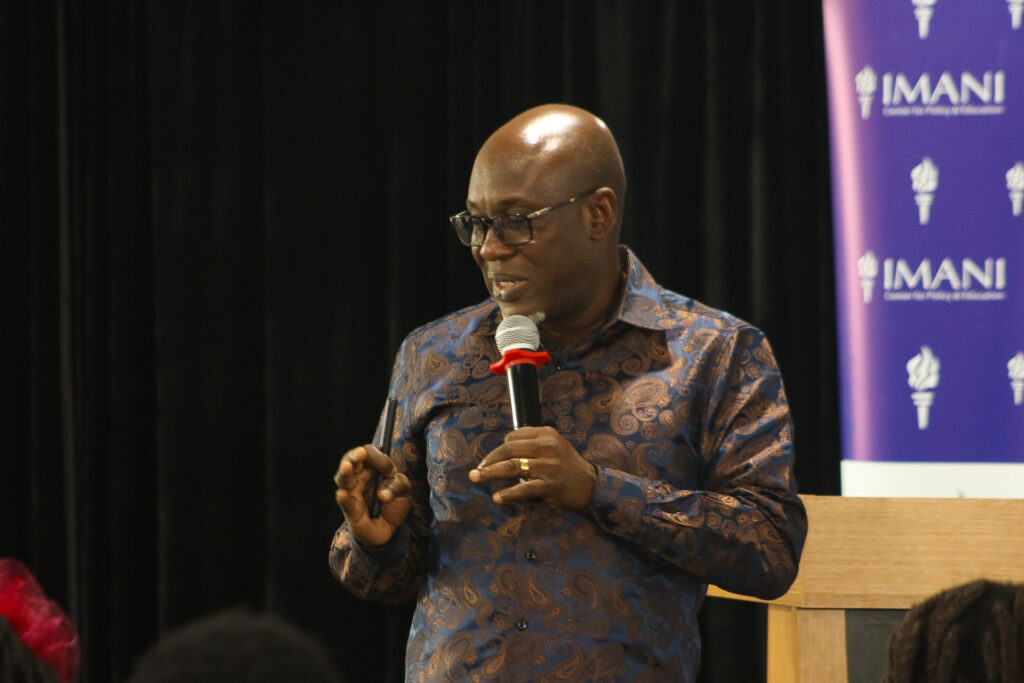
He argued that when governments instead draw their operating revenue from external sources, whether foreign aid, loans or grants, the incentive to be responsive to domestic taxpayers weakens correspondingly.
“If your government is not relying on you for taxes and resources, they won’t listen to you,” he said, arguing that this dynamic explains why some African governments appear more attentive to foreign donors and lending institutions than to their own populations.
A Rejection of the Western Small-Tax Framing
Mr Bentil distinguished his position from the American conservative preference for minimal taxation regardless of fiscal circumstances, citing the United States’ roughly $40 trillion national debt as an example of a tax policy he considers disconnected from responsible governance.
He argued that taxation should be set at a level sufficient to fund the functions citizens actually want their government to perform, tying the size of the tax base directly to the scope of services a government is expected to deliver. “Our taxes must be enough to do the things that we want the government to do for us,” he said.
Mr Bentil closed the taxation argument by rejecting any suggestion that this libertarian position amounts to an endorsement of unchecked personal wealth accumulation.
He said the underlying goal is a well-functioning society rather than personal fortune, and that a properly funded, accountable government, paid for by its own citizens rather than external patrons, is the mechanism through which that broader social good becomes achievable.
He tied the argument back to the session’s wider themes of freedom of movement and property rights, noting that national borders and the visa systems that enforce them are relatively recent constructs rather than natural or permanent features of human organisation, and that the same libertarian commitment to liberty that demands accountable taxation also extends to freedom of migration.
READ ALSO: Kofi Bentil Pushes Free Markets, Economic Freedom to Drive Africa’s Development