
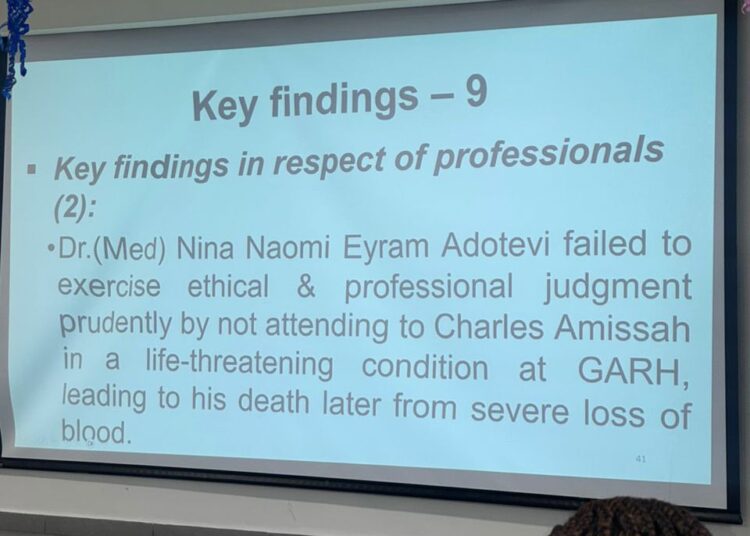
A committee established to investigate the death of 29-year-old engineer Charles Amissah has concluded that he died from medical neglect rather than the direct injuries sustained in a road accident, intensifying national concern over Ghana’s emergency healthcare response system.
The findings, announced by committee chair Professor Agyeman Badu Akosa, indicate that timely medical intervention could have saved the young engineer’s life after he was knocked down in a hit and run incident near the Kwame Nkrumah Circle Overpass in Accra on February 6, 2026.
Charles Amissah, an employee of Promasidor Ghana Limited, was initially attended to by personnel from the National Ambulance Service following the accident. However, his condition reportedly worsened after he encountered difficulties accessing emergency treatment at multiple health facilities.
According to reports, he was turned away by the Police Hospital, Ridge Hospital, and the Korle Bu Teaching Hospital due to the reported unavailability of beds and emergency treatment space.
The young engineer eventually died while still being transported in search of medical care, triggering widespread outrage across the country and renewed debate about the state of emergency healthcare services in Ghana.

Autopsy Reveals Preventable Death
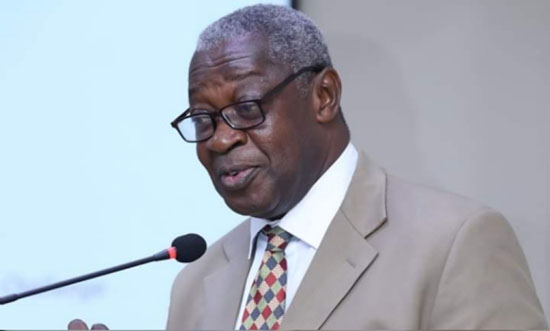
Presenting the committee’s findings, Professor Akosa explained that the autopsy report established that Charles Amissah did not die instantly from the accident itself.
Instead, he died gradually from excessive blood loss that could potentially have been controlled if immediate treatment had been administered at any of the health facilities he visited.
“And the pathology confirms a slow death from medical neglect, and was not from the instant trauma. What it means is that if at any of these facilities, there had been medical intervention, Charles Amissah could have survived.”
Professor Emmanuel Agyeman Badu Akosa
The committee explained that the primary cause of death was exsanguination, or excessive blood loss, resulting from a severe injury to his upper arm and surrounding soft tissue.
The findings have deepened concerns about the effectiveness of Ghana’s emergency healthcare system, particularly in handling trauma and accident cases that require rapid intervention.
Questions Over Emergency Healthcare Response
The circumstances surrounding Amissah’s death have drawn sharp public attention to longstanding concerns about emergency preparedness, hospital capacity, and coordination among healthcare institutions.
Critics argue that the inability of multiple major hospitals in Accra to admit and treat a critically injured patient points to deeper systemic failures within the healthcare delivery system.
The case has also reignited debate over whether emergency care protocols are being effectively implemented, especially in life threatening situations where delays can determine survival.
Healthcare experts note that trauma patients suffering severe blood loss often require immediate stabilization measures that can significantly improve survival chances even before advanced treatment becomes available.
The committee’s conclusion that Amissah died from preventable complications rather than instant trauma has therefore amplified calls for urgent reforms.
Many Ghanaians have expressed frustration over what they see as a dangerous gap between emergency transport services and actual hospital readiness to receive patients in critical condition.
Public Outrage and Calls for Accountability
The death of Charles Amissah quickly became a national issue after reports emerged detailing the unsuccessful attempts to secure emergency treatment for him across several hospitals.
Public reactions intensified after eyewitness accounts suggested that valuable time was lost while efforts were made to locate an available medical facility.
Social commentators, healthcare advocates, and members of the public have since called for accountability from both healthcare institutions and policymakers responsible for emergency medical coordination.

Some analysts argue that the tragedy reflects broader challenges confronting Ghana’s healthcare infrastructure, including overcrowding, inadequate bed capacity, staffing shortages, and uneven emergency response systems.
The case has also renewed scrutiny of referral procedures between hospitals and the extent to which emergency patients are protected under existing healthcare policies.
Committee Investigation and Broader Implications
The government established the three member investigative committee amid growing pressure for answers following the public reaction to the incident.
The committee was tasked with examining the sequence of events leading to Amissah’s death, including the response of emergency personnel, hospital decisions, and possible systemic failures.
Professor Akosa’s remarks now place the spotlight firmly on the issue of medical neglect and emergency access rather than solely on the original road accident.
Healthcare policy analysts believe the findings could trigger wider reforms aimed at improving emergency medical coordination and ensuring hospitals are better equipped to handle critical cases.
Some experts have also proposed the creation of centralized emergency bed management systems to allow ambulances and emergency responders to identify available treatment facilities more efficiently.
Others are calling for mandatory emergency stabilization protocols requiring hospitals to provide immediate life saving intervention regardless of bed availability before transferring patients elsewhere.
Growing Pressure for Reform
The death of Charles Amissah has become more than an isolated tragedy. It has evolved into a broader symbol of the urgent need to strengthen emergency healthcare systems and restore public confidence in trauma response services.

For many Ghanaians, the committee’s conclusion that the young engineer could have survived with timely treatment raises painful questions about how many similar cases may go undocumented each year.
As pressure mounts on authorities to act on the committee’s findings, healthcare reform advocates insist that systemic improvements are necessary to prevent future avoidable deaths.
The final recommendations of the committee are expected to influence ongoing national discussions about emergency healthcare delivery, accountability within public hospitals, and the broader resilience of Ghana’s healthcare system.
READ ALSO: Over 60% Developing Nations Face Water Crisis, Scientists Warn