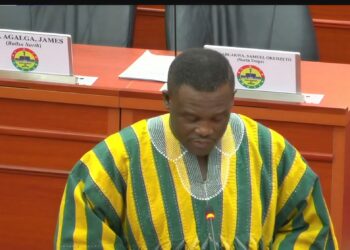

Professor Titus Kofi Beyuo, Member of Parliament for the Lambussie Constituency and Board Chair of the Korle-Bu Teaching Hospital, has attributed Ghana’s persistent no bed syndrome largely to attitudinal challenges within the healthcare system, warning that lives continue to be lost to preventable failures in emergency care.
Speaking on the floor of the Parliament of Ghana, Prof Beyuo delivered a deeply reflective statement following the recent death of engineer Charles Amissah, who reportedly died after being turned away from multiple health facilities.
“I would also like to express my deepest condolences to the family of the late Charles Amissah on behalf of all of us and in particular, on behalf of the board and management of the Korle-Bu Teaching Hospital.”
Professor Titus Kofi Beyuo, Member of Parliament for the Lambussie Constituency and Board Chair of the Korle-Bu Teaching Hospital
To underscore the gravity of the situation, Prof Beyuo took lawmakers back to June 2018, recalling the case of a 70 year old businessman, Prince Anthony Poku Acheampong, who died after visiting seven hospitals in search of care. He noted with concern that one of the hospitals that turned the man away was an institution his company supplied with stationery.
He reminded the House that following public outrage at the time, the then Minister of Health constituted committees to investigate the phenomenon and prevent future occurrences.

Despite those efforts, Prof Beyuo said, Ghana finds itself confronting a similar tragedy eight years later, this time involving a younger and otherwise healthy professional.
Describing the development as deeply unfortunate, he stressed that the recurrence of such incidents points to unresolved systemic and human challenges within the health sector.
What No Bed Really Means
Prof Beyuo challenged the conventional understanding of no bed syndrome, explaining that the phrase goes beyond the absence of a physical bed at an emergency unit.
According to him, no bed can also mean the absence of blood for transfusion, lack of oxygen, unavailability of an intensive care unit space, or the absence of specialised staff such as an anaesthetist when surgery is anticipated.
“For instance, an anaesthetist is not there, and they think that the patient will require surgery. It could mean there is no theatre space. It could mean there is no oxygen in this hospital.
“There is no ICU bed, but we think that this patient needs ICU care. It could mean there is no stroke bed, and therefore, we are telling you no bed because you have a stroke. There is no doctor at this moment, so there is no bed.”
Professor Titus Kofi Beyuo, Member of Parliament for the Lambussie Constituency and Board Chair of the Korle-Bu Teaching Hospital
However, Prof Beyuo said the most disturbing interpretation of no bed is when it reflects a lack of willingness by staff to work. He explained that in some situations, patients are turned away because a shift is ending and staff are unwilling to admit new cases and complete the required documentation.
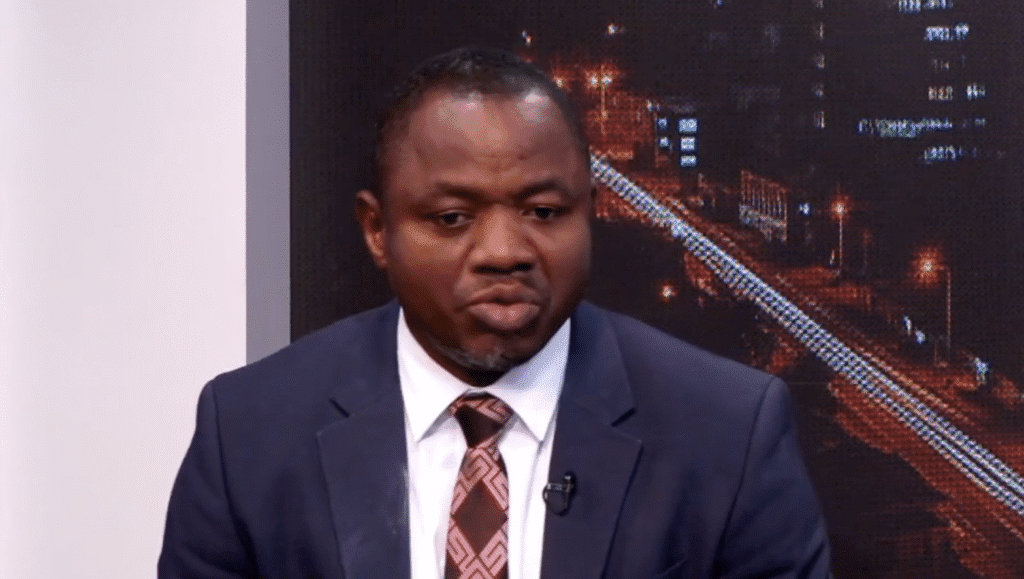
The Lambussie MP also pointed to fear and fatigue among health workers as contributing factors. He noted that some doctors avoid attending to critically ill patients out of concern that establishing duty of care could expose them to legal consequences if the patient dies.
He questioned the morality and legality of situations where patients collapse or die at the entrance of emergency units after waiting for extended periods, simply because no clinician formally examined them. Prof Beyuo argued that such scenarios raise serious ethical and legal questions that require deeper reflection by both medical and legal professionals.
Structural and Functional Constraints
Drawing on findings from previous investigations, Prof Beyuo explained that the causes of no bed syndrome can be grouped into structural, functional, and attitudinal factors.
On the structural front, he cited standards by the World Health Organization, which recommend between two and five hospital beds per ten thousand hospital population.
In contrast, Ghana currently has fewer than one bed per ten thousand population, indicating a significant infrastructure deficit. He acknowledged that in some cases, hospitals are genuinely overwhelmed due to limited bed capacity.
Functionally, however, Prof Beyuo said inefficiencies persist even where beds exist. He explained that beds may be available on other wards, but reluctance to transfer patients and reorganise space often leads to unnecessary refusals at emergency units.
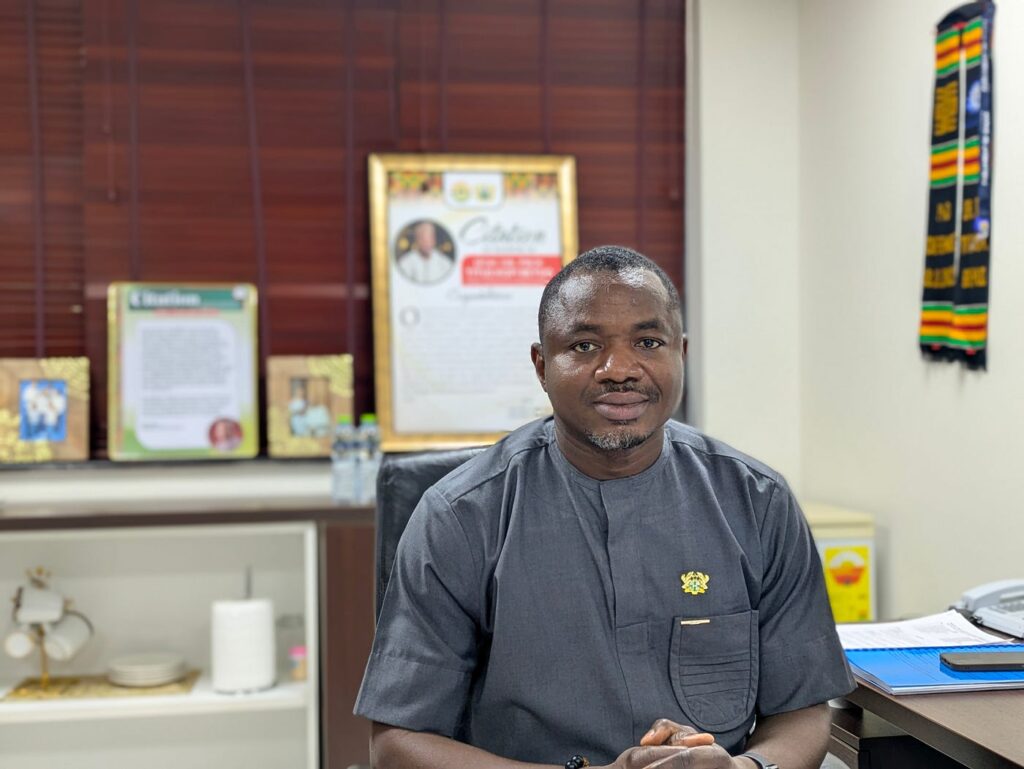
Despite the structural and functional gaps, Prof Beyuo was emphatic that attitude remains the most critical problem. He recalled that the causes of no bed syndrome were well documented by committees set up under former Health Minister Kweku Agyemang Manu, on which he served in his previous role as General Secretary of the Ghana Medical Association.
Yet, he said, little has changed because the underlying mindset has not shifted. According to him, no amount of infrastructure expansion or policy reform will yield results if health workers do not approach patients with empathy, responsibility, and a sense of shared humanity.
“May I stand on this to appeal to my colleague health workers? Look at that next patient; it could be you. It could be your father. It could be your mother. It doesn’t have to be another doctor calling you before you create a bed and accept the patient”.
Professor Titus Kofi Beyuo, Member of Parliament for the Lambussie Constituency and Board Chair of the Korle-Bu Teaching Hospital
He cautioned that emergencies do not announce themselves and that those who are unconscious or critically ill cannot call for help on their own behalf. Prof Beyuo concluded by stressing that saving lives must take precedence over convenience, fear, or routine.
He warned that unless attitudes change, Ghana risks continuing a cycle where avoidable deaths erode public trust in the healthcare system. His remarks have reignited national debate on emergency care, professional responsibility, and the urgent need for both systemic reform and cultural change within Ghana’s health institutions.
READ ALSO: Ghana’s Electricity Costs Too High, Analyst Warns