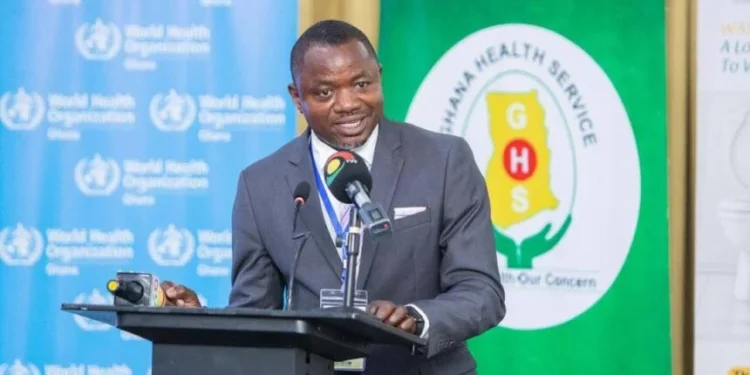
Professor Titus Kofi Beyuo, Member of Parliament for the Lambussie Constituency and Board Chair of Korle-Bu Teaching Hospital, has disclosed that the government is working on a national integrated bed management and referral coordination system aimed at ending the persistent challenges associated with health emergencies across the country.
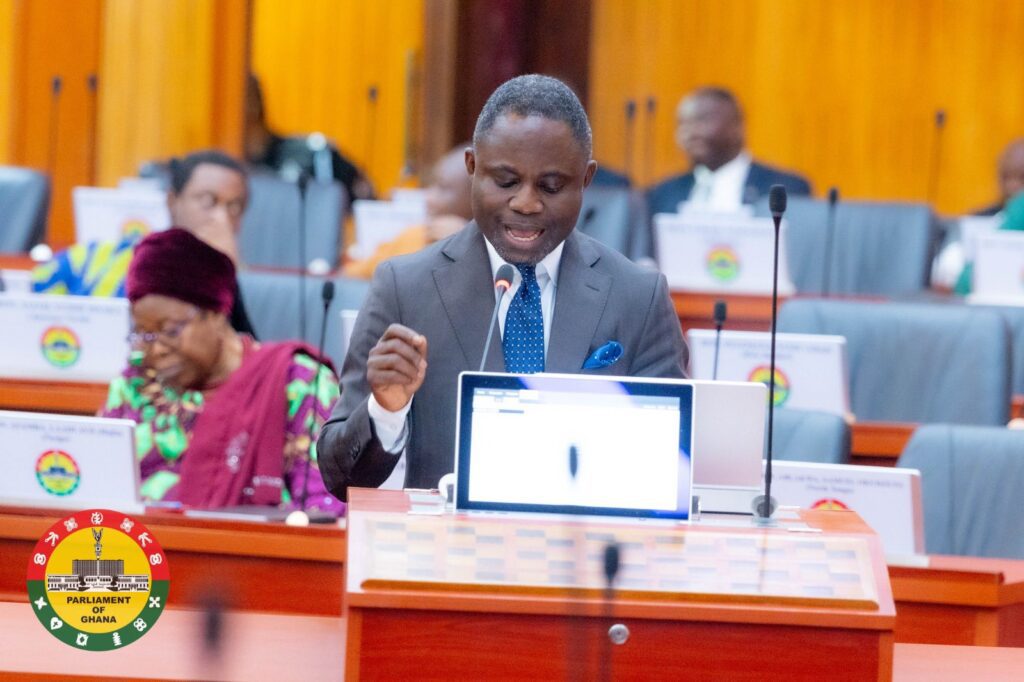
Addressing the Parliament of Ghana, Prof Beyuo confirmed that Korle Bu was the final health facility where the late patient at the centre of national attention passed away.
He expressed regret over the incident and conveyed condolences to the bereaved family, stating that the hospital had already taken internal steps to respond to the matter.
According to him, four staff members at Korle Bu have been interdicted, and an internal committee has been constituted to investigate the circumstances surrounding the death.
“The Minister of Health, as alluded to by the Deputy Minister, has also set up a very high-level committee headed by the revered Professor Agyeman Badu Akorsah, and they are working to see the exact cause of this incident.”
Professor Titus Kofi Beyuo, Member of Parliament for the Lambussie Constituency and Board Chair of the Korle-Bu Teaching Hospital
National Bed Management System in Progress
Beyond the immediate response, Prof Beyuo said government is pursuing a comprehensive and long term solution to the recurring no bed syndrome that has plagued emergency healthcare delivery in Ghana.

He revealed that the Ministry of Health has already assembled a technical team to develop a national integrated bed management and referral coordination system.
He explained that the system will be supported by information technology and designed to provide real time data on the availability of different categories of hospital beds nationwide. This will include information on intensive care unit beds, stroke beds, maternity beds, paediatric beds, and general emergency spaces.
According to Prof Beyuo, the initiative builds on the work of previous ministers and is intended to eliminate guesswork and discretion in emergency referrals. He noted that the development of the system was already in its final stages when the recent incident occurred, describing the timing as unfortunate.
He said the Minister of Health has since directed the technical team to accelerate its work, with the goal of making a major policy announcement that will usher in comprehensive change in how emergencies are managed across the health system.
Ending Arbitrary Refusals and Inconsistencies
Prof Beyuo used his personal experience to illustrate the urgency of the reform. He recounted receiving calls from colleagues who sought to refer patients to Korle-Bu, only to be told there were no available beds at the emergency unit. In contrast, he said that when he personally intervened, beds were suddenly found to be available.
He described this inconsistency as part of a broader systemic failure that undermines confidence in emergency care and places patients at unnecessary risk. According to him, the proposed integrated system will remove subjective decision making by ensuring that bed availability is transparent and verifiable in real time.
Under the new arrangement, ambulance services and referring facilities will no longer need to call around in search of a hospital willing to accept a patient. Instead, dispatchers and clinicians will be able to identify appropriate facilities instantly based on the patient’s clinical needs and available capacity.
Prof Beyuo said the national bed management system will be linked directly to the National Ambulance Service, allowing emergency responders to transport patients to facilities that are fully prepared to receive them.
He stressed that this integration will reduce delays, prevent needless hospital hopping, and improve survival outcomes, particularly for critically ill patients. “I’m pleading that Parliament will give the Minister all the support needed so that this problem can be solved once and for all”, he urged.
Call for Ambulance Care Reforms
In addition to bed coordination challenges, Prof Beyuo raised concerns about the current operational model of the ambulance service, which he said relies largely on a scoop and run approach.
He explained that while ambulances are able to transport patients quickly from accident scenes, they often lack the capacity to provide even basic life-sustaining interventions during transit.
He cited the recent case under discussion, noting that the patient’s blood pressure had dropped to critically low levels by the time he arrived at Korle Bu. According to Prof Beyuo, the simple administration of intravenous fluids such as normal saline during transport could have significantly improved the patient’s chances of survival.

He argued that the existing model must be reviewed to allow ambulance personnel to deliver basic pre hospital care, including setting intravenous lines and stabilising patients en route to hospital.
Prof Beyuo concluded by calling for upgraded training for ambulance staff to include specialised paramedics capable of providing essential emergency care. He said such reforms, combined with the proposed national bed management system, would mark a turning point in Ghana’s emergency healthcare delivery.
He emphasised that addressing health emergencies requires coordinated systems rather than isolated interventions, adding that the lives of patients depend on timely decisions, clear information, and properly trained personnel working within an integrated national framework.
READ ALSO: Trump Touts Economy In State Of The Union Address