
The 2026 MoMo Fintech Lab has entered its zonal bootcamp and hackathon pitch phase following the receipt of more than 1,700 entries from across Ghana, marking a significant step in efforts to develop locally driven financial technology solutions.
The programme is designed to help promising innovators transform their ideas into commercially viable products that address practical economic challenges, expand financial inclusion and strengthen Ghana’s digital economy.
The bootcamp organised by MobileMoney Fintech LTD in partnership with the Bank of Ghana, the initiative brings together emerging entrepreneurs developing solutions for agriculture, small and medium-sized enterprises (SMEs), digital payments and other areas of financial technology.
Through structured training, mentorship, prototype development and pitching sessions, shortlisted participants will receive support to refine their concepts and assess their potential for commercial application.
The zonal activities began in Tamale before moving to Kumasi from October 26 to 30 and concluding in Accra from November 2 to 6. The regional structure is intended to accommodate different innovation priorities across the country while giving participants opportunities to develop solutions relevant to the communities and businesses they serve.
Mr. Shaibu Haruna, Chief Executive Officer of MobileMoney Fintech LTD, said the response demonstrated Ghana’s capacity to develop technology solutions rooted in local economic realities.
”More than 1,700 entries sends a powerful message: Ghana has the talent and ambition to build solutions for its most pressing challenges. From agriculture in the North and SME growth in the Middle Belt to payment innovation in the South, these ideas reflect the realities of our economy.”
CEO of MoMo Fintech LTD,Mr. Shaibu Haruna
Regional Priorities Shape Innovation
The entries highlight differences in the challenges innovators are seeking to address across Ghana’s three zones, reflecting the varied needs of farmers, merchants, small businesses and consumers.
In the Northern Zone, agriculture-focused fintech concepts lead submissions. These solutions seek to support farmers, strengthen agricultural value chains and improve access to financial services.

The emphasis reflects the potential for financial technology to address barriers affecting agricultural enterprises, including access to appropriate financial products and services.
For agricultural businesses, digital financial solutions can help facilitate transactions, improve payment processes and strengthen connections between participants in the value chain.
However, the commercial relevance of these concepts will depend on their ability to respond to users’ needs and operate effectively within existing agricultural systems.
In the Middle Zone, SME and merchant solutions dominate the entries. Innovators are focusing on tools that improve business operations, facilitate digital payments and support enterprise growth.
Such solutions could help businesses manage transactions more efficiently and participate more actively in an increasingly digital commercial environment.
The Southern Zone, meanwhile, has recorded strong interest in payment innovations aimed at making digital transactions simpler, faster and more accessible.
The regional differences provide a framework for tailoring the bootcamps to the practical challenges identified by participants. They also give the programme an opportunity to assess ideas according to their relevance, usability and potential to develop into sustainable businesses.
Bootcamps Target Market Readiness
During the zonal bootcamps, shortlisted innovators will participate in hands-on training and receive mentorship to strengthen their technical capabilities, leadership skills and commercial understanding.
They will also refine their business models, develop prototypes and present their solutions before expert panels during the hackathon pitch competitions.
The programme’s approach extends beyond generating ideas to preparing participants for the demands of developing and commercialising technology products.
Technical development must be supported by viable business models, an understanding of customer needs and the capacity to deliver solutions that can be sustained beyond the competition.
Mr. Haruna said the programme would help innovators translate their initial concepts into solutions capable of delivering practical results.
”Our goal is to help innovators turn that promise into scalable solutions that create meaningful impact.”
CEO of MoMo Fintech Lab, Mr. Shaibu Haruna
A total of 12 innovators will advance from the zonal hackathons and pitch competitions to the next stage of the programme. Their progression will mark an important selection point, narrowing the field to participants whose solutions can receive further attention as they move towards broader development and potential market adoption.
The programme will also connect participants with mentors and industry players, providing opportunities to strengthen their ideas through professional guidance and exposure to the fintech ecosystem.
These connections could be important for innovators seeking to improve their products, understand commercial requirements and identify potential pathways to market.
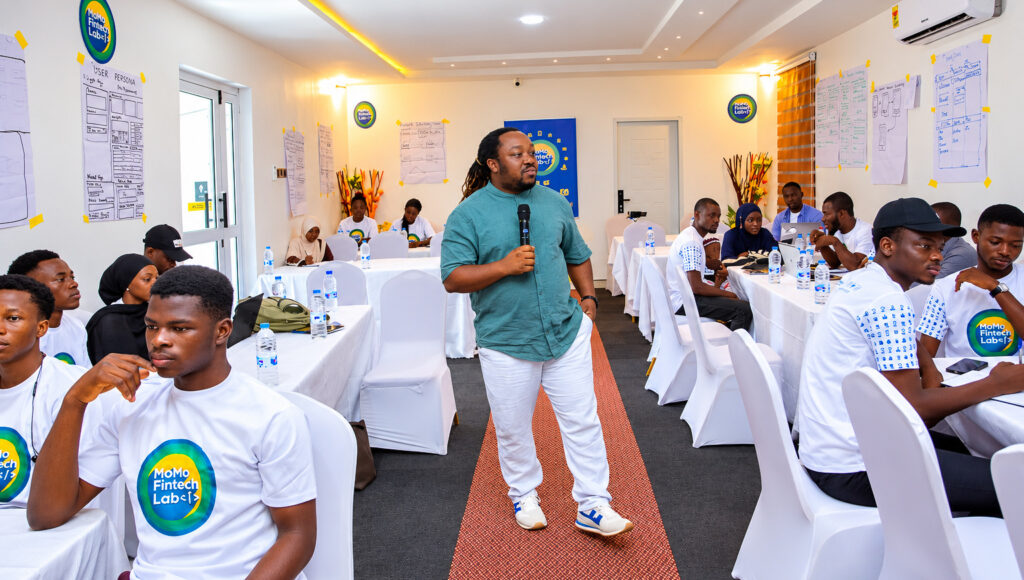
For participating entrepreneurs, the combination of technical training, business development and industry engagement is intended to provide a more comprehensive foundation for building viable fintech enterprises.
Demo Day Offers Commercial Opportunities
The MoMo Fintech Lab will culminate in a National Demo Day scheduled for December 3, 2026, when finalists will showcase their solutions and compete for cash awards of up to GHS100,000, digital devices and additional support to advance their innovations.
The event will provide a platform for presenting the finalists’ work and demonstrating how their products respond to identified challenges.
The awards and further support are intended to encourage continued development, although the long term value of the programme will ultimately depend on whether the solutions can attract users, secure commercial opportunities and remain viable after the competition.
The initiative is supported by GCB Bank, Hubtel, appsNmobile, Zenith Bank, First National Bank, Blue Penguin, Korba, Fidelity Bank, Afrifanom (VaMiJo) and JUMO, alongside its partnership with the Bank of Ghana.
Their involvement places the programme within a wider financial services and technology network that can provide relevant industry exposure as participants develop their solutions.
”Beyond the competition, the MoMo Fintech Lab will equip participants with technical, leadership and commercial skills, while connecting them with mentors and industry players who can help move promising solutions from concept to scale.”
CEO of MoMo Fintech Lab, Mr. Shaibu Haruna
With more than 1,700 entries received and 12 innovators expected to progress beyond the zonal competitions, the 2026 MoMo Fintech Lab is seeking to establish a pathway from early-stage ideas to commercially relevant fintech products.
Its outcomes will be measured not only by the number of participants trained or awards distributed, but also by the capacity of the resulting solutions to address real financial needs and contribute to a more inclusive digital economy.
The December 3, Demo Day will provide the next major opportunity to assess the progress made by the finalists and the readiness of their innovations for further development.
READ MORE:Mahama to Urge Putin to Pursue Russia-Ukraine Ceasefire