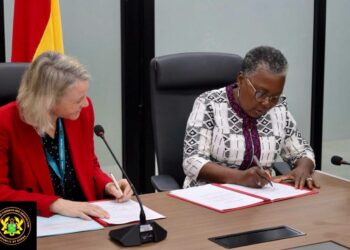
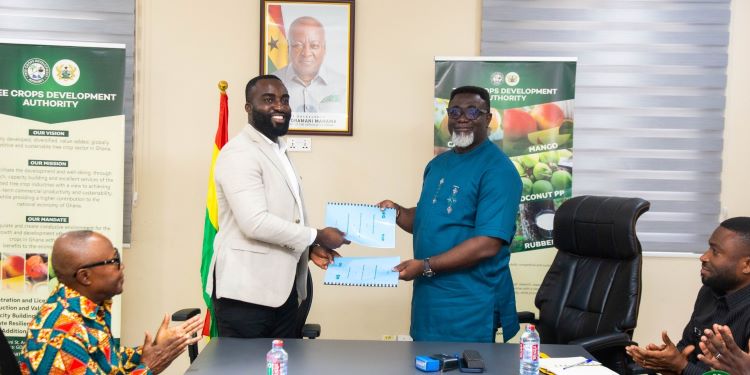
The Tree Crops Development Authority (TCDA) has entered into two strategic partnership agreements to integrate apiculture into farming systems and reclaim degraded lands for industrial rubber production.
These recently signed Memoranda of Understanding (MoUs) represent an integrated agricultural model that prioritizes ecological health as a primary driver of economic yield.
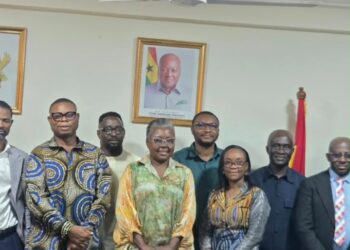
Under the direction of Chief Executive Officer Dr. Andy Osei Okrah, the Authority is moving to bridge the gap between traditional crop cultivation and modern environmental management, ensuring that Ghana’s tree crop sector remains resilient in the face of shifting global standards for sustainability.
Through formalizing relationships with Pan-African Business Developers (PABD) and Save Our Lands Projects LBG (SOL), the TCDA is addressing two of the most persistent bottlenecks in the agricultural value chain: the depletion of natural pollinators and the abandonment of exhausted landscapes.
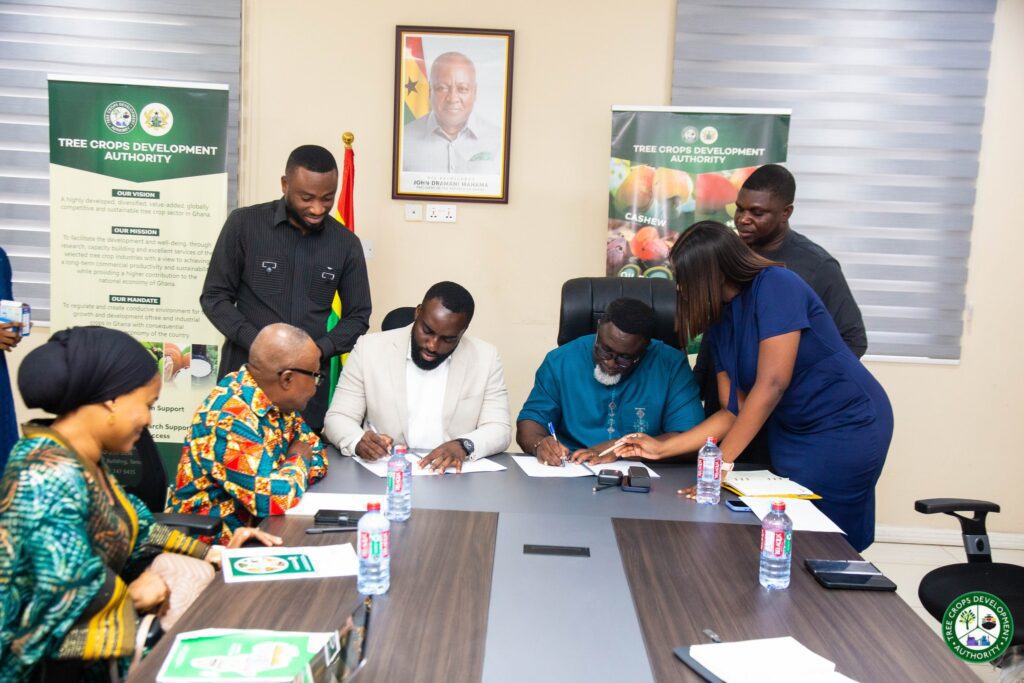
“The Authority signed its first strategic MoU with Mr. Kirk Agyekum, Chief Executive Officer of Pan-African Business Developers (PABD), to implement the ‘Bees for Income and Nutrition (BEEIN) Project,’ a transformative initiative aimed at integrating beekeeping into tree crop farming systems”
Tree Crops Development Authority
According to the TCDA, these interventions are not supplementary environmental programs but core economic strategies to diversify farmer income and expand the physical footprint of the tree crops sector without encroaching on primary forests.
The BEEIN project is built on the scientific understanding that the presence of bees is a critical variable in the success of tree crop flowering and fruit sets.
For the Authority, the introduction of managed beekeeping into the tree crop ecosystem is an investment in the biological infrastructure that pays dividends in both crop quality and supplementary revenue. This move recognizes that the traditional separation of apiculture and forestry is an inefficient use of land and biological synergy.
Yet, the economic logic of the BEEIN project extends beyond simple pollination services. For the smallholder farmer, honey and beeswax represent high-value commodities that are largely insulated from the price shocks that affect global markets for raw cocoa or cashews.
This secondary income stream is vital for rural financial stability, providing a steady flow of cash that can be reinvested into farm maintenance or household needs during the lean months between harvests.
Under the technical guidance of Mr. Kirk Agyekum and the PABD team, the project will focus on production enhancement and value chain sustainability, ensuring that Ghanaian honey meets the rigorous standards required for international export.
Rubber Plantations
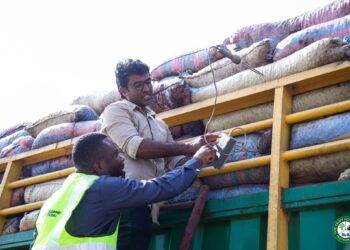
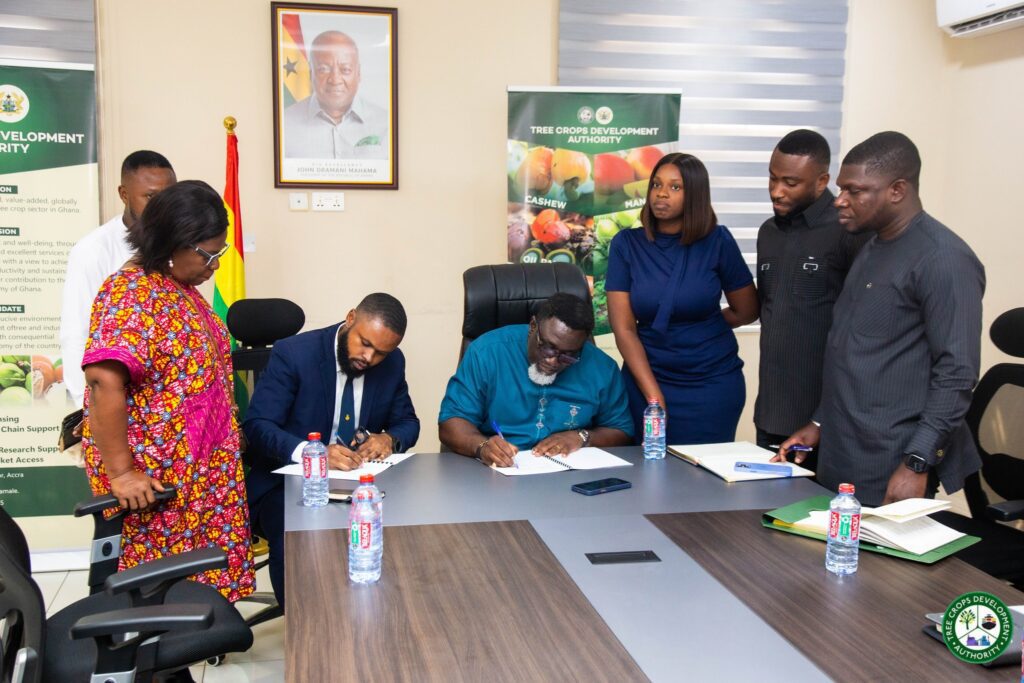
The second strategic MoU focuses on the physical restoration of the Ghanaian landscape through a partnership with Save Our Lands (SOL) Projects LBG. This 10-hectare pilot project targets degraded areas specifically for the development of rubber plantations, proving that economic growth can be achieved through environmental repair.
Many regions in Ghana have suffered from land exhaustion due to unregulated mining or aggressive monoculture, leaving behind “dead zones” that contribute nothing to the national economy. The TCDA and SOL have now moved to turn these liabilities back into productive assets.
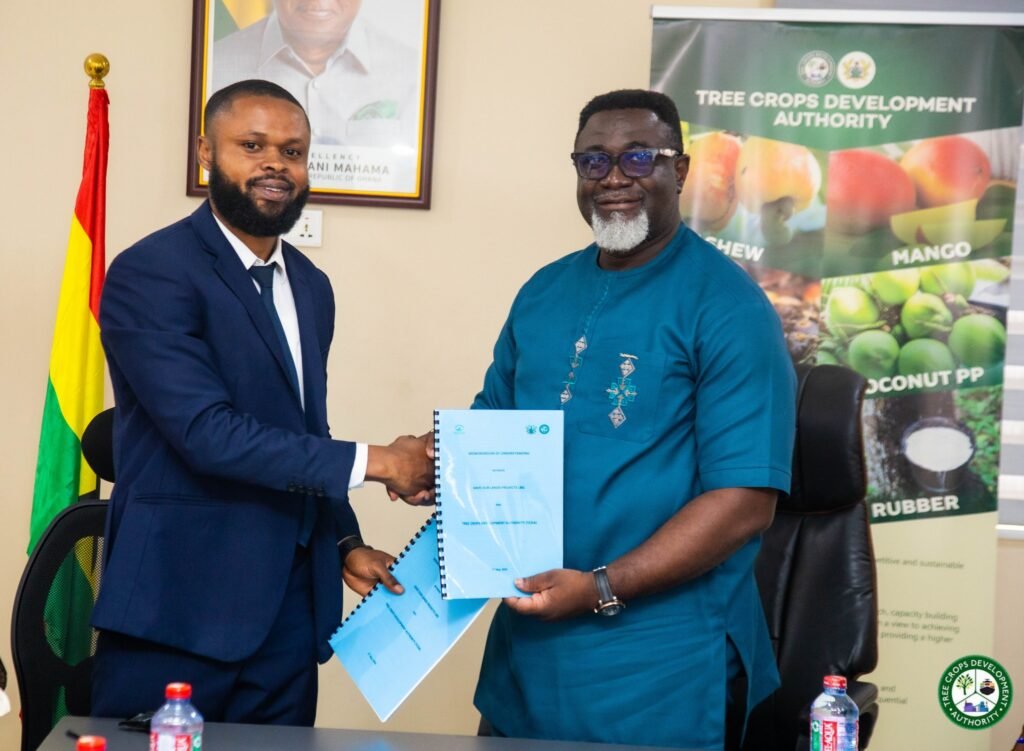
The agreement was signed by Dr. Andy Osei Okrah of TCDA and Mr. Aaron Agyapong, Executive Director of SOL. The selection of rubber as the primary tool for reclamation is a calculated move, as rubber trees are famously hardy and capable of thriving in environments where more sensitive food crops would fail.
As these plantations mature, they perform essential ecological functions, such as stabilizing the soil and restoring groundwater cycles, while simultaneously producing the raw latex required for industrial manufacturing. This initiative supports the TCDA’s broader mandate to expand rubber production in a way that is both inclusive and sustainable.
By focusing on reclamation rather than deforestation, the Authority is positioning Ghana as a leader in “green” rubber production, a designation that is increasingly valuable in the European and North American markets.
During the signings, Dr. Andy Osei Okrah redefined the TCDA’s role as a facilitator of “inclusive economic transformation.” The Authority is cognizant that agricultural growth is only meaningful if it empowers the communities that steward the land.
Both the beekeeping initiative and the rubber reclamation pilot are designed to create localized employment and skill-sharing opportunities. Whether it is training youth in apiculture management or employing local workers for plantation maintenance, these projects are ensuring that the dividends of agricultural innovation are distributed across the rural economy.
This focus on inclusivity is a cornerstone of the TCDA’s long-term strategy to build a resilient and diversified export base, encouraging farmers to see themselves as multifaceted entrepreneurs who manage complex biological systems.
The TCDA noted that its role in this transition is to provide the legal and technical frameworks – such as these MoUs – that allow private sector expertise to flow into the farming community. This synergy between government policy and private sector innovation is the only sustainable path toward achieving the production targets set for the six priority tree crops.
The formalization of these two agreements in Accra marks the beginning of a more sophisticated era for the Tree Crops Development Authority. The TCDA has demonstrated that it understands the interconnected nature of modern agricultural challenges.
The success of these pilot projects is expected to provide the data necessary to scale these interventions across the country, potentially transforming thousands of hectares of degraded land into productive, bee-rich ecosystems.
As the implementation phase begins, the TCDA will be closely monitoring the impact on soil health and farmer profitability.
READ ALSO: Ted Turner, CNN Founder and Media Visionary, Dies at 87